
Free Estimates on New Roof, Siding, Gutter Replacements


Free Estimates on New Roof, Siding, Gutter Replacements
(630) 520-0576
Mon - Sat: 8am to 8pm

Roofing for Commercial Properties in Illinois: What Business Owners Need to Know






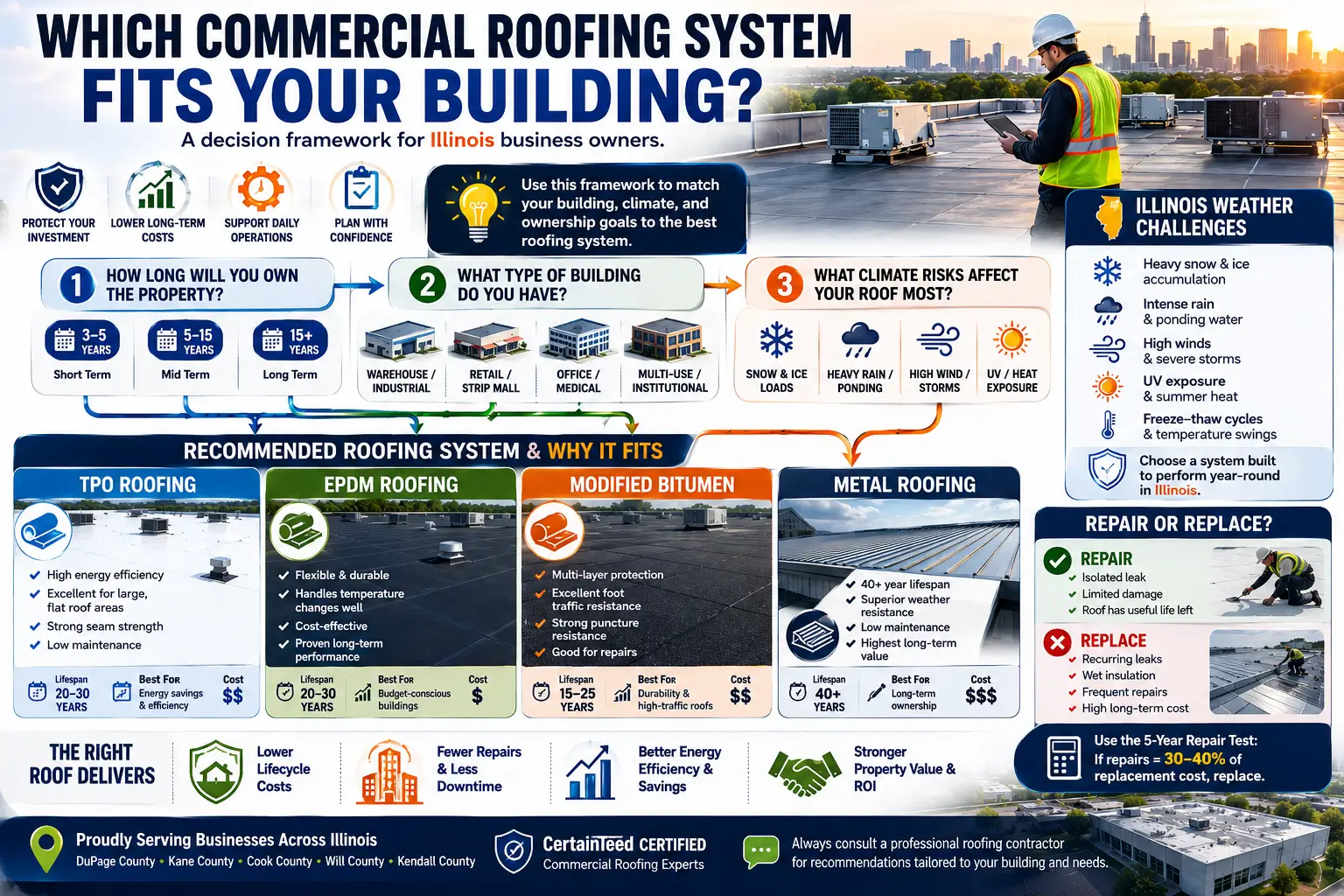
A commercial roof protects your building, employees, customers, equipment, and daily operations. The right roofing decision depends on your building design, Illinois weather exposure, repair history, and ownership plans. Roofing for commercial properties requires a different approach than residential roofing because commercial buildings have larger roof areas, more complex drainage systems, and greater financial exposure when problems occur.
Illinois weather adds another layer of risk. Snow, ice, hail, heavy rain, strong winds, and summer heat all affect roofing performance throughout the year. Use this guide to compare roof systems, understand repair timing, and avoid spending money on solutions that do not fit your building's needs.
At Top Quality Roofing & Siding, we help Illinois businesses evaluate roofing systems based on real-world performance and ownership goals. Businesses researching roofing options can learn more from our Illinois roofing specialists and commercial roofing services resources.
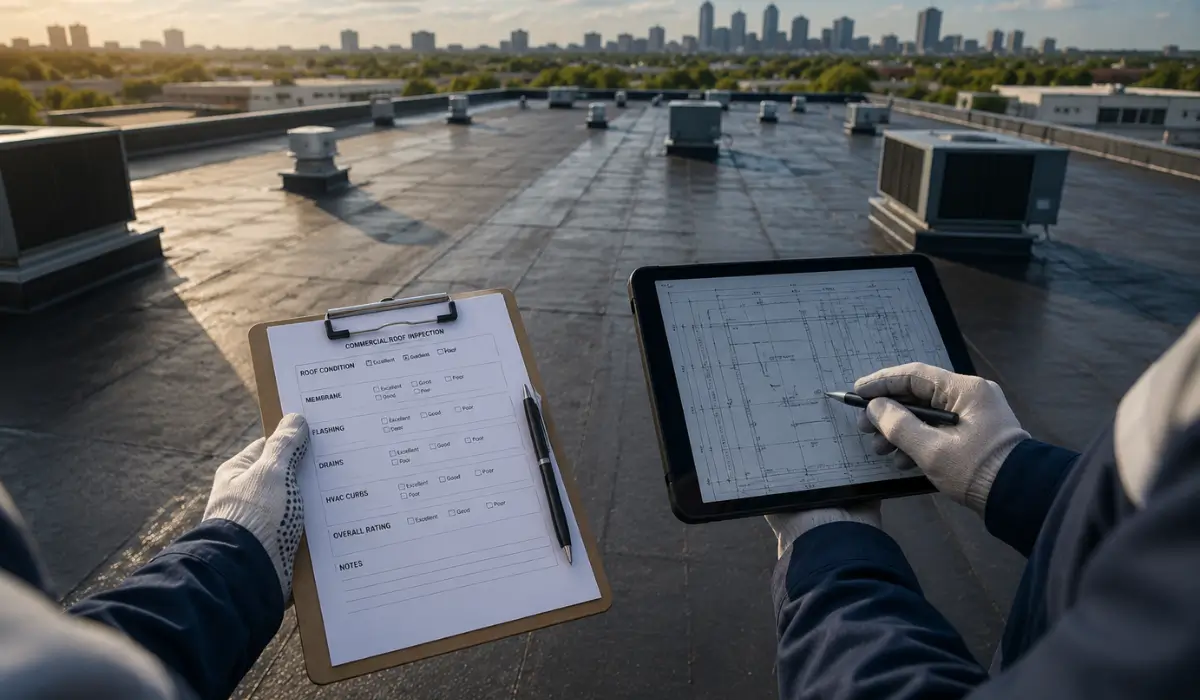
Roofing for Commercial Properties: Commercial Roof Inspection and Planning in Illinois
How Commercial Buildings Create Different Roofing Challenges
Commercial roofs operate differently than residential roofs because they cover larger areas, support more rooftop equipment, and often use mostly flat designs. These factors affect installation methods, maintenance planning, and repair costs.
Small roofing problems can affect large sections of a commercial building before visible signs appear indoors. A drainage issue or failure around roof edges, wall connections, or rooftop equipment can spread across hundreds of square feet before it is discovered.
Commercial roofs also support business operations. Roofing decisions can affect tenants, inventory, employee safety, production schedules, and maintenance budgets.
Understanding Common Commercial Roofing Risks
Most commercial roofing issues fall into four categories:
Drainage and water management
Rooftop equipment and roof penetrations
Weather exposure
Maintenance and inspection practices
Each of these areas influences repair frequency, operating costs, and overall roof lifespan.
Problems often develop gradually rather than all at once. We often explain it this way: a commercial roof can look perfectly fine from the parking lot while hidden drainage or roof edge issues continue developing beneath the surface.
Commercial roofing projects also involve stricter safety requirements, building codes, and warranty standards than most residential projects. These factors should be considered before any major roofing work begins.
Why Drainage Problems Create Expensive Roofing Issues
Standing water remains one of the most common causes of commercial roof deterioration. Mostly flat roofing systems are designed to move water efficiently, but clogged drains, settlement, and poor maintenance can create areas where water collects.
When water remains on a roof for extended periods, it increases stress on roofing materials, insulation, drainage components, and structural systems. Freeze-thaw cycles during Illinois winters can accelerate that damage.
What we often see is that recurring leaks are frequently linked to drainage problems rather than complete roof failure. Property owners who identify drainage concerns early are often able to extend roof life and avoid larger repair projects.
Quick Answer The best commercial roof depends on building use, climate exposure, maintenance goals, expected ownership timeline, and the condition of the existing roof. |
Choosing the Right Roofing System for Illinois Weather
The right roofing system balances durability, maintenance requirements, energy performance, and expected service life. Illinois weather rewards roofing systems that can handle snow loads, UV exposure, seasonal storms, and temperature swings.
Property owners often compare roofing systems based on installation cost alone. In practice, maintenance requirements and roof lifespan often have a greater impact on overall ownership costs.
Commercial Roofing System Comparison
Roofing System | Typical Lifespan | Maintenance Level | Energy Efficiency | Illinois Performance |
TPO | 20–30 Years | Low | High | Strong |
EPDM | 20–30 Years | Moderate | Moderate | Strong |
Modified Bitumen | 15–25 Years | Moderate | Moderate | Good |
Metal Roofing | 40+ Years | Low | High | Excellent |
This comparison provides a useful starting point, but building design, insulation levels, occupancy needs, and ownership goals should also influence the final decision.
Pros and Cons of Common Commercial Roofing Systems
Property owners evaluating flat roof systems IL often compare several materials before making a decision.
TPO Roofing
Pros: Reflective surface, energy efficiency, low maintenance
Cons: Installation quality is critical
EPDM Roofing
Pros: Flexible material, proven performance, handles temperature changes well
Cons: Darker surface may absorb more heat
Modified Bitumen Roofing
Pros: Durable, multi-layer protection, strong foot-traffic resistance
Cons: Typically requires more maintenance than single-ply systems
Metal Roofing
Pros: Long lifespan, strong weather resistance, low maintenance
Cons: Higher upfront investment
Illinois Climate Considerations
Illinois roofs face demanding weather throughout the year. Winter snow and freeze-thaw cycles place stress on drainage systems and roof connections, while summer heat and UV exposure can accelerate material aging.
Because of these conditions, roofing systems that manage moisture effectively and maintain durability through seasonal temperature swings tend to perform best across Illinois commercial properties.
Businesses planning to own a property for many years often place greater value on durability and operating costs than on installation price alone.
Energy Performance and Operating Costs
Energy costs continue to influence commercial roofing decisions. Reflective roofing systems can help reduce heat absorption and lower cooling demands during warmer months.
The U.S. Department of Energy recognizes cool roofing technologies as one method for improving building energy performance.
Buildings with large roof areas often experience the greatest benefit from energy-conscious roofing decisions. Even modest improvements can create measurable savings over time.
Illinois Commercial Roofing Lifecycle Framework™
Many owners focus only on current roof conditions. A stronger approach is evaluating where the roof sits within its service life and how ownership goals may influence future decisions.
We recommend reviewing commercial roofs using four stages:
Current condition assessment
Remaining service life estimate
Repair frequency review
Ownership horizon planning
This framework helps business owners make decisions based on building performance rather than reacting only when leaks appear.
Based on actual scenarios, owners who align roofing decisions with ownership goals often achieve better financial outcomes than those who wait until problems become emergencies.
Businesses budgeting future roofing work can review project ranges using our roof cost calculator before comparing replacement options.
Knowing When Repairs Stop Making Financial Sense
Quick Answer: Repair or Replace? Repair is usually the better option when damage is isolated, insulation remains dry, and the roof still has meaningful service life remaining. |
Replacement is often the better choice when leaks continue returning, water collects regularly, or repair costs keep increasing.
A commercial roof does not automatically need replacement when problems appear. The key is determining whether repairs continue providing value or simply delay a larger issue.
Many building owners prefer repairs because they require less upfront investment. That approach often makes sense when damage is limited and the roofing system is otherwise performing well.
A warehouse owner planning to hold a property for another decade will often evaluate roofing differently than an investor preparing a building for sale. Ownership goals frequently influence the right financial decision.
Commercial Roof Decision Matrix
Situation | Better Path | Why |
One isolated leak | Repair | Lower cost and limited risk |
Several recurring leaks | Inspection first | May signal wider failure |
Wet insulation | Replacement planning | Hidden damage spreads |
Aging roof with yearly repairs | Replacement quote | Repairs may no longer pay off |
Storm damage | Documentation and inspection | Supports claims and planning |
The matrix helps simplify decisions by connecting roof condition with cost risk and ownership goals.
Business owners evaluating roofing for commercial properties often compare projected repair costs over the next five years against replacement costs before making a final decision.
The 5-Year Repair Test
If projected repair costs over the next five years approach 30–40% of replacement cost, replacement should be seriously reviewed.
Repairs may still be appropriate, but the decision should be based on total ownership cost rather than the next invoice.
A common mistake: waiting until leaks appear before scheduling an inspection. Small concerns frequently become larger expenses when they remain unaddressed through multiple seasons.
Signs That Replacement May Be the Better Option
Recurring leaks often indicate broader roofing deterioration rather than isolated damage. Persistent ponding water may also signal underlying drainage problems.
Property owners researching commercial roof repair options should determine whether repairs are solving the root cause or simply postponing future expenses.
For example, a retail building with a recurring leak near rooftop HVAC equipment may not need a full replacement. However, if the same leak returns after multiple repairs, the underlying issue may be poor drainage or aging roofing materials.
Commercial Roofing Cost Escalation Rule
Small roofing issues often cost three to five times more when they are deferred beyond a seasonal maintenance cycle.
The National Roofing Contractors Association emphasizes proactive inspections and maintenance planning as effective ways to reduce unexpected roofing expenses. The strongest roofing decisions balance current budget realities with building condition and ownership goals.
Planning Around Weather, Storms, and Insurance Claims
Weather-related roofing damage often develops gradually rather than immediately. Wind, hail, heavy rain, freeze-thaw cycles, and seasonal temperature changes can affect commercial roofing systems long before visible leaks appear.
Illinois weather creates unique challenges for commercial properties. What we often see is that small storm-related issues become larger repair projects when inspections are delayed after severe weather.
Routine inspections help property owners identify concerns before they interrupt business operations or create larger repair costs.
Seasonal Protection Process
A proactive roofing strategy often follows this process:
Schedule seasonal inspections.
Address minor concerns before storm season.
Document roof conditions regularly.
Review warranty requirements annually.
Inspect after major weather events.
This process helps reduce emergency repairs and supports more predictable maintenance planning.
Insurance Documentation and Claims Preparation
Storm-related repairs often involve insurance considerations. Proper documentation can make a significant difference when filing a claim.
Recommended documentation includes:
Photos of visible roof conditions
Dates of major weather events
Inspection reports
Maintenance records
Previous repair invoices
Our roofing insurance claim guide explains important steps property owners can take when documenting damage and working through the claims process.
Business owners looking for preventive maintenance guidance can review our roofing issues before storm season resource and our spring roof maintenance checklist for seasonal planning recommendations.
Planning Around Business Disruption
Roofing work can affect deliveries, tenants, parking, noise levels, and building access.
Before work begins, business owners should understand how the contractor plans to protect entrances, manage debris, and schedule work around normal operations.
For many commercial properties, the best roofing project is not only the one installed correctly but also the one managed with minimal disruption to daily business activity.
What Separates Professional Commercial Roofing Teams From General Contractors
Commercial roofing projects involve more than installing materials. Drainage planning, code compliance, safety requirements, scheduling, and warranty protection all influence long-term performance.
The contractor selected for the work can significantly affect roofing results. A lower proposal price does not always represent lower overall cost when workmanship and project planning are considered.
Business owners comparing contractors often begin by researching a local roofing company with commercial project experience and a history of serving Illinois property owners.
Evaluating a Commercial Roofing Contractor
Evaluation Area | Why It Matters |
Licensing and insurance | Protects owners and stakeholders |
Manufacturer certifications | Supports warranty coverage |
Commercial experience | Reduces project risk |
Safety practices | Protects workers and occupants |
Local reputation | Demonstrates reliability |
These criteria help separate experienced commercial roofing professionals from contractors who primarily focus on residential work. Property owners evaluating industrial roofing contractors IL should also review completed projects before making a final decision.
Reviewing completed roofing projects can help business owners understand how roofing systems perform across different building types.
Questions to Ask Before Signing
What voids the warranty?
Who handles manufacturer documentation?
How will roof access be controlled?
How will weather delays be handled?
What happens if wet insulation is discovered?
These questions help identify how thoroughly a contractor plans commercial roofing projects and manages risk.
Material Quality and Warranty Protection
Material quality influences roofing performance, but installation quality is equally important. Even premium products can underperform if installation standards are not followed.
Manufacturer certifications often indicate specialized training and adherence to approved installation procedures. This helps protect warranty eligibility while supporting consistent roofing performance.
Roofing Systems and Ownership Value
Many commercial property owners are evaluating metal roofing for buildings because of its durability, lifespan, and relatively low maintenance requirements.
In our experience, some of the most expensive commercial roofing mistakes occur before installation begins. An incomplete project scope, weak documentation, inadequate drainage review, or unclear warranty terms can create costs that far exceed the original savings.
Facility managers, property investors, and business owners often evaluate roofing projects differently based on ownership goals and building priorities.
Certifications, Safety, and Project Standards
Our team holds CertainTeed certifications and works with commercial property owners throughout DuPage County, Kane County, Cook County, Will County, and Kendall County.
The Occupational Safety and Health Administration (OSHA) establishes important workplace safety standards that professional roofing contractors must follow during commercial roofing projects.
At Top Quality Roofing & Siding, we encourage business owners to evaluate roofing investments based on performance, durability, and ownership value rather than installation cost alone.
Commercial Roof Owner Checklist
Keep inspection reports in one location
Track every repair by date and location
Photograph roof conditions after major storms
Review warranty terms before approving work
Compare five-year repair costs against replacement costs
Inspect drainage before winter and after spring storms
Property owners who maintain clear roofing records often make better budgeting, repair, and replacement decisions.
Final Thoughts on Commercial Roofing Planning
Commercial roofing decisions affect building performance, operating costs, tenant experience, and property value. Whether the right solution is a targeted repair, maintenance strategy, or full replacement, the strongest outcomes come from making informed decisions before problems become urgent.
Throughout this guide, one theme remains consistent: proactive planning almost always costs less than reactive repairs.
Roofing for commercial properties should be approached as part of a broader property management strategy rather than a one-time project. Evaluating roof age, repair history, drainage performance, warranty requirements, and ownership goals helps support better long-term decisions.
The strongest decisions are made with reliable information, realistic planning, and a focus on protecting the property for years to come.
Protect Your Business Assets with Smart Roofing Decisions
Commercial roofing decisions affect operational continuity, maintenance costs, tenant satisfaction, and property value. Whether you're evaluating repairs, planning a flat roof upgrade, or considering a metal roofing installation, expert guidance can help you make informed decisions that align with your budget and business goals.
At Top Quality Roofing & Siding, we help Illinois property owners evaluate roofing options based on building condition, performance expectations, and ownership objectives. Even if you are not planning a roof replacement today, a professional inspection can identify concerns before they affect operations or maintenance budgets.
Get a commercial roofing consultation in Illinois and receive practical recommendations tailored to your property's needs.
Schedule a Commercial Roof Audit
A commercial roof protects your building, employees, customers, equipment, and daily operations. The right roofing decision depends on your building design, Illinois weather exposure, repair history, and ownership plans. Roofing for commercial properties requires a different approach than residential roofing because commercial buildings have larger roof areas, more complex drainage systems, and greater financial exposure when problems occur.
Illinois weather adds another layer of risk. Snow, ice, hail, heavy rain, strong winds, and summer heat all affect roofing performance throughout the year. Use this guide to compare roof systems, understand repair timing, and avoid spending money on solutions that do not fit your building's needs.
At Top Quality Roofing & Siding, we help Illinois businesses evaluate roofing systems based on real-world performance and ownership goals. Businesses researching roofing options can learn more from our Illinois roofing specialists and commercial roofing services resources.
Roofing for Commercial Properties: Commercial Roof Inspection and Planning in Illinois
How Commercial Buildings Create Different Roofing Challenges
Commercial roofs operate differently than residential roofs because they cover larger areas, support more rooftop equipment, and often use mostly flat designs. These factors affect installation methods, maintenance planning, and repair costs.
Small roofing problems can affect large sections of a commercial building before visible signs appear indoors. A drainage issue or failure around roof edges, wall connections, or rooftop equipment can spread across hundreds of square feet before it is discovered.
Commercial roofs also support business operations. Roofing decisions can affect tenants, inventory, employee safety, production schedules, and maintenance budgets.
Understanding Common Commercial Roofing Risks
Most commercial roofing issues fall into four categories:
Drainage and water management
Rooftop equipment and roof penetrations
Weather exposure
Maintenance and inspection practices
Each of these areas influences repair frequency, operating costs, and overall roof lifespan.
Problems often develop gradually rather than all at once. We often explain it this way: a commercial roof can look perfectly fine from the parking lot while hidden drainage or roof edge issues continue developing beneath the surface.
Commercial roofing projects also involve stricter safety requirements, building codes, and warranty standards than most residential projects. These factors should be considered before any major roofing work begins.
Why Drainage Problems Create Expensive Roofing Issues
Standing water remains one of the most common causes of commercial roof deterioration. Mostly flat roofing systems are designed to move water efficiently, but clogged drains, settlement, and poor maintenance can create areas where water collects.
When water remains on a roof for extended periods, it increases stress on roofing materials, insulation, drainage components, and structural systems. Freeze-thaw cycles during Illinois winters can accelerate that damage.
What we often see is that recurring leaks are frequently linked to drainage problems rather than complete roof failure. Property owners who identify drainage concerns early are often able to extend roof life and avoid larger repair projects.
Quick Answer The best commercial roof depends on building use, climate exposure, maintenance goals, expected ownership timeline, and the condition of the existing roof. |
Choosing the Right Roofing System for Illinois Weather
The right roofing system balances durability, maintenance requirements, energy performance, and expected service life. Illinois weather rewards roofing systems that can handle snow loads, UV exposure, seasonal storms, and temperature swings.
Property owners often compare roofing systems based on installation cost alone. In practice, maintenance requirements and roof lifespan often have a greater impact on overall ownership costs.
Commercial Roofing System Comparison
Roofing System | Typical Lifespan | Maintenance Level | Energy Efficiency | Illinois Performance |
TPO | 20–30 Years | Low | High | Strong |
EPDM | 20–30 Years | Moderate | Moderate | Strong |
Modified Bitumen | 15–25 Years | Moderate | Moderate | Good |
Metal Roofing | 40+ Years | Low | High | Excellent |
This comparison provides a useful starting point, but building design, insulation levels, occupancy needs, and ownership goals should also influence the final decision.
Pros and Cons of Common Commercial Roofing Systems
Property owners evaluating flat roof systems IL often compare several materials before making a decision.
TPO Roofing
Pros: Reflective surface, energy efficiency, low maintenance
Cons: Installation quality is critical
EPDM Roofing
Pros: Flexible material, proven performance, handles temperature changes well
Cons: Darker surface may absorb more heat
Modified Bitumen Roofing
Pros: Durable, multi-layer protection, strong foot-traffic resistance
Cons: Typically requires more maintenance than single-ply systems
Metal Roofing
Pros: Long lifespan, strong weather resistance, low maintenance
Cons: Higher upfront investment
Illinois Climate Considerations
Illinois roofs face demanding weather throughout the year. Winter snow and freeze-thaw cycles place stress on drainage systems and roof connections, while summer heat and UV exposure can accelerate material aging.
Because of these conditions, roofing systems that manage moisture effectively and maintain durability through seasonal temperature swings tend to perform best across Illinois commercial properties.
Businesses planning to own a property for many years often place greater value on durability and operating costs than on installation price alone.
Energy Performance and Operating Costs
Energy costs continue to influence commercial roofing decisions. Reflective roofing systems can help reduce heat absorption and lower cooling demands during warmer months.
The U.S. Department of Energy recognizes cool roofing technologies as one method for improving building energy performance.
Buildings with large roof areas often experience the greatest benefit from energy-conscious roofing decisions. Even modest improvements can create measurable savings over time.
Illinois Commercial Roofing Lifecycle Framework™
Many owners focus only on current roof conditions. A stronger approach is evaluating where the roof sits within its service life and how ownership goals may influence future decisions.
We recommend reviewing commercial roofs using four stages:
Current condition assessment
Remaining service life estimate
Repair frequency review
Ownership horizon planning
This framework helps business owners make decisions based on building performance rather than reacting only when leaks appear.
Based on actual scenarios, owners who align roofing decisions with ownership goals often achieve better financial outcomes than those who wait until problems become emergencies.
Businesses budgeting future roofing work can review project ranges using our roof cost calculator before comparing replacement options.
Knowing When Repairs Stop Making Financial Sense
Quick Answer: Repair or Replace? Repair is usually the better option when damage is isolated, insulation remains dry, and the roof still has meaningful service life remaining. |
Replacement is often the better choice when leaks continue returning, water collects regularly, or repair costs keep increasing.
A commercial roof does not automatically need replacement when problems appear. The key is determining whether repairs continue providing value or simply delay a larger issue.
Many building owners prefer repairs because they require less upfront investment. That approach often makes sense when damage is limited and the roofing system is otherwise performing well.
A warehouse owner planning to hold a property for another decade will often evaluate roofing differently than an investor preparing a building for sale. Ownership goals frequently influence the right financial decision.
Commercial Roof Decision Matrix
Situation | Better Path | Why |
One isolated leak | Repair | Lower cost and limited risk |
Several recurring leaks | Inspection first | May signal wider failure |
Wet insulation | Replacement planning | Hidden damage spreads |
Aging roof with yearly repairs | Replacement quote | Repairs may no longer pay off |
Storm damage | Documentation and inspection | Supports claims and planning |
The matrix helps simplify decisions by connecting roof condition with cost risk and ownership goals.
Business owners evaluating roofing for commercial properties often compare projected repair costs over the next five years against replacement costs before making a final decision.
The 5-Year Repair Test
If projected repair costs over the next five years approach 30–40% of replacement cost, replacement should be seriously reviewed.
Repairs may still be appropriate, but the decision should be based on total ownership cost rather than the next invoice.
A common mistake: waiting until leaks appear before scheduling an inspection. Small concerns frequently become larger expenses when they remain unaddressed through multiple seasons.
Signs That Replacement May Be the Better Option
Recurring leaks often indicate broader roofing deterioration rather than isolated damage. Persistent ponding water may also signal underlying drainage problems.
Property owners researching commercial roof repair options should determine whether repairs are solving the root cause or simply postponing future expenses.
For example, a retail building with a recurring leak near rooftop HVAC equipment may not need a full replacement. However, if the same leak returns after multiple repairs, the underlying issue may be poor drainage or aging roofing materials.
Commercial Roofing Cost Escalation Rule
Small roofing issues often cost three to five times more when they are deferred beyond a seasonal maintenance cycle.
The National Roofing Contractors Association emphasizes proactive inspections and maintenance planning as effective ways to reduce unexpected roofing expenses. The strongest roofing decisions balance current budget realities with building condition and ownership goals.
Planning Around Weather, Storms, and Insurance Claims
Weather-related roofing damage often develops gradually rather than immediately. Wind, hail, heavy rain, freeze-thaw cycles, and seasonal temperature changes can affect commercial roofing systems long before visible leaks appear.
Illinois weather creates unique challenges for commercial properties. What we often see is that small storm-related issues become larger repair projects when inspections are delayed after severe weather.
Routine inspections help property owners identify concerns before they interrupt business operations or create larger repair costs.
Seasonal Protection Process
A proactive roofing strategy often follows this process:
Schedule seasonal inspections.
Address minor concerns before storm season.
Document roof conditions regularly.
Review warranty requirements annually.
Inspect after major weather events.
This process helps reduce emergency repairs and supports more predictable maintenance planning.
Insurance Documentation and Claims Preparation
Storm-related repairs often involve insurance considerations. Proper documentation can make a significant difference when filing a claim.
Recommended documentation includes:
Photos of visible roof conditions
Dates of major weather events
Inspection reports
Maintenance records
Previous repair invoices
Our roofing insurance claim guide explains important steps property owners can take when documenting damage and working through the claims process.
Business owners looking for preventive maintenance guidance can review our roofing issues before storm season resource and our spring roof maintenance checklist for seasonal planning recommendations.
Planning Around Business Disruption
Roofing work can affect deliveries, tenants, parking, noise levels, and building access.
Before work begins, business owners should understand how the contractor plans to protect entrances, manage debris, and schedule work around normal operations.
For many commercial properties, the best roofing project is not only the one installed correctly but also the one managed with minimal disruption to daily business activity.
What Separates Professional Commercial Roofing Teams From General Contractors
Commercial roofing projects involve more than installing materials. Drainage planning, code compliance, safety requirements, scheduling, and warranty protection all influence long-term performance.
The contractor selected for the work can significantly affect roofing results. A lower proposal price does not always represent lower overall cost when workmanship and project planning are considered.
Business owners comparing contractors often begin by researching a local roofing company with commercial project experience and a history of serving Illinois property owners.
Evaluating a Commercial Roofing Contractor
Evaluation Area | Why It Matters |
Licensing and insurance | Protects owners and stakeholders |
Manufacturer certifications | Supports warranty coverage |
Commercial experience | Reduces project risk |
Safety practices | Protects workers and occupants |
Local reputation | Demonstrates reliability |
These criteria help separate experienced commercial roofing professionals from contractors who primarily focus on residential work. Property owners evaluating industrial roofing contractors IL should also review completed projects before making a final decision.
Reviewing completed roofing projects can help business owners understand how roofing systems perform across different building types.
Questions to Ask Before Signing
What voids the warranty?
Who handles manufacturer documentation?
How will roof access be controlled?
How will weather delays be handled?
What happens if wet insulation is discovered?
These questions help identify how thoroughly a contractor plans commercial roofing projects and manages risk.
Material Quality and Warranty Protection
Material quality influences roofing performance, but installation quality is equally important. Even premium products can underperform if installation standards are not followed.
Manufacturer certifications often indicate specialized training and adherence to approved installation procedures. This helps protect warranty eligibility while supporting consistent roofing performance.
Roofing Systems and Ownership Value
Many commercial property owners are evaluating metal roofing for buildings because of its durability, lifespan, and relatively low maintenance requirements.
In our experience, some of the most expensive commercial roofing mistakes occur before installation begins. An incomplete project scope, weak documentation, inadequate drainage review, or unclear warranty terms can create costs that far exceed the original savings.
Facility managers, property investors, and business owners often evaluate roofing projects differently based on ownership goals and building priorities.
Certifications, Safety, and Project Standards
Our team holds CertainTeed certifications and works with commercial property owners throughout DuPage County, Kane County, Cook County, Will County, and Kendall County.
The Occupational Safety and Health Administration (OSHA) establishes important workplace safety standards that professional roofing contractors must follow during commercial roofing projects.
At Top Quality Roofing & Siding, we encourage business owners to evaluate roofing investments based on performance, durability, and ownership value rather than installation cost alone.
Commercial Roof Owner Checklist
Keep inspection reports in one location
Track every repair by date and location
Photograph roof conditions after major storms
Review warranty terms before approving work
Compare five-year repair costs against replacement costs
Inspect drainage before winter and after spring storms
Property owners who maintain clear roofing records often make better budgeting, repair, and replacement decisions.
Final Thoughts on Commercial Roofing Planning
Commercial roofing decisions affect building performance, operating costs, tenant experience, and property value. Whether the right solution is a targeted repair, maintenance strategy, or full replacement, the strongest outcomes come from making informed decisions before problems become urgent.
Throughout this guide, one theme remains consistent: proactive planning almost always costs less than reactive repairs.
Roofing for commercial properties should be approached as part of a broader property management strategy rather than a one-time project. Evaluating roof age, repair history, drainage performance, warranty requirements, and ownership goals helps support better long-term decisions.
The strongest decisions are made with reliable information, realistic planning, and a focus on protecting the property for years to come.
Protect Your Business Assets with Smart Roofing Decisions
Commercial roofing decisions affect operational continuity, maintenance costs, tenant satisfaction, and property value. Whether you're evaluating repairs, planning a flat roof upgrade, or considering a metal roofing installation, expert guidance can help you make informed decisions that align with your budget and business goals.
At Top Quality Roofing & Siding, we help Illinois property owners evaluate roofing options based on building condition, performance expectations, and ownership objectives. Even if you are not planning a roof replacement today, a professional inspection can identify concerns before they affect operations or maintenance budgets.
Get a commercial roofing consultation in Illinois and receive practical recommendations tailored to your property's needs.
Schedule a Commercial Roof Audit
A commercial roof protects your building, employees, customers, equipment, and daily operations. The right roofing decision depends on your building design, Illinois weather exposure, repair history, and ownership plans. Roofing for commercial properties requires a different approach than residential roofing because commercial buildings have larger roof areas, more complex drainage systems, and greater financial exposure when problems occur.
Illinois weather adds another layer of risk. Snow, ice, hail, heavy rain, strong winds, and summer heat all affect roofing performance throughout the year. Use this guide to compare roof systems, understand repair timing, and avoid spending money on solutions that do not fit your building's needs.
At Top Quality Roofing & Siding, we help Illinois businesses evaluate roofing systems based on real-world performance and ownership goals. Businesses researching roofing options can learn more from our Illinois roofing specialists and commercial roofing services resources.
Roofing for Commercial Properties: Commercial Roof Inspection and Planning in Illinois
How Commercial Buildings Create Different Roofing Challenges
Commercial roofs operate differently than residential roofs because they cover larger areas, support more rooftop equipment, and often use mostly flat designs. These factors affect installation methods, maintenance planning, and repair costs.
Small roofing problems can affect large sections of a commercial building before visible signs appear indoors. A drainage issue or failure around roof edges, wall connections, or rooftop equipment can spread across hundreds of square feet before it is discovered.
Commercial roofs also support business operations. Roofing decisions can affect tenants, inventory, employee safety, production schedules, and maintenance budgets.
Understanding Common Commercial Roofing Risks
Most commercial roofing issues fall into four categories:
Drainage and water management
Rooftop equipment and roof penetrations
Weather exposure
Maintenance and inspection practices
Each of these areas influences repair frequency, operating costs, and overall roof lifespan.
Problems often develop gradually rather than all at once. We often explain it this way: a commercial roof can look perfectly fine from the parking lot while hidden drainage or roof edge issues continue developing beneath the surface.
Commercial roofing projects also involve stricter safety requirements, building codes, and warranty standards than most residential projects. These factors should be considered before any major roofing work begins.
Why Drainage Problems Create Expensive Roofing Issues
Standing water remains one of the most common causes of commercial roof deterioration. Mostly flat roofing systems are designed to move water efficiently, but clogged drains, settlement, and poor maintenance can create areas where water collects.
When water remains on a roof for extended periods, it increases stress on roofing materials, insulation, drainage components, and structural systems. Freeze-thaw cycles during Illinois winters can accelerate that damage.
What we often see is that recurring leaks are frequently linked to drainage problems rather than complete roof failure. Property owners who identify drainage concerns early are often able to extend roof life and avoid larger repair projects.
Quick Answer The best commercial roof depends on building use, climate exposure, maintenance goals, expected ownership timeline, and the condition of the existing roof. |
Choosing the Right Roofing System for Illinois Weather
The right roofing system balances durability, maintenance requirements, energy performance, and expected service life. Illinois weather rewards roofing systems that can handle snow loads, UV exposure, seasonal storms, and temperature swings.
Property owners often compare roofing systems based on installation cost alone. In practice, maintenance requirements and roof lifespan often have a greater impact on overall ownership costs.
Commercial Roofing System Comparison
Roofing System | Typical Lifespan | Maintenance Level | Energy Efficiency | Illinois Performance |
TPO | 20–30 Years | Low | High | Strong |
EPDM | 20–30 Years | Moderate | Moderate | Strong |
Modified Bitumen | 15–25 Years | Moderate | Moderate | Good |
Metal Roofing | 40+ Years | Low | High | Excellent |
This comparison provides a useful starting point, but building design, insulation levels, occupancy needs, and ownership goals should also influence the final decision.
Pros and Cons of Common Commercial Roofing Systems
Property owners evaluating flat roof systems IL often compare several materials before making a decision.
TPO Roofing
Pros: Reflective surface, energy efficiency, low maintenance
Cons: Installation quality is critical
EPDM Roofing
Pros: Flexible material, proven performance, handles temperature changes well
Cons: Darker surface may absorb more heat
Modified Bitumen Roofing
Pros: Durable, multi-layer protection, strong foot-traffic resistance
Cons: Typically requires more maintenance than single-ply systems
Metal Roofing
Pros: Long lifespan, strong weather resistance, low maintenance
Cons: Higher upfront investment
Illinois Climate Considerations
Illinois roofs face demanding weather throughout the year. Winter snow and freeze-thaw cycles place stress on drainage systems and roof connections, while summer heat and UV exposure can accelerate material aging.
Because of these conditions, roofing systems that manage moisture effectively and maintain durability through seasonal temperature swings tend to perform best across Illinois commercial properties.
Businesses planning to own a property for many years often place greater value on durability and operating costs than on installation price alone.
Energy Performance and Operating Costs
Energy costs continue to influence commercial roofing decisions. Reflective roofing systems can help reduce heat absorption and lower cooling demands during warmer months.
The U.S. Department of Energy recognizes cool roofing technologies as one method for improving building energy performance.
Buildings with large roof areas often experience the greatest benefit from energy-conscious roofing decisions. Even modest improvements can create measurable savings over time.
Illinois Commercial Roofing Lifecycle Framework™
Many owners focus only on current roof conditions. A stronger approach is evaluating where the roof sits within its service life and how ownership goals may influence future decisions.
We recommend reviewing commercial roofs using four stages:
Current condition assessment
Remaining service life estimate
Repair frequency review
Ownership horizon planning
This framework helps business owners make decisions based on building performance rather than reacting only when leaks appear.
Based on actual scenarios, owners who align roofing decisions with ownership goals often achieve better financial outcomes than those who wait until problems become emergencies.
Businesses budgeting future roofing work can review project ranges using our roof cost calculator before comparing replacement options.
Knowing When Repairs Stop Making Financial Sense
Quick Answer: Repair or Replace? Repair is usually the better option when damage is isolated, insulation remains dry, and the roof still has meaningful service life remaining. |
Replacement is often the better choice when leaks continue returning, water collects regularly, or repair costs keep increasing.
A commercial roof does not automatically need replacement when problems appear. The key is determining whether repairs continue providing value or simply delay a larger issue.
Many building owners prefer repairs because they require less upfront investment. That approach often makes sense when damage is limited and the roofing system is otherwise performing well.
A warehouse owner planning to hold a property for another decade will often evaluate roofing differently than an investor preparing a building for sale. Ownership goals frequently influence the right financial decision.
Commercial Roof Decision Matrix
Situation | Better Path | Why |
One isolated leak | Repair | Lower cost and limited risk |
Several recurring leaks | Inspection first | May signal wider failure |
Wet insulation | Replacement planning | Hidden damage spreads |
Aging roof with yearly repairs | Replacement quote | Repairs may no longer pay off |
Storm damage | Documentation and inspection | Supports claims and planning |
The matrix helps simplify decisions by connecting roof condition with cost risk and ownership goals.
Business owners evaluating roofing for commercial properties often compare projected repair costs over the next five years against replacement costs before making a final decision.
The 5-Year Repair Test
If projected repair costs over the next five years approach 30–40% of replacement cost, replacement should be seriously reviewed.
Repairs may still be appropriate, but the decision should be based on total ownership cost rather than the next invoice.
A common mistake: waiting until leaks appear before scheduling an inspection. Small concerns frequently become larger expenses when they remain unaddressed through multiple seasons.
Signs That Replacement May Be the Better Option
Recurring leaks often indicate broader roofing deterioration rather than isolated damage. Persistent ponding water may also signal underlying drainage problems.
Property owners researching commercial roof repair options should determine whether repairs are solving the root cause or simply postponing future expenses.
For example, a retail building with a recurring leak near rooftop HVAC equipment may not need a full replacement. However, if the same leak returns after multiple repairs, the underlying issue may be poor drainage or aging roofing materials.
Commercial Roofing Cost Escalation Rule
Small roofing issues often cost three to five times more when they are deferred beyond a seasonal maintenance cycle.
The National Roofing Contractors Association emphasizes proactive inspections and maintenance planning as effective ways to reduce unexpected roofing expenses. The strongest roofing decisions balance current budget realities with building condition and ownership goals.
Planning Around Weather, Storms, and Insurance Claims
Weather-related roofing damage often develops gradually rather than immediately. Wind, hail, heavy rain, freeze-thaw cycles, and seasonal temperature changes can affect commercial roofing systems long before visible leaks appear.
Illinois weather creates unique challenges for commercial properties. What we often see is that small storm-related issues become larger repair projects when inspections are delayed after severe weather.
Routine inspections help property owners identify concerns before they interrupt business operations or create larger repair costs.
Seasonal Protection Process
A proactive roofing strategy often follows this process:
Schedule seasonal inspections.
Address minor concerns before storm season.
Document roof conditions regularly.
Review warranty requirements annually.
Inspect after major weather events.
This process helps reduce emergency repairs and supports more predictable maintenance planning.
Insurance Documentation and Claims Preparation
Storm-related repairs often involve insurance considerations. Proper documentation can make a significant difference when filing a claim.
Recommended documentation includes:
Photos of visible roof conditions
Dates of major weather events
Inspection reports
Maintenance records
Previous repair invoices
Our roofing insurance claim guide explains important steps property owners can take when documenting damage and working through the claims process.
Business owners looking for preventive maintenance guidance can review our roofing issues before storm season resource and our spring roof maintenance checklist for seasonal planning recommendations.
Planning Around Business Disruption
Roofing work can affect deliveries, tenants, parking, noise levels, and building access.
Before work begins, business owners should understand how the contractor plans to protect entrances, manage debris, and schedule work around normal operations.
For many commercial properties, the best roofing project is not only the one installed correctly but also the one managed with minimal disruption to daily business activity.
What Separates Professional Commercial Roofing Teams From General Contractors
Commercial roofing projects involve more than installing materials. Drainage planning, code compliance, safety requirements, scheduling, and warranty protection all influence long-term performance.
The contractor selected for the work can significantly affect roofing results. A lower proposal price does not always represent lower overall cost when workmanship and project planning are considered.
Business owners comparing contractors often begin by researching a local roofing company with commercial project experience and a history of serving Illinois property owners.
Evaluating a Commercial Roofing Contractor
Evaluation Area | Why It Matters |
Licensing and insurance | Protects owners and stakeholders |
Manufacturer certifications | Supports warranty coverage |
Commercial experience | Reduces project risk |
Safety practices | Protects workers and occupants |
Local reputation | Demonstrates reliability |
These criteria help separate experienced commercial roofing professionals from contractors who primarily focus on residential work. Property owners evaluating industrial roofing contractors IL should also review completed projects before making a final decision.
Reviewing completed roofing projects can help business owners understand how roofing systems perform across different building types.
Questions to Ask Before Signing
What voids the warranty?
Who handles manufacturer documentation?
How will roof access be controlled?
How will weather delays be handled?
What happens if wet insulation is discovered?
These questions help identify how thoroughly a contractor plans commercial roofing projects and manages risk.
Material Quality and Warranty Protection
Material quality influences roofing performance, but installation quality is equally important. Even premium products can underperform if installation standards are not followed.
Manufacturer certifications often indicate specialized training and adherence to approved installation procedures. This helps protect warranty eligibility while supporting consistent roofing performance.
Roofing Systems and Ownership Value
Many commercial property owners are evaluating metal roofing for buildings because of its durability, lifespan, and relatively low maintenance requirements.
In our experience, some of the most expensive commercial roofing mistakes occur before installation begins. An incomplete project scope, weak documentation, inadequate drainage review, or unclear warranty terms can create costs that far exceed the original savings.
Facility managers, property investors, and business owners often evaluate roofing projects differently based on ownership goals and building priorities.
Certifications, Safety, and Project Standards
Our team holds CertainTeed certifications and works with commercial property owners throughout DuPage County, Kane County, Cook County, Will County, and Kendall County.
The Occupational Safety and Health Administration (OSHA) establishes important workplace safety standards that professional roofing contractors must follow during commercial roofing projects.
At Top Quality Roofing & Siding, we encourage business owners to evaluate roofing investments based on performance, durability, and ownership value rather than installation cost alone.
Commercial Roof Owner Checklist
Keep inspection reports in one location
Track every repair by date and location
Photograph roof conditions after major storms
Review warranty terms before approving work
Compare five-year repair costs against replacement costs
Inspect drainage before winter and after spring storms
Property owners who maintain clear roofing records often make better budgeting, repair, and replacement decisions.
Final Thoughts on Commercial Roofing Planning
Commercial roofing decisions affect building performance, operating costs, tenant experience, and property value. Whether the right solution is a targeted repair, maintenance strategy, or full replacement, the strongest outcomes come from making informed decisions before problems become urgent.
Throughout this guide, one theme remains consistent: proactive planning almost always costs less than reactive repairs.
Roofing for commercial properties should be approached as part of a broader property management strategy rather than a one-time project. Evaluating roof age, repair history, drainage performance, warranty requirements, and ownership goals helps support better long-term decisions.
The strongest decisions are made with reliable information, realistic planning, and a focus on protecting the property for years to come.
Protect Your Business Assets with Smart Roofing Decisions
Commercial roofing decisions affect operational continuity, maintenance costs, tenant satisfaction, and property value. Whether you're evaluating repairs, planning a flat roof upgrade, or considering a metal roofing installation, expert guidance can help you make informed decisions that align with your budget and business goals.
At Top Quality Roofing & Siding, we help Illinois property owners evaluate roofing options based on building condition, performance expectations, and ownership objectives. Even if you are not planning a roof replacement today, a professional inspection can identify concerns before they affect operations or maintenance budgets.
Get a commercial roofing consultation in Illinois and receive practical recommendations tailored to your property's needs.
Schedule a Commercial Roof Audit
A commercial roof protects your building, employees, customers, equipment, and daily operations. The right roofing decision depends on your building design, Illinois weather exposure, repair history, and ownership plans. Roofing for commercial properties requires a different approach than residential roofing because commercial buildings have larger roof areas, more complex drainage systems, and greater financial exposure when problems occur.
Illinois weather adds another layer of risk. Snow, ice, hail, heavy rain, strong winds, and summer heat all affect roofing performance throughout the year. Use this guide to compare roof systems, understand repair timing, and avoid spending money on solutions that do not fit your building's needs.
At Top Quality Roofing & Siding, we help Illinois businesses evaluate roofing systems based on real-world performance and ownership goals. Businesses researching roofing options can learn more from our Illinois roofing specialists and commercial roofing services resources.
Roofing for Commercial Properties: Commercial Roof Inspection and Planning in Illinois
How Commercial Buildings Create Different Roofing Challenges
Commercial roofs operate differently than residential roofs because they cover larger areas, support more rooftop equipment, and often use mostly flat designs. These factors affect installation methods, maintenance planning, and repair costs.
Small roofing problems can affect large sections of a commercial building before visible signs appear indoors. A drainage issue or failure around roof edges, wall connections, or rooftop equipment can spread across hundreds of square feet before it is discovered.
Commercial roofs also support business operations. Roofing decisions can affect tenants, inventory, employee safety, production schedules, and maintenance budgets.
Understanding Common Commercial Roofing Risks
Most commercial roofing issues fall into four categories:
Drainage and water management
Rooftop equipment and roof penetrations
Weather exposure
Maintenance and inspection practices
Each of these areas influences repair frequency, operating costs, and overall roof lifespan.
Problems often develop gradually rather than all at once. We often explain it this way: a commercial roof can look perfectly fine from the parking lot while hidden drainage or roof edge issues continue developing beneath the surface.
Commercial roofing projects also involve stricter safety requirements, building codes, and warranty standards than most residential projects. These factors should be considered before any major roofing work begins.
Why Drainage Problems Create Expensive Roofing Issues
Standing water remains one of the most common causes of commercial roof deterioration. Mostly flat roofing systems are designed to move water efficiently, but clogged drains, settlement, and poor maintenance can create areas where water collects.
When water remains on a roof for extended periods, it increases stress on roofing materials, insulation, drainage components, and structural systems. Freeze-thaw cycles during Illinois winters can accelerate that damage.
What we often see is that recurring leaks are frequently linked to drainage problems rather than complete roof failure. Property owners who identify drainage concerns early are often able to extend roof life and avoid larger repair projects.
Quick Answer The best commercial roof depends on building use, climate exposure, maintenance goals, expected ownership timeline, and the condition of the existing roof. |
Choosing the Right Roofing System for Illinois Weather
The right roofing system balances durability, maintenance requirements, energy performance, and expected service life. Illinois weather rewards roofing systems that can handle snow loads, UV exposure, seasonal storms, and temperature swings.
Property owners often compare roofing systems based on installation cost alone. In practice, maintenance requirements and roof lifespan often have a greater impact on overall ownership costs.
Commercial Roofing System Comparison
Roofing System | Typical Lifespan | Maintenance Level | Energy Efficiency | Illinois Performance |
TPO | 20–30 Years | Low | High | Strong |
EPDM | 20–30 Years | Moderate | Moderate | Strong |
Modified Bitumen | 15–25 Years | Moderate | Moderate | Good |
Metal Roofing | 40+ Years | Low | High | Excellent |
This comparison provides a useful starting point, but building design, insulation levels, occupancy needs, and ownership goals should also influence the final decision.
Pros and Cons of Common Commercial Roofing Systems
Property owners evaluating flat roof systems IL often compare several materials before making a decision.
TPO Roofing
Pros: Reflective surface, energy efficiency, low maintenance
Cons: Installation quality is critical
EPDM Roofing
Pros: Flexible material, proven performance, handles temperature changes well
Cons: Darker surface may absorb more heat
Modified Bitumen Roofing
Pros: Durable, multi-layer protection, strong foot-traffic resistance
Cons: Typically requires more maintenance than single-ply systems
Metal Roofing
Pros: Long lifespan, strong weather resistance, low maintenance
Cons: Higher upfront investment
Illinois Climate Considerations
Illinois roofs face demanding weather throughout the year. Winter snow and freeze-thaw cycles place stress on drainage systems and roof connections, while summer heat and UV exposure can accelerate material aging.
Because of these conditions, roofing systems that manage moisture effectively and maintain durability through seasonal temperature swings tend to perform best across Illinois commercial properties.
Businesses planning to own a property for many years often place greater value on durability and operating costs than on installation price alone.
Energy Performance and Operating Costs
Energy costs continue to influence commercial roofing decisions. Reflective roofing systems can help reduce heat absorption and lower cooling demands during warmer months.
The U.S. Department of Energy recognizes cool roofing technologies as one method for improving building energy performance.
Buildings with large roof areas often experience the greatest benefit from energy-conscious roofing decisions. Even modest improvements can create measurable savings over time.
Illinois Commercial Roofing Lifecycle Framework™
Many owners focus only on current roof conditions. A stronger approach is evaluating where the roof sits within its service life and how ownership goals may influence future decisions.
We recommend reviewing commercial roofs using four stages:
Current condition assessment
Remaining service life estimate
Repair frequency review
Ownership horizon planning
This framework helps business owners make decisions based on building performance rather than reacting only when leaks appear.
Based on actual scenarios, owners who align roofing decisions with ownership goals often achieve better financial outcomes than those who wait until problems become emergencies.
Businesses budgeting future roofing work can review project ranges using our roof cost calculator before comparing replacement options.
Knowing When Repairs Stop Making Financial Sense
Quick Answer: Repair or Replace? Repair is usually the better option when damage is isolated, insulation remains dry, and the roof still has meaningful service life remaining. |
Replacement is often the better choice when leaks continue returning, water collects regularly, or repair costs keep increasing.
A commercial roof does not automatically need replacement when problems appear. The key is determining whether repairs continue providing value or simply delay a larger issue.
Many building owners prefer repairs because they require less upfront investment. That approach often makes sense when damage is limited and the roofing system is otherwise performing well.
A warehouse owner planning to hold a property for another decade will often evaluate roofing differently than an investor preparing a building for sale. Ownership goals frequently influence the right financial decision.
Commercial Roof Decision Matrix
Situation | Better Path | Why |
One isolated leak | Repair | Lower cost and limited risk |
Several recurring leaks | Inspection first | May signal wider failure |
Wet insulation | Replacement planning | Hidden damage spreads |
Aging roof with yearly repairs | Replacement quote | Repairs may no longer pay off |
Storm damage | Documentation and inspection | Supports claims and planning |
The matrix helps simplify decisions by connecting roof condition with cost risk and ownership goals.
Business owners evaluating roofing for commercial properties often compare projected repair costs over the next five years against replacement costs before making a final decision.
The 5-Year Repair Test
If projected repair costs over the next five years approach 30–40% of replacement cost, replacement should be seriously reviewed.
Repairs may still be appropriate, but the decision should be based on total ownership cost rather than the next invoice.
A common mistake: waiting until leaks appear before scheduling an inspection. Small concerns frequently become larger expenses when they remain unaddressed through multiple seasons.
Signs That Replacement May Be the Better Option
Recurring leaks often indicate broader roofing deterioration rather than isolated damage. Persistent ponding water may also signal underlying drainage problems.
Property owners researching commercial roof repair options should determine whether repairs are solving the root cause or simply postponing future expenses.
For example, a retail building with a recurring leak near rooftop HVAC equipment may not need a full replacement. However, if the same leak returns after multiple repairs, the underlying issue may be poor drainage or aging roofing materials.
Commercial Roofing Cost Escalation Rule
Small roofing issues often cost three to five times more when they are deferred beyond a seasonal maintenance cycle.
The National Roofing Contractors Association emphasizes proactive inspections and maintenance planning as effective ways to reduce unexpected roofing expenses. The strongest roofing decisions balance current budget realities with building condition and ownership goals.
Planning Around Weather, Storms, and Insurance Claims
Weather-related roofing damage often develops gradually rather than immediately. Wind, hail, heavy rain, freeze-thaw cycles, and seasonal temperature changes can affect commercial roofing systems long before visible leaks appear.
Illinois weather creates unique challenges for commercial properties. What we often see is that small storm-related issues become larger repair projects when inspections are delayed after severe weather.
Routine inspections help property owners identify concerns before they interrupt business operations or create larger repair costs.
Seasonal Protection Process
A proactive roofing strategy often follows this process:
Schedule seasonal inspections.
Address minor concerns before storm season.
Document roof conditions regularly.
Review warranty requirements annually.
Inspect after major weather events.
This process helps reduce emergency repairs and supports more predictable maintenance planning.
Insurance Documentation and Claims Preparation
Storm-related repairs often involve insurance considerations. Proper documentation can make a significant difference when filing a claim.
Recommended documentation includes:
Photos of visible roof conditions
Dates of major weather events
Inspection reports
Maintenance records
Previous repair invoices
Our roofing insurance claim guide explains important steps property owners can take when documenting damage and working through the claims process.
Business owners looking for preventive maintenance guidance can review our roofing issues before storm season resource and our spring roof maintenance checklist for seasonal planning recommendations.
Planning Around Business Disruption
Roofing work can affect deliveries, tenants, parking, noise levels, and building access.
Before work begins, business owners should understand how the contractor plans to protect entrances, manage debris, and schedule work around normal operations.
For many commercial properties, the best roofing project is not only the one installed correctly but also the one managed with minimal disruption to daily business activity.
What Separates Professional Commercial Roofing Teams From General Contractors
Commercial roofing projects involve more than installing materials. Drainage planning, code compliance, safety requirements, scheduling, and warranty protection all influence long-term performance.
The contractor selected for the work can significantly affect roofing results. A lower proposal price does not always represent lower overall cost when workmanship and project planning are considered.
Business owners comparing contractors often begin by researching a local roofing company with commercial project experience and a history of serving Illinois property owners.
Evaluating a Commercial Roofing Contractor
Evaluation Area | Why It Matters |
Licensing and insurance | Protects owners and stakeholders |
Manufacturer certifications | Supports warranty coverage |
Commercial experience | Reduces project risk |
Safety practices | Protects workers and occupants |
Local reputation | Demonstrates reliability |
These criteria help separate experienced commercial roofing professionals from contractors who primarily focus on residential work. Property owners evaluating industrial roofing contractors IL should also review completed projects before making a final decision.
Reviewing completed roofing projects can help business owners understand how roofing systems perform across different building types.
Questions to Ask Before Signing
What voids the warranty?
Who handles manufacturer documentation?
How will roof access be controlled?
How will weather delays be handled?
What happens if wet insulation is discovered?
These questions help identify how thoroughly a contractor plans commercial roofing projects and manages risk.
Material Quality and Warranty Protection
Material quality influences roofing performance, but installation quality is equally important. Even premium products can underperform if installation standards are not followed.
Manufacturer certifications often indicate specialized training and adherence to approved installation procedures. This helps protect warranty eligibility while supporting consistent roofing performance.
Roofing Systems and Ownership Value
Many commercial property owners are evaluating metal roofing for buildings because of its durability, lifespan, and relatively low maintenance requirements.
In our experience, some of the most expensive commercial roofing mistakes occur before installation begins. An incomplete project scope, weak documentation, inadequate drainage review, or unclear warranty terms can create costs that far exceed the original savings.
Facility managers, property investors, and business owners often evaluate roofing projects differently based on ownership goals and building priorities.
Certifications, Safety, and Project Standards
Our team holds CertainTeed certifications and works with commercial property owners throughout DuPage County, Kane County, Cook County, Will County, and Kendall County.
The Occupational Safety and Health Administration (OSHA) establishes important workplace safety standards that professional roofing contractors must follow during commercial roofing projects.
At Top Quality Roofing & Siding, we encourage business owners to evaluate roofing investments based on performance, durability, and ownership value rather than installation cost alone.
Commercial Roof Owner Checklist
Keep inspection reports in one location
Track every repair by date and location
Photograph roof conditions after major storms
Review warranty terms before approving work
Compare five-year repair costs against replacement costs
Inspect drainage before winter and after spring storms
Property owners who maintain clear roofing records often make better budgeting, repair, and replacement decisions.
Final Thoughts on Commercial Roofing Planning
Commercial roofing decisions affect building performance, operating costs, tenant experience, and property value. Whether the right solution is a targeted repair, maintenance strategy, or full replacement, the strongest outcomes come from making informed decisions before problems become urgent.
Throughout this guide, one theme remains consistent: proactive planning almost always costs less than reactive repairs.
Roofing for commercial properties should be approached as part of a broader property management strategy rather than a one-time project. Evaluating roof age, repair history, drainage performance, warranty requirements, and ownership goals helps support better long-term decisions.
The strongest decisions are made with reliable information, realistic planning, and a focus on protecting the property for years to come.
Protect Your Business Assets with Smart Roofing Decisions
Commercial roofing decisions affect operational continuity, maintenance costs, tenant satisfaction, and property value. Whether you're evaluating repairs, planning a flat roof upgrade, or considering a metal roofing installation, expert guidance can help you make informed decisions that align with your budget and business goals.
At Top Quality Roofing & Siding, we help Illinois property owners evaluate roofing options based on building condition, performance expectations, and ownership objectives. Even if you are not planning a roof replacement today, a professional inspection can identify concerns before they affect operations or maintenance budgets.
Get a commercial roofing consultation in Illinois and receive practical recommendations tailored to your property's needs.
Schedule a Commercial Roof Audit


Pricing & financing



Copyright © 2025 Top Quality Roofing and Siding
Pricing & financing
Copyright © 2025 Top Quality Roofing and Siding
Pricing & financing

Copyright © 2025 Top Quality Roofing and Siding