
Free Estimates on New Roof, Siding, Gutter Replacements


Free Estimates on New Roof, Siding, Gutter Replacements
(630) 520-0576
Mon - Sat: 8am to 8pm

How Heat & UV Can Damage Your Roof (and What to Do About It)








Heat & UV can damage your roof long before you notice a leak. In Illinois, months of intense sunlight, high temperatures, and sudden summer storms can slowly weaken roofing materials, reduce energy efficiency, and shorten your roof's lifespan.
We've seen homeowners spend thousands on avoidable repairs because early signs of heat damage went unnoticed. Most heat-related roofing problems can be identified and addressed before they become major issues. Top Quality Roofing has helped more than 900 Illinois homeowners understand what is happening above their heads and what steps make the most sense moving forward.
Not sure whether your roof is showing signs of heat damage? Start with the warning signs below. A quick review can help you spot problems before they turn into expensive repairs.
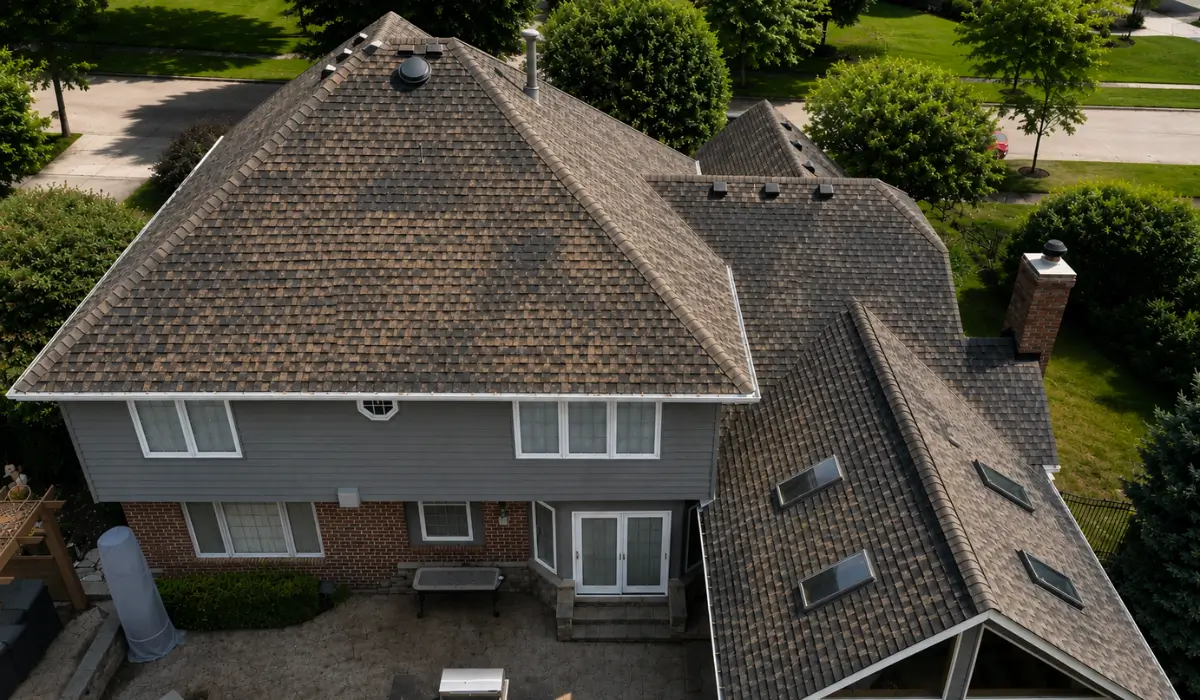
Residential Roof Exposed to Prolonged Illinois Summer Sunlight
Why Summer Roof Damage Is a Real Threat in Illinois
Summer roof damage is not just a concern in desert climates. Many cases of summer roof damage IL homeowners experience begin with months of heat exposure that slowly weaken roofing materials before visible problems appear.
UV Exposure Breaks Down Shingles Over Time
Many homeowners focus on rain and wind damage while overlooking the effects of ultraviolet radiation. UV rays gradually break down the protective compounds in roofing materials, and asphalt shingles are especially vulnerable because constant sun exposure dries out the oils that help shingles remain flexible.
Over time, this process can lead to:
Granule loss
Surface deterioration
Reduced weather resistance
Shorter roof lifespan
We've inspected roofs throughout our local service areas where UV deterioration was visible years before leaks developed. Small changes in shingle condition often appear long before homeowners notice water intrusion inside the home.
Heat Expands Materials, Leading to Cracks, Warping, and Leaks
Picture a roof baking in direct sunlight during a July afternoon. Surface temperatures can become significantly hotter than the surrounding air, creating stress throughout the roofing system.
As roofing materials heat up, they expand. When temperatures drop overnight, those same materials contract. This daily cycle places stress on shingles, flashing, fasteners, and roof decking connections.
Repeated expansion and contraction can eventually create cracks, separation points, warped materials, and areas where water can enter the roofing system. Damage often develops gradually, making routine inspections especially important during Illinois summers.
Illinois Summers Bring Both High Temperatures and Storm Bursts
While sunlight causes gradual deterioration, summer storms can exploit existing weaknesses. A roof already weakened by UV exposure may be less capable of handling high winds, heavy rainfall, hail impacts, and sudden temperature swings.
Homeowners preparing for summer weather often benefit from reviewing our seasonal roof maintenance checklist, which highlights common issues before peak heat arrives. Preventive maintenance remains one of the most effective ways to avoid larger repairs later in the season.
Our team regularly evaluates roofs across DuPage, Kane, Cook, and surrounding counties. As CertainTeed Shingle Quality Specialists and licensed Illinois Public Adjusters, we often see heat-related deterioration appear years before homeowners expect major roofing issues. Homeowners interested in our experience and local background can review our company background.
What makes Illinois different is the combination of prolonged summer heat, humidity, sudden temperature swings, and severe storm activity. In our experience, that combination creates a faster cycle of expansion, contraction, and weather exposure than many homeowners realize.
Look for these warning signs before summer reaches its hottest months:
Missing or loose shingles
Discoloration on roof surfaces
Excessive attic heat
Cracked flashing
Granules collecting in gutters
Catching these issues early often prevents more expensive repairs later.
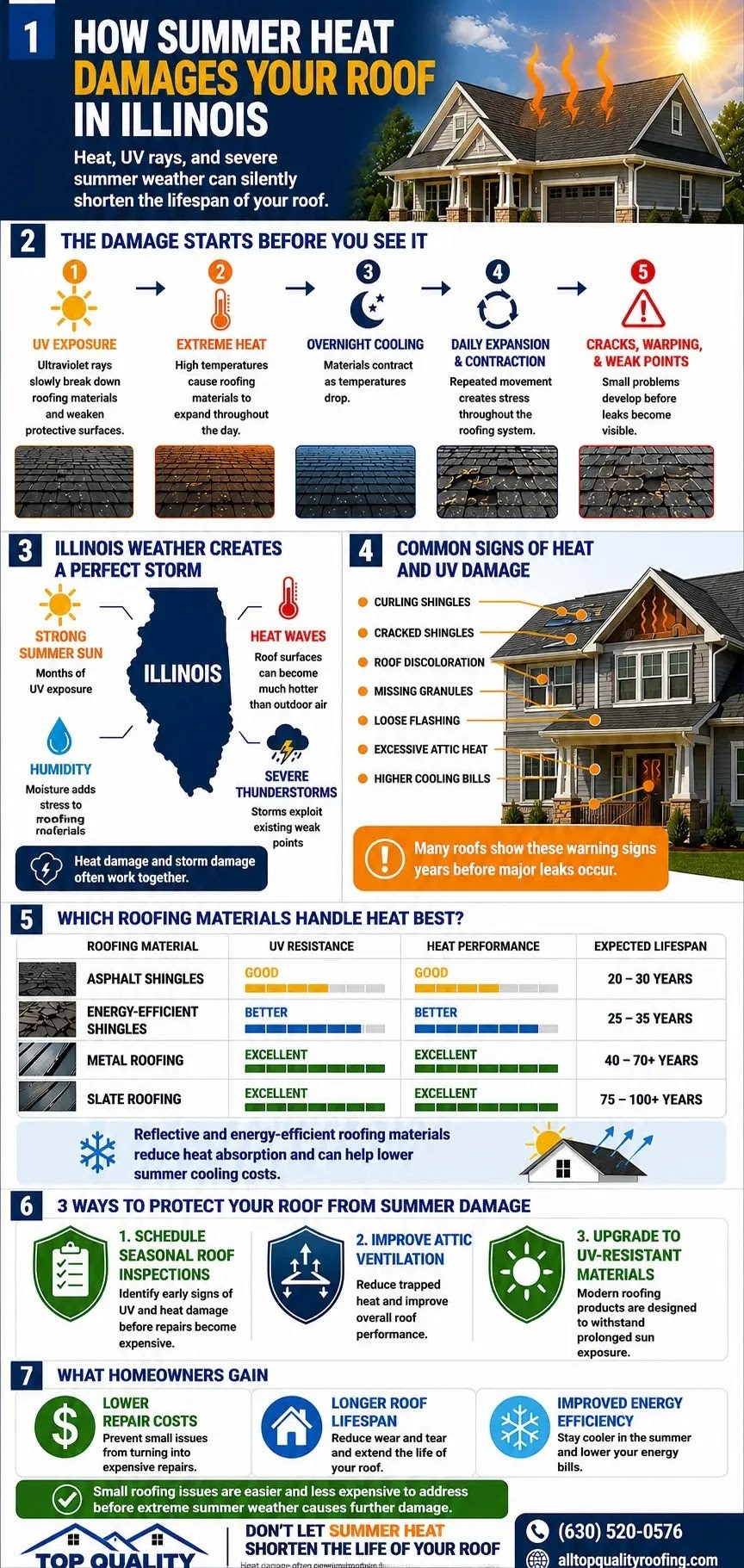
Heat & UV can damage your roof even when everything appears normal from the ground. The effects often build gradually through daily sun exposure, temperature swings, and seasonal weather conditions, which is why understanding the warning signs early can help prevent more costly repairs later.
Signs of UV Damage to Watch For
One of the biggest challenges with UV damage is that it often develops silently. Many roofs continue functioning while deterioration slowly progresses beneath the surface.
Shingle Curling or Cracking
Curling edges are often among the first visible indicators of prolonged sun exposure. As shingles lose flexibility, they may begin lifting at the edges or develop small cracks across their surface.
These openings make it easier for moisture to penetrate the roofing system during storms. Left unaddressed, small cracks can expand and expose larger sections of the roof to weather-related damage.
Roof Discoloration or Patchy Fade
A roof that appears uneven in color may be showing signs of UV-related wear. Roof discoloration often occurs when different sections receive varying levels of sunlight throughout the day.
Fading can indicate that protective layers are beginning to deteriorate. While discoloration does not always mean replacement is necessary, it should prompt a closer inspection to determine whether deeper damage is developing.
Higher Attic Temperatures and Cooling Costs
Many homeowners first notice a problem through their utility bills. A roof that absorbs excessive heat can transfer that heat into the attic, forcing HVAC systems to work harder throughout the summer.
The U.S. Department of Energy's cool roof guidance explains how reflective roofing materials can help reduce heat absorption and improve overall energy performance. Lower attic temperatures can contribute to greater comfort and reduced cooling costs.
Many homeowners reach this point and realize the problem isn't just aging shingles. Heat often affects the entire roofing system, including ventilation, attic performance, and energy efficiency.
Trying to determine whether the issue is cosmetic or structural can be difficult from the ground. Our Illinois roofing solutions outline the evaluation process we use to identify the root cause and recommend the most appropriate solution.
This is where many DIY inspections reach their limit. A roof may look fine from the yard while hidden heat damage continues developing beneath the surface, making a professional assessment valuable for long-term planning.
Best Roofing Materials for Heat & UV Protection
Not all roofing materials respond to heat and UV exposure the same way. Some are better equipped to withstand decades of sunlight while maintaining performance and appearance.
Asphalt vs Slate in UV Endurance
Homeowners frequently ask about asphalt vs slate when evaluating long-term durability. Both materials have strengths, but their performance under prolonged UV exposure differs significantly.
Feature | Asphalt Shingles | Slate Roofing |
UV Resistance | Good | Excellent |
Lifespan | 20–30 years | 75–100+ years |
Maintenance | Moderate | Low |
Weight | Lightweight | Heavy |
Initial Investment | Lower | Higher |
Heat Tolerance | Good | Excellent |
Asphalt remains one of the most popular choices because of affordability and dependable performance. Slate offers exceptional durability and longevity, although the structure must be capable of supporting the additional weight.
Homeowners evaluating replacement options often compare long-term value rather than upfront cost alone. Our roof replacement services can help determine which material best matches your home's needs and budget.
Metal Roofs With Reflective Coatings
While asphalt and slate receive most of the attention, metal roofing has become increasingly popular for heat management. Reflective coatings help redirect solar radiation away from the roof surface, reducing heat absorption during the hottest months of the year.
Potential benefits include:
Lower roof temperatures
Reduced attic heat buildup
Improved energy efficiency
Long-term durability
The Environmental Protection Agency's cool roof resources provide additional information on reflective roofing systems and heat reduction strategies. Many homeowners consider metal roofing when energy performance is a high priority.
Energy-Efficient Shingles IL Homeowners Should Consider
Outcome matters more than marketing labels. Modern energy-efficient shingles IL homeowners install today often incorporate reflective granules designed to reduce solar heat absorption without sacrificing appearance.
CertainTeed products, which our team regularly install, include options engineered for improved thermal performance while maintaining strong curb appeal. The right product can help balance durability, appearance, and energy efficiency.
Homeowners researching material upgrades may also find value in our guide on asphalt roof replacement planning, which covers timing and replacement considerations specific to Illinois properties.
How to Prevent or Fix Heat-Related Roof Damage
The most effective way to manage heat damage is addressing vulnerabilities before they become structural problems. Early action typically costs less and helps extend the life of the roofing system.
Schedule Seasonal Inspections Before Peak Heat
Many costly repairs begin as small issues that go unnoticed. Routine inspections help identify early UV deterioration, cracked shingles, ventilation deficiencies, flashing damage, and storm-related wear before they worsen.
A professional inspection often reveals problems homeowners cannot safely see from the ground. Identifying those issues early provides more repair options and reduces the likelihood of emergency repairs later.
Upgrade to UV-Protection Roofing Materials
Comparing upfront cost alone rarely tells the full story. A lower-priced roofing system may save money initially, but premium materials often deliver better durability and energy performance over time.
Homeowners considering upgrades often review available roof financing options to better understand what fits their budget and long-term goals. A roofing investment should be evaluated based on performance, longevity, and future maintenance needs.
Add Ventilation and Reflective Underlayment
A roof's performance depends on more than shingles. Proper ventilation allows excess heat to escape rather than accumulating in the attic, while reflective underlayment can further reduce heat transfer into living spaces.
Many homes that experience excessive attic temperatures benefit from improvements in both areas. Better airflow can improve comfort, reduce cooling demands, and help roofing materials perform as intended.
Heat doesn't affect roofing alone. Prolonged sun exposure can also contribute to exterior wear, which is why many homeowners evaluate both roofing and siding replacement services when planning long-term home protection.
Storm preparation often goes hand in hand with heat protection. Our article covering Illinois storm protection methods explains how storm resilience and heat resistance work together to protect your home.
Don't let Illinois summer sun silently destroy your roof. Book a heat-readiness check or explore UV-resistant roofing upgrades today.
🔗 Schedule Summer Roof Inspection | Explore Energy-Efficient Shingles IL
Heat & UV can damage your roof long before you notice a leak. In Illinois, months of intense sunlight, high temperatures, and sudden summer storms can slowly weaken roofing materials, reduce energy efficiency, and shorten your roof's lifespan.
We've seen homeowners spend thousands on avoidable repairs because early signs of heat damage went unnoticed. Most heat-related roofing problems can be identified and addressed before they become major issues. Top Quality Roofing has helped more than 900 Illinois homeowners understand what is happening above their heads and what steps make the most sense moving forward.
Not sure whether your roof is showing signs of heat damage? Start with the warning signs below. A quick review can help you spot problems before they turn into expensive repairs.
Residential Roof Exposed to Prolonged Illinois Summer Sunlight
Why Summer Roof Damage Is a Real Threat in Illinois
Summer roof damage is not just a concern in desert climates. Many cases of summer roof damage IL homeowners experience begin with months of heat exposure that slowly weaken roofing materials before visible problems appear.
UV Exposure Breaks Down Shingles Over Time
Many homeowners focus on rain and wind damage while overlooking the effects of ultraviolet radiation. UV rays gradually break down the protective compounds in roofing materials, and asphalt shingles are especially vulnerable because constant sun exposure dries out the oils that help shingles remain flexible.
Over time, this process can lead to:
Granule loss
Surface deterioration
Reduced weather resistance
Shorter roof lifespan
We've inspected roofs throughout our local service areas where UV deterioration was visible years before leaks developed. Small changes in shingle condition often appear long before homeowners notice water intrusion inside the home.
Heat Expands Materials, Leading to Cracks, Warping, and Leaks
Picture a roof baking in direct sunlight during a July afternoon. Surface temperatures can become significantly hotter than the surrounding air, creating stress throughout the roofing system.
As roofing materials heat up, they expand. When temperatures drop overnight, those same materials contract. This daily cycle places stress on shingles, flashing, fasteners, and roof decking connections.
Repeated expansion and contraction can eventually create cracks, separation points, warped materials, and areas where water can enter the roofing system. Damage often develops gradually, making routine inspections especially important during Illinois summers.
Illinois Summers Bring Both High Temperatures and Storm Bursts
While sunlight causes gradual deterioration, summer storms can exploit existing weaknesses. A roof already weakened by UV exposure may be less capable of handling high winds, heavy rainfall, hail impacts, and sudden temperature swings.
Homeowners preparing for summer weather often benefit from reviewing our seasonal roof maintenance checklist, which highlights common issues before peak heat arrives. Preventive maintenance remains one of the most effective ways to avoid larger repairs later in the season.
Our team regularly evaluates roofs across DuPage, Kane, Cook, and surrounding counties. As CertainTeed Shingle Quality Specialists and licensed Illinois Public Adjusters, we often see heat-related deterioration appear years before homeowners expect major roofing issues. Homeowners interested in our experience and local background can review our company background.
What makes Illinois different is the combination of prolonged summer heat, humidity, sudden temperature swings, and severe storm activity. In our experience, that combination creates a faster cycle of expansion, contraction, and weather exposure than many homeowners realize.
Look for these warning signs before summer reaches its hottest months:
Missing or loose shingles
Discoloration on roof surfaces
Excessive attic heat
Cracked flashing
Granules collecting in gutters
Catching these issues early often prevents more expensive repairs later.
Heat & UV can damage your roof even when everything appears normal from the ground. The effects often build gradually through daily sun exposure, temperature swings, and seasonal weather conditions, which is why understanding the warning signs early can help prevent more costly repairs later.
Signs of UV Damage to Watch For
One of the biggest challenges with UV damage is that it often develops silently. Many roofs continue functioning while deterioration slowly progresses beneath the surface.
Shingle Curling or Cracking
Curling edges are often among the first visible indicators of prolonged sun exposure. As shingles lose flexibility, they may begin lifting at the edges or develop small cracks across their surface.
These openings make it easier for moisture to penetrate the roofing system during storms. Left unaddressed, small cracks can expand and expose larger sections of the roof to weather-related damage.
Roof Discoloration or Patchy Fade
A roof that appears uneven in color may be showing signs of UV-related wear. Roof discoloration often occurs when different sections receive varying levels of sunlight throughout the day.
Fading can indicate that protective layers are beginning to deteriorate. While discoloration does not always mean replacement is necessary, it should prompt a closer inspection to determine whether deeper damage is developing.
Higher Attic Temperatures and Cooling Costs
Many homeowners first notice a problem through their utility bills. A roof that absorbs excessive heat can transfer that heat into the attic, forcing HVAC systems to work harder throughout the summer.
The U.S. Department of Energy's cool roof guidance explains how reflective roofing materials can help reduce heat absorption and improve overall energy performance. Lower attic temperatures can contribute to greater comfort and reduced cooling costs.
Many homeowners reach this point and realize the problem isn't just aging shingles. Heat often affects the entire roofing system, including ventilation, attic performance, and energy efficiency.
Trying to determine whether the issue is cosmetic or structural can be difficult from the ground. Our Illinois roofing solutions outline the evaluation process we use to identify the root cause and recommend the most appropriate solution.
This is where many DIY inspections reach their limit. A roof may look fine from the yard while hidden heat damage continues developing beneath the surface, making a professional assessment valuable for long-term planning.
Best Roofing Materials for Heat & UV Protection
Not all roofing materials respond to heat and UV exposure the same way. Some are better equipped to withstand decades of sunlight while maintaining performance and appearance.
Asphalt vs Slate in UV Endurance
Homeowners frequently ask about asphalt vs slate when evaluating long-term durability. Both materials have strengths, but their performance under prolonged UV exposure differs significantly.
Feature | Asphalt Shingles | Slate Roofing |
UV Resistance | Good | Excellent |
Lifespan | 20–30 years | 75–100+ years |
Maintenance | Moderate | Low |
Weight | Lightweight | Heavy |
Initial Investment | Lower | Higher |
Heat Tolerance | Good | Excellent |
Asphalt remains one of the most popular choices because of affordability and dependable performance. Slate offers exceptional durability and longevity, although the structure must be capable of supporting the additional weight.
Homeowners evaluating replacement options often compare long-term value rather than upfront cost alone. Our roof replacement services can help determine which material best matches your home's needs and budget.
Metal Roofs With Reflective Coatings
While asphalt and slate receive most of the attention, metal roofing has become increasingly popular for heat management. Reflective coatings help redirect solar radiation away from the roof surface, reducing heat absorption during the hottest months of the year.
Potential benefits include:
Lower roof temperatures
Reduced attic heat buildup
Improved energy efficiency
Long-term durability
The Environmental Protection Agency's cool roof resources provide additional information on reflective roofing systems and heat reduction strategies. Many homeowners consider metal roofing when energy performance is a high priority.
Energy-Efficient Shingles IL Homeowners Should Consider
Outcome matters more than marketing labels. Modern energy-efficient shingles IL homeowners install today often incorporate reflective granules designed to reduce solar heat absorption without sacrificing appearance.
CertainTeed products, which our team regularly install, include options engineered for improved thermal performance while maintaining strong curb appeal. The right product can help balance durability, appearance, and energy efficiency.
Homeowners researching material upgrades may also find value in our guide on asphalt roof replacement planning, which covers timing and replacement considerations specific to Illinois properties.
How to Prevent or Fix Heat-Related Roof Damage
The most effective way to manage heat damage is addressing vulnerabilities before they become structural problems. Early action typically costs less and helps extend the life of the roofing system.
Schedule Seasonal Inspections Before Peak Heat
Many costly repairs begin as small issues that go unnoticed. Routine inspections help identify early UV deterioration, cracked shingles, ventilation deficiencies, flashing damage, and storm-related wear before they worsen.
A professional inspection often reveals problems homeowners cannot safely see from the ground. Identifying those issues early provides more repair options and reduces the likelihood of emergency repairs later.
Upgrade to UV-Protection Roofing Materials
Comparing upfront cost alone rarely tells the full story. A lower-priced roofing system may save money initially, but premium materials often deliver better durability and energy performance over time.
Homeowners considering upgrades often review available roof financing options to better understand what fits their budget and long-term goals. A roofing investment should be evaluated based on performance, longevity, and future maintenance needs.
Add Ventilation and Reflective Underlayment
A roof's performance depends on more than shingles. Proper ventilation allows excess heat to escape rather than accumulating in the attic, while reflective underlayment can further reduce heat transfer into living spaces.
Many homes that experience excessive attic temperatures benefit from improvements in both areas. Better airflow can improve comfort, reduce cooling demands, and help roofing materials perform as intended.
Heat doesn't affect roofing alone. Prolonged sun exposure can also contribute to exterior wear, which is why many homeowners evaluate both roofing and siding replacement services when planning long-term home protection.
Storm preparation often goes hand in hand with heat protection. Our article covering Illinois storm protection methods explains how storm resilience and heat resistance work together to protect your home.
Don't let Illinois summer sun silently destroy your roof. Book a heat-readiness check or explore UV-resistant roofing upgrades today.
🔗 Schedule Summer Roof Inspection | Explore Energy-Efficient Shingles IL
Heat & UV can damage your roof long before you notice a leak. In Illinois, months of intense sunlight, high temperatures, and sudden summer storms can slowly weaken roofing materials, reduce energy efficiency, and shorten your roof's lifespan.
We've seen homeowners spend thousands on avoidable repairs because early signs of heat damage went unnoticed. Most heat-related roofing problems can be identified and addressed before they become major issues. Top Quality Roofing has helped more than 900 Illinois homeowners understand what is happening above their heads and what steps make the most sense moving forward.
Not sure whether your roof is showing signs of heat damage? Start with the warning signs below. A quick review can help you spot problems before they turn into expensive repairs.
Residential Roof Exposed to Prolonged Illinois Summer Sunlight
Why Summer Roof Damage Is a Real Threat in Illinois
Summer roof damage is not just a concern in desert climates. Many cases of summer roof damage IL homeowners experience begin with months of heat exposure that slowly weaken roofing materials before visible problems appear.
UV Exposure Breaks Down Shingles Over Time
Many homeowners focus on rain and wind damage while overlooking the effects of ultraviolet radiation. UV rays gradually break down the protective compounds in roofing materials, and asphalt shingles are especially vulnerable because constant sun exposure dries out the oils that help shingles remain flexible.
Over time, this process can lead to:
Granule loss
Surface deterioration
Reduced weather resistance
Shorter roof lifespan
We've inspected roofs throughout our local service areas where UV deterioration was visible years before leaks developed. Small changes in shingle condition often appear long before homeowners notice water intrusion inside the home.
Heat Expands Materials, Leading to Cracks, Warping, and Leaks
Picture a roof baking in direct sunlight during a July afternoon. Surface temperatures can become significantly hotter than the surrounding air, creating stress throughout the roofing system.
As roofing materials heat up, they expand. When temperatures drop overnight, those same materials contract. This daily cycle places stress on shingles, flashing, fasteners, and roof decking connections.
Repeated expansion and contraction can eventually create cracks, separation points, warped materials, and areas where water can enter the roofing system. Damage often develops gradually, making routine inspections especially important during Illinois summers.
Illinois Summers Bring Both High Temperatures and Storm Bursts
While sunlight causes gradual deterioration, summer storms can exploit existing weaknesses. A roof already weakened by UV exposure may be less capable of handling high winds, heavy rainfall, hail impacts, and sudden temperature swings.
Homeowners preparing for summer weather often benefit from reviewing our seasonal roof maintenance checklist, which highlights common issues before peak heat arrives. Preventive maintenance remains one of the most effective ways to avoid larger repairs later in the season.
Our team regularly evaluates roofs across DuPage, Kane, Cook, and surrounding counties. As CertainTeed Shingle Quality Specialists and licensed Illinois Public Adjusters, we often see heat-related deterioration appear years before homeowners expect major roofing issues. Homeowners interested in our experience and local background can review our company background.
What makes Illinois different is the combination of prolonged summer heat, humidity, sudden temperature swings, and severe storm activity. In our experience, that combination creates a faster cycle of expansion, contraction, and weather exposure than many homeowners realize.
Look for these warning signs before summer reaches its hottest months:
Missing or loose shingles
Discoloration on roof surfaces
Excessive attic heat
Cracked flashing
Granules collecting in gutters
Catching these issues early often prevents more expensive repairs later.
Heat & UV can damage your roof even when everything appears normal from the ground. The effects often build gradually through daily sun exposure, temperature swings, and seasonal weather conditions, which is why understanding the warning signs early can help prevent more costly repairs later.
Signs of UV Damage to Watch For
One of the biggest challenges with UV damage is that it often develops silently. Many roofs continue functioning while deterioration slowly progresses beneath the surface.
Shingle Curling or Cracking
Curling edges are often among the first visible indicators of prolonged sun exposure. As shingles lose flexibility, they may begin lifting at the edges or develop small cracks across their surface.
These openings make it easier for moisture to penetrate the roofing system during storms. Left unaddressed, small cracks can expand and expose larger sections of the roof to weather-related damage.
Roof Discoloration or Patchy Fade
A roof that appears uneven in color may be showing signs of UV-related wear. Roof discoloration often occurs when different sections receive varying levels of sunlight throughout the day.
Fading can indicate that protective layers are beginning to deteriorate. While discoloration does not always mean replacement is necessary, it should prompt a closer inspection to determine whether deeper damage is developing.
Higher Attic Temperatures and Cooling Costs
Many homeowners first notice a problem through their utility bills. A roof that absorbs excessive heat can transfer that heat into the attic, forcing HVAC systems to work harder throughout the summer.
The U.S. Department of Energy's cool roof guidance explains how reflective roofing materials can help reduce heat absorption and improve overall energy performance. Lower attic temperatures can contribute to greater comfort and reduced cooling costs.
Many homeowners reach this point and realize the problem isn't just aging shingles. Heat often affects the entire roofing system, including ventilation, attic performance, and energy efficiency.
Trying to determine whether the issue is cosmetic or structural can be difficult from the ground. Our Illinois roofing solutions outline the evaluation process we use to identify the root cause and recommend the most appropriate solution.
This is where many DIY inspections reach their limit. A roof may look fine from the yard while hidden heat damage continues developing beneath the surface, making a professional assessment valuable for long-term planning.
Best Roofing Materials for Heat & UV Protection
Not all roofing materials respond to heat and UV exposure the same way. Some are better equipped to withstand decades of sunlight while maintaining performance and appearance.
Asphalt vs Slate in UV Endurance
Homeowners frequently ask about asphalt vs slate when evaluating long-term durability. Both materials have strengths, but their performance under prolonged UV exposure differs significantly.
Feature | Asphalt Shingles | Slate Roofing |
UV Resistance | Good | Excellent |
Lifespan | 20–30 years | 75–100+ years |
Maintenance | Moderate | Low |
Weight | Lightweight | Heavy |
Initial Investment | Lower | Higher |
Heat Tolerance | Good | Excellent |
Asphalt remains one of the most popular choices because of affordability and dependable performance. Slate offers exceptional durability and longevity, although the structure must be capable of supporting the additional weight.
Homeowners evaluating replacement options often compare long-term value rather than upfront cost alone. Our roof replacement services can help determine which material best matches your home's needs and budget.
Metal Roofs With Reflective Coatings
While asphalt and slate receive most of the attention, metal roofing has become increasingly popular for heat management. Reflective coatings help redirect solar radiation away from the roof surface, reducing heat absorption during the hottest months of the year.
Potential benefits include:
Lower roof temperatures
Reduced attic heat buildup
Improved energy efficiency
Long-term durability
The Environmental Protection Agency's cool roof resources provide additional information on reflective roofing systems and heat reduction strategies. Many homeowners consider metal roofing when energy performance is a high priority.
Energy-Efficient Shingles IL Homeowners Should Consider
Outcome matters more than marketing labels. Modern energy-efficient shingles IL homeowners install today often incorporate reflective granules designed to reduce solar heat absorption without sacrificing appearance.
CertainTeed products, which our team regularly install, include options engineered for improved thermal performance while maintaining strong curb appeal. The right product can help balance durability, appearance, and energy efficiency.
Homeowners researching material upgrades may also find value in our guide on asphalt roof replacement planning, which covers timing and replacement considerations specific to Illinois properties.
How to Prevent or Fix Heat-Related Roof Damage
The most effective way to manage heat damage is addressing vulnerabilities before they become structural problems. Early action typically costs less and helps extend the life of the roofing system.
Schedule Seasonal Inspections Before Peak Heat
Many costly repairs begin as small issues that go unnoticed. Routine inspections help identify early UV deterioration, cracked shingles, ventilation deficiencies, flashing damage, and storm-related wear before they worsen.
A professional inspection often reveals problems homeowners cannot safely see from the ground. Identifying those issues early provides more repair options and reduces the likelihood of emergency repairs later.
Upgrade to UV-Protection Roofing Materials
Comparing upfront cost alone rarely tells the full story. A lower-priced roofing system may save money initially, but premium materials often deliver better durability and energy performance over time.
Homeowners considering upgrades often review available roof financing options to better understand what fits their budget and long-term goals. A roofing investment should be evaluated based on performance, longevity, and future maintenance needs.
Add Ventilation and Reflective Underlayment
A roof's performance depends on more than shingles. Proper ventilation allows excess heat to escape rather than accumulating in the attic, while reflective underlayment can further reduce heat transfer into living spaces.
Many homes that experience excessive attic temperatures benefit from improvements in both areas. Better airflow can improve comfort, reduce cooling demands, and help roofing materials perform as intended.
Heat doesn't affect roofing alone. Prolonged sun exposure can also contribute to exterior wear, which is why many homeowners evaluate both roofing and siding replacement services when planning long-term home protection.
Storm preparation often goes hand in hand with heat protection. Our article covering Illinois storm protection methods explains how storm resilience and heat resistance work together to protect your home.
Don't let Illinois summer sun silently destroy your roof. Book a heat-readiness check or explore UV-resistant roofing upgrades today.
🔗 Schedule Summer Roof Inspection | Explore Energy-Efficient Shingles IL
Heat & UV can damage your roof long before you notice a leak. In Illinois, months of intense sunlight, high temperatures, and sudden summer storms can slowly weaken roofing materials, reduce energy efficiency, and shorten your roof's lifespan.
We've seen homeowners spend thousands on avoidable repairs because early signs of heat damage went unnoticed. Most heat-related roofing problems can be identified and addressed before they become major issues. Top Quality Roofing has helped more than 900 Illinois homeowners understand what is happening above their heads and what steps make the most sense moving forward.
Not sure whether your roof is showing signs of heat damage? Start with the warning signs below. A quick review can help you spot problems before they turn into expensive repairs.
Residential Roof Exposed to Prolonged Illinois Summer Sunlight
Why Summer Roof Damage Is a Real Threat in Illinois
Summer roof damage is not just a concern in desert climates. Many cases of summer roof damage IL homeowners experience begin with months of heat exposure that slowly weaken roofing materials before visible problems appear.
UV Exposure Breaks Down Shingles Over Time
Many homeowners focus on rain and wind damage while overlooking the effects of ultraviolet radiation. UV rays gradually break down the protective compounds in roofing materials, and asphalt shingles are especially vulnerable because constant sun exposure dries out the oils that help shingles remain flexible.
Over time, this process can lead to:
Granule loss
Surface deterioration
Reduced weather resistance
Shorter roof lifespan
We've inspected roofs throughout our local service areas where UV deterioration was visible years before leaks developed. Small changes in shingle condition often appear long before homeowners notice water intrusion inside the home.
Heat Expands Materials, Leading to Cracks, Warping, and Leaks
Picture a roof baking in direct sunlight during a July afternoon. Surface temperatures can become significantly hotter than the surrounding air, creating stress throughout the roofing system.
As roofing materials heat up, they expand. When temperatures drop overnight, those same materials contract. This daily cycle places stress on shingles, flashing, fasteners, and roof decking connections.
Repeated expansion and contraction can eventually create cracks, separation points, warped materials, and areas where water can enter the roofing system. Damage often develops gradually, making routine inspections especially important during Illinois summers.
Illinois Summers Bring Both High Temperatures and Storm Bursts
While sunlight causes gradual deterioration, summer storms can exploit existing weaknesses. A roof already weakened by UV exposure may be less capable of handling high winds, heavy rainfall, hail impacts, and sudden temperature swings.
Homeowners preparing for summer weather often benefit from reviewing our seasonal roof maintenance checklist, which highlights common issues before peak heat arrives. Preventive maintenance remains one of the most effective ways to avoid larger repairs later in the season.
Our team regularly evaluates roofs across DuPage, Kane, Cook, and surrounding counties. As CertainTeed Shingle Quality Specialists and licensed Illinois Public Adjusters, we often see heat-related deterioration appear years before homeowners expect major roofing issues. Homeowners interested in our experience and local background can review our company background.
What makes Illinois different is the combination of prolonged summer heat, humidity, sudden temperature swings, and severe storm activity. In our experience, that combination creates a faster cycle of expansion, contraction, and weather exposure than many homeowners realize.
Look for these warning signs before summer reaches its hottest months:
Missing or loose shingles
Discoloration on roof surfaces
Excessive attic heat
Cracked flashing
Granules collecting in gutters
Catching these issues early often prevents more expensive repairs later.
Heat & UV can damage your roof even when everything appears normal from the ground. The effects often build gradually through daily sun exposure, temperature swings, and seasonal weather conditions, which is why understanding the warning signs early can help prevent more costly repairs later.
Signs of UV Damage to Watch For
One of the biggest challenges with UV damage is that it often develops silently. Many roofs continue functioning while deterioration slowly progresses beneath the surface.
Shingle Curling or Cracking
Curling edges are often among the first visible indicators of prolonged sun exposure. As shingles lose flexibility, they may begin lifting at the edges or develop small cracks across their surface.
These openings make it easier for moisture to penetrate the roofing system during storms. Left unaddressed, small cracks can expand and expose larger sections of the roof to weather-related damage.
Roof Discoloration or Patchy Fade
A roof that appears uneven in color may be showing signs of UV-related wear. Roof discoloration often occurs when different sections receive varying levels of sunlight throughout the day.
Fading can indicate that protective layers are beginning to deteriorate. While discoloration does not always mean replacement is necessary, it should prompt a closer inspection to determine whether deeper damage is developing.
Higher Attic Temperatures and Cooling Costs
Many homeowners first notice a problem through their utility bills. A roof that absorbs excessive heat can transfer that heat into the attic, forcing HVAC systems to work harder throughout the summer.
The U.S. Department of Energy's cool roof guidance explains how reflective roofing materials can help reduce heat absorption and improve overall energy performance. Lower attic temperatures can contribute to greater comfort and reduced cooling costs.
Many homeowners reach this point and realize the problem isn't just aging shingles. Heat often affects the entire roofing system, including ventilation, attic performance, and energy efficiency.
Trying to determine whether the issue is cosmetic or structural can be difficult from the ground. Our Illinois roofing solutions outline the evaluation process we use to identify the root cause and recommend the most appropriate solution.
This is where many DIY inspections reach their limit. A roof may look fine from the yard while hidden heat damage continues developing beneath the surface, making a professional assessment valuable for long-term planning.
Best Roofing Materials for Heat & UV Protection
Not all roofing materials respond to heat and UV exposure the same way. Some are better equipped to withstand decades of sunlight while maintaining performance and appearance.
Asphalt vs Slate in UV Endurance
Homeowners frequently ask about asphalt vs slate when evaluating long-term durability. Both materials have strengths, but their performance under prolonged UV exposure differs significantly.
Feature | Asphalt Shingles | Slate Roofing |
UV Resistance | Good | Excellent |
Lifespan | 20–30 years | 75–100+ years |
Maintenance | Moderate | Low |
Weight | Lightweight | Heavy |
Initial Investment | Lower | Higher |
Heat Tolerance | Good | Excellent |
Asphalt remains one of the most popular choices because of affordability and dependable performance. Slate offers exceptional durability and longevity, although the structure must be capable of supporting the additional weight.
Homeowners evaluating replacement options often compare long-term value rather than upfront cost alone. Our roof replacement services can help determine which material best matches your home's needs and budget.
Metal Roofs With Reflective Coatings
While asphalt and slate receive most of the attention, metal roofing has become increasingly popular for heat management. Reflective coatings help redirect solar radiation away from the roof surface, reducing heat absorption during the hottest months of the year.
Potential benefits include:
Lower roof temperatures
Reduced attic heat buildup
Improved energy efficiency
Long-term durability
The Environmental Protection Agency's cool roof resources provide additional information on reflective roofing systems and heat reduction strategies. Many homeowners consider metal roofing when energy performance is a high priority.
Energy-Efficient Shingles IL Homeowners Should Consider
Outcome matters more than marketing labels. Modern energy-efficient shingles IL homeowners install today often incorporate reflective granules designed to reduce solar heat absorption without sacrificing appearance.
CertainTeed products, which our team regularly install, include options engineered for improved thermal performance while maintaining strong curb appeal. The right product can help balance durability, appearance, and energy efficiency.
Homeowners researching material upgrades may also find value in our guide on asphalt roof replacement planning, which covers timing and replacement considerations specific to Illinois properties.
How to Prevent or Fix Heat-Related Roof Damage
The most effective way to manage heat damage is addressing vulnerabilities before they become structural problems. Early action typically costs less and helps extend the life of the roofing system.
Schedule Seasonal Inspections Before Peak Heat
Many costly repairs begin as small issues that go unnoticed. Routine inspections help identify early UV deterioration, cracked shingles, ventilation deficiencies, flashing damage, and storm-related wear before they worsen.
A professional inspection often reveals problems homeowners cannot safely see from the ground. Identifying those issues early provides more repair options and reduces the likelihood of emergency repairs later.
Upgrade to UV-Protection Roofing Materials
Comparing upfront cost alone rarely tells the full story. A lower-priced roofing system may save money initially, but premium materials often deliver better durability and energy performance over time.
Homeowners considering upgrades often review available roof financing options to better understand what fits their budget and long-term goals. A roofing investment should be evaluated based on performance, longevity, and future maintenance needs.
Add Ventilation and Reflective Underlayment
A roof's performance depends on more than shingles. Proper ventilation allows excess heat to escape rather than accumulating in the attic, while reflective underlayment can further reduce heat transfer into living spaces.
Many homes that experience excessive attic temperatures benefit from improvements in both areas. Better airflow can improve comfort, reduce cooling demands, and help roofing materials perform as intended.
Heat doesn't affect roofing alone. Prolonged sun exposure can also contribute to exterior wear, which is why many homeowners evaluate both roofing and siding replacement services when planning long-term home protection.
Storm preparation often goes hand in hand with heat protection. Our article covering Illinois storm protection methods explains how storm resilience and heat resistance work together to protect your home.
Don't let Illinois summer sun silently destroy your roof. Book a heat-readiness check or explore UV-resistant roofing upgrades today.
🔗 Schedule Summer Roof Inspection | Explore Energy-Efficient Shingles IL


Pricing & financing



Copyright © 2025 Top Quality Roofing and Siding
Pricing & financing
Copyright © 2025 Top Quality Roofing and Siding
Pricing & financing

Copyright © 2025 Top Quality Roofing and Siding