
Free Estimates on New Roof, Siding, Gutter Replacements


Free Estimates on New Roof, Siding, Gutter Replacements
(630) 520-0576
Mon - Sat: 8am to 8pm

Is Your Roof Warranty Still Protecting Your Illinois Home?







Many Illinois homeowners assume their roof warranty covers any problem that develops after installation. Coverage is usually more specific. The type of warranty, installer, roofing product, and written terms can all affect whether a repair or replacement qualifies.
Top Quality Roofing & Siding encourages homeowners to check these details before a leak, storm, or material problem creates an urgent decision. Understanding how roof warranties work in Illinois can also help you avoid work that could affect existing coverage.
The Difference Between Manufacturer and Workmanship Warranties
Roofing warranties generally protect either the roofing product or the installation. A manufacturer's roofing warranty typically addresses qualifying defects in roofing materials. A workmanship warranty from the roofing contractor addresses covered installation problems based on the contractor's own warranty terms.
That distinction matters when a problem appears. A shingle problem does not automatically mean the installer made a mistake, just as a leak does not automatically prove that the roofing material failed. Identifying the likely cause helps determine which protection may apply.
Why Your Roof Warranty May Depend on the Cause
A qualifying manufacturing defect may fall under product protection, while an installation problem may involve the contractor's workmanship coverage. Storm damage is another category homeowners should keep separate. Hail, wind, and other weather events may involve homeowners insurance rather than a product or workmanship warranty.
Understanding the difference between a warranty and an Illinois roofing insurance claim can help you check the right documents first. Actual insurance coverage depends on the policy and circumstances, while warranty eligibility depends on the applicable warranty terms. For additional state-specific background, homeowners can review this resource about roofing and homeowners insurance in Illinois.
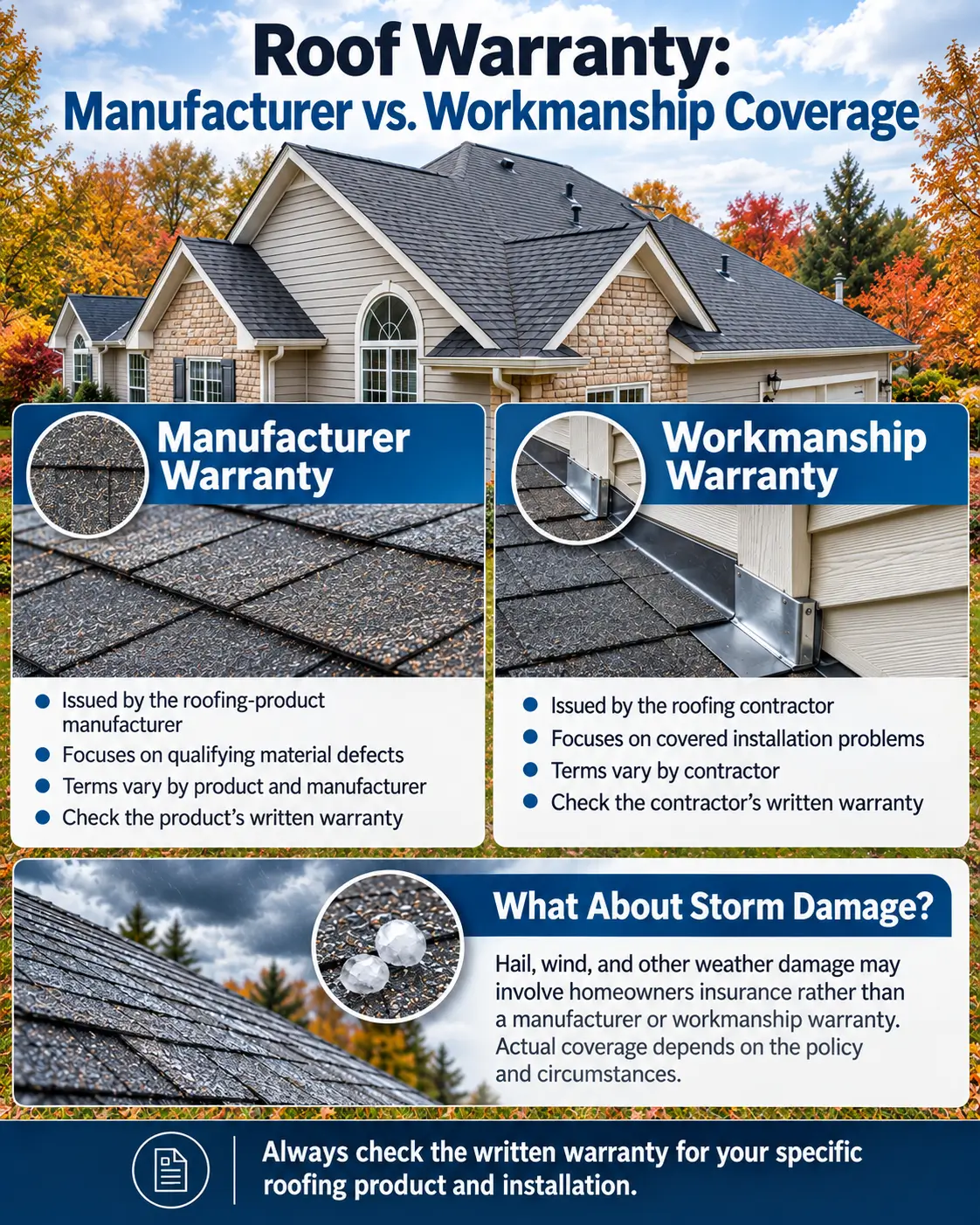
Roof Warranty: Manufacturer vs. Workmanship Coverage
What a Roof Warranty May Cover
Coverage varies by manufacturer and product, so the written warranty should always control the answer. For CertainTeed products, homeowners can use the manufacturer's CertainTeed warranty information to locate applicable warranty documents.
Depending on the terms for the specific product, areas worth checking include:
Manufacturing defects in shingles or other roofing materials
Product-specific wind terms and limitations
Material deterioration that meets stated warranty conditions
Metal roofing finish, paint, or coating protection when included
These examples are not universal warranty terms. Homeowners comparing roofing systems can review our Illinois roofing options, but the exact documents for the installed product provide the reliable answer about coverage.
What Can Affect Your Coverage?
A roof warranty can remain active even when a particular problem falls outside its terms. Product requirements differ, making the warranty documents important before repairs, modifications, or other work begins.
Depending on the roofing product and its warranty, conditions worth checking can include:
Ventilation: Some roofing systems have installation or ventilation requirements that may affect coverage.
Roof modifications: Satellite equipment, added components, or roof penetrations may be subject to specific warranty terms.
Later repairs: Subsequent work may need to meet applicable installation or manufacturer requirements.
Documentation: Contracts, product information, registration records, invoices, photographs, and repair records can help establish what work was completed.
Maintenance also makes it easier to identify changes before they become harder to evaluate. Avoiding common Illinois summer roofing mistakes can help you monitor your roof's condition between professional inspections.
Before modifying or repairing a protected roof, review your roof warranty and the applicable manufacturer requirements. Do not assume that a particular change automatically cancels coverage or that every later repair is permitted. The actual warranty documents should answer those questions.
How Asphalt and Metal Coverage Can Differ
When comparing asphalt and metal roofing warranties, look beyond the number of years advertised. Asphalt and metal roofs should not be compared on warranty length alone because their systems can involve different materials, finishes, components, conditions, and exclusions.
Roofing system | Warranty details worth checking |
Asphalt shingles | Material defects, wind terms, installation requirements, coverage periods, transfer conditions |
Metal roofing | Panels, finishes or coatings, applicable components, coverage periods, transfer conditions |
Transferability deserves particular attention if the home is sold. Some warranties may allow a transfer under stated conditions, while others may limit transfers or require specific steps within a certain period. Never assume that coverage automatically follows the property.
Premium products can come with different warranty options, but a longer advertised term does not by itself establish better protection. Compare what is covered, what is excluded, whether labor and materials are treated differently, whether protection changes over time, and what responsibilities the homeowner must meet.
Questions to Ask Your Roofing Contractor
When comparing local roofing contractors in Warrenville, look beyond the advertised warranty length. Installation qualifications, workmanship protection, product requirements, and responsibility after installation can all affect how useful that protection is.
Before approving roofing work, ask:
What manufacturer warranty comes with this roofing product?
What workmanship coverage is included with the installation?
Does this product require a certified installer for specific warranty protection?
Who is responsible for registration, and is there a deadline?
Are there maintenance, ventilation, or documentation requirements?
Can the warranty be transferred if the home is sold?
What should I do first if I notice a possible roofing problem?
Registration requirements can vary by product and warranty. CertainTeed provides a product registration resource, but homeowners should check the applicable warranty documents to determine what steps apply to their roofing system.
These questions can also help separate a possible warranty concern from weather damage. If severe weather leaves visible changes, checking the common signs of hail damage can help you identify conditions that deserve a closer look.
Review Your Warranty Before You Need It
Check who issued your warranty, what it covers, its exclusions, registration requirements, and the process for reporting a problem. Top Quality Roofing & Siding works with Illinois homeowners on residential roofing services, and reviewing the roof alongside the available documents can provide useful context when a problem appears.
What to Bring for a Roof Warranty Review
If available, bring your original contract, warranty documents, product information, installation date, registration confirmation, photographs, and records of previous repairs. These details can help distinguish a material concern, installation issue, maintenance problem, or possible storm-related condition.
We can evaluate the roof itself, but the written warranty and its issuer ultimately determine whether a specific issue qualifies for coverage. If you have concerns about your roof's condition, request a roofing inspection so our team can evaluate the roof and help identify an appropriate next step.
Many Illinois homeowners assume their roof warranty covers any problem that develops after installation. Coverage is usually more specific. The type of warranty, installer, roofing product, and written terms can all affect whether a repair or replacement qualifies.
Top Quality Roofing & Siding encourages homeowners to check these details before a leak, storm, or material problem creates an urgent decision. Understanding how roof warranties work in Illinois can also help you avoid work that could affect existing coverage.
The Difference Between Manufacturer and Workmanship Warranties
Roofing warranties generally protect either the roofing product or the installation. A manufacturer's roofing warranty typically addresses qualifying defects in roofing materials. A workmanship warranty from the roofing contractor addresses covered installation problems based on the contractor's own warranty terms.
That distinction matters when a problem appears. A shingle problem does not automatically mean the installer made a mistake, just as a leak does not automatically prove that the roofing material failed. Identifying the likely cause helps determine which protection may apply.
Why Your Roof Warranty May Depend on the Cause
A qualifying manufacturing defect may fall under product protection, while an installation problem may involve the contractor's workmanship coverage. Storm damage is another category homeowners should keep separate. Hail, wind, and other weather events may involve homeowners insurance rather than a product or workmanship warranty.
Understanding the difference between a warranty and an Illinois roofing insurance claim can help you check the right documents first. Actual insurance coverage depends on the policy and circumstances, while warranty eligibility depends on the applicable warranty terms. For additional state-specific background, homeowners can review this resource about roofing and homeowners insurance in Illinois.
Roof Warranty: Manufacturer vs. Workmanship Coverage
What a Roof Warranty May Cover
Coverage varies by manufacturer and product, so the written warranty should always control the answer. For CertainTeed products, homeowners can use the manufacturer's CertainTeed warranty information to locate applicable warranty documents.
Depending on the terms for the specific product, areas worth checking include:
Manufacturing defects in shingles or other roofing materials
Product-specific wind terms and limitations
Material deterioration that meets stated warranty conditions
Metal roofing finish, paint, or coating protection when included
These examples are not universal warranty terms. Homeowners comparing roofing systems can review our Illinois roofing options, but the exact documents for the installed product provide the reliable answer about coverage.
What Can Affect Your Coverage?
A roof warranty can remain active even when a particular problem falls outside its terms. Product requirements differ, making the warranty documents important before repairs, modifications, or other work begins.
Depending on the roofing product and its warranty, conditions worth checking can include:
Ventilation: Some roofing systems have installation or ventilation requirements that may affect coverage.
Roof modifications: Satellite equipment, added components, or roof penetrations may be subject to specific warranty terms.
Later repairs: Subsequent work may need to meet applicable installation or manufacturer requirements.
Documentation: Contracts, product information, registration records, invoices, photographs, and repair records can help establish what work was completed.
Maintenance also makes it easier to identify changes before they become harder to evaluate. Avoiding common Illinois summer roofing mistakes can help you monitor your roof's condition between professional inspections.
Before modifying or repairing a protected roof, review your roof warranty and the applicable manufacturer requirements. Do not assume that a particular change automatically cancels coverage or that every later repair is permitted. The actual warranty documents should answer those questions.
How Asphalt and Metal Coverage Can Differ
When comparing asphalt and metal roofing warranties, look beyond the number of years advertised. Asphalt and metal roofs should not be compared on warranty length alone because their systems can involve different materials, finishes, components, conditions, and exclusions.
Roofing system | Warranty details worth checking |
Asphalt shingles | Material defects, wind terms, installation requirements, coverage periods, transfer conditions |
Metal roofing | Panels, finishes or coatings, applicable components, coverage periods, transfer conditions |
Transferability deserves particular attention if the home is sold. Some warranties may allow a transfer under stated conditions, while others may limit transfers or require specific steps within a certain period. Never assume that coverage automatically follows the property.
Premium products can come with different warranty options, but a longer advertised term does not by itself establish better protection. Compare what is covered, what is excluded, whether labor and materials are treated differently, whether protection changes over time, and what responsibilities the homeowner must meet.
Questions to Ask Your Roofing Contractor
When comparing local roofing contractors in Warrenville, look beyond the advertised warranty length. Installation qualifications, workmanship protection, product requirements, and responsibility after installation can all affect how useful that protection is.
Before approving roofing work, ask:
What manufacturer warranty comes with this roofing product?
What workmanship coverage is included with the installation?
Does this product require a certified installer for specific warranty protection?
Who is responsible for registration, and is there a deadline?
Are there maintenance, ventilation, or documentation requirements?
Can the warranty be transferred if the home is sold?
What should I do first if I notice a possible roofing problem?
Registration requirements can vary by product and warranty. CertainTeed provides a product registration resource, but homeowners should check the applicable warranty documents to determine what steps apply to their roofing system.
These questions can also help separate a possible warranty concern from weather damage. If severe weather leaves visible changes, checking the common signs of hail damage can help you identify conditions that deserve a closer look.
Review Your Warranty Before You Need It
Check who issued your warranty, what it covers, its exclusions, registration requirements, and the process for reporting a problem. Top Quality Roofing & Siding works with Illinois homeowners on residential roofing services, and reviewing the roof alongside the available documents can provide useful context when a problem appears.
What to Bring for a Roof Warranty Review
If available, bring your original contract, warranty documents, product information, installation date, registration confirmation, photographs, and records of previous repairs. These details can help distinguish a material concern, installation issue, maintenance problem, or possible storm-related condition.
We can evaluate the roof itself, but the written warranty and its issuer ultimately determine whether a specific issue qualifies for coverage. If you have concerns about your roof's condition, request a roofing inspection so our team can evaluate the roof and help identify an appropriate next step.
Many Illinois homeowners assume their roof warranty covers any problem that develops after installation. Coverage is usually more specific. The type of warranty, installer, roofing product, and written terms can all affect whether a repair or replacement qualifies.
Top Quality Roofing & Siding encourages homeowners to check these details before a leak, storm, or material problem creates an urgent decision. Understanding how roof warranties work in Illinois can also help you avoid work that could affect existing coverage.
The Difference Between Manufacturer and Workmanship Warranties
Roofing warranties generally protect either the roofing product or the installation. A manufacturer's roofing warranty typically addresses qualifying defects in roofing materials. A workmanship warranty from the roofing contractor addresses covered installation problems based on the contractor's own warranty terms.
That distinction matters when a problem appears. A shingle problem does not automatically mean the installer made a mistake, just as a leak does not automatically prove that the roofing material failed. Identifying the likely cause helps determine which protection may apply.
Why Your Roof Warranty May Depend on the Cause
A qualifying manufacturing defect may fall under product protection, while an installation problem may involve the contractor's workmanship coverage. Storm damage is another category homeowners should keep separate. Hail, wind, and other weather events may involve homeowners insurance rather than a product or workmanship warranty.
Understanding the difference between a warranty and an Illinois roofing insurance claim can help you check the right documents first. Actual insurance coverage depends on the policy and circumstances, while warranty eligibility depends on the applicable warranty terms. For additional state-specific background, homeowners can review this resource about roofing and homeowners insurance in Illinois.
Roof Warranty: Manufacturer vs. Workmanship Coverage
What a Roof Warranty May Cover
Coverage varies by manufacturer and product, so the written warranty should always control the answer. For CertainTeed products, homeowners can use the manufacturer's CertainTeed warranty information to locate applicable warranty documents.
Depending on the terms for the specific product, areas worth checking include:
Manufacturing defects in shingles or other roofing materials
Product-specific wind terms and limitations
Material deterioration that meets stated warranty conditions
Metal roofing finish, paint, or coating protection when included
These examples are not universal warranty terms. Homeowners comparing roofing systems can review our Illinois roofing options, but the exact documents for the installed product provide the reliable answer about coverage.
What Can Affect Your Coverage?
A roof warranty can remain active even when a particular problem falls outside its terms. Product requirements differ, making the warranty documents important before repairs, modifications, or other work begins.
Depending on the roofing product and its warranty, conditions worth checking can include:
Ventilation: Some roofing systems have installation or ventilation requirements that may affect coverage.
Roof modifications: Satellite equipment, added components, or roof penetrations may be subject to specific warranty terms.
Later repairs: Subsequent work may need to meet applicable installation or manufacturer requirements.
Documentation: Contracts, product information, registration records, invoices, photographs, and repair records can help establish what work was completed.
Maintenance also makes it easier to identify changes before they become harder to evaluate. Avoiding common Illinois summer roofing mistakes can help you monitor your roof's condition between professional inspections.
Before modifying or repairing a protected roof, review your roof warranty and the applicable manufacturer requirements. Do not assume that a particular change automatically cancels coverage or that every later repair is permitted. The actual warranty documents should answer those questions.
How Asphalt and Metal Coverage Can Differ
When comparing asphalt and metal roofing warranties, look beyond the number of years advertised. Asphalt and metal roofs should not be compared on warranty length alone because their systems can involve different materials, finishes, components, conditions, and exclusions.
Roofing system | Warranty details worth checking |
Asphalt shingles | Material defects, wind terms, installation requirements, coverage periods, transfer conditions |
Metal roofing | Panels, finishes or coatings, applicable components, coverage periods, transfer conditions |
Transferability deserves particular attention if the home is sold. Some warranties may allow a transfer under stated conditions, while others may limit transfers or require specific steps within a certain period. Never assume that coverage automatically follows the property.
Premium products can come with different warranty options, but a longer advertised term does not by itself establish better protection. Compare what is covered, what is excluded, whether labor and materials are treated differently, whether protection changes over time, and what responsibilities the homeowner must meet.
Questions to Ask Your Roofing Contractor
When comparing local roofing contractors in Warrenville, look beyond the advertised warranty length. Installation qualifications, workmanship protection, product requirements, and responsibility after installation can all affect how useful that protection is.
Before approving roofing work, ask:
What manufacturer warranty comes with this roofing product?
What workmanship coverage is included with the installation?
Does this product require a certified installer for specific warranty protection?
Who is responsible for registration, and is there a deadline?
Are there maintenance, ventilation, or documentation requirements?
Can the warranty be transferred if the home is sold?
What should I do first if I notice a possible roofing problem?
Registration requirements can vary by product and warranty. CertainTeed provides a product registration resource, but homeowners should check the applicable warranty documents to determine what steps apply to their roofing system.
These questions can also help separate a possible warranty concern from weather damage. If severe weather leaves visible changes, checking the common signs of hail damage can help you identify conditions that deserve a closer look.
Review Your Warranty Before You Need It
Check who issued your warranty, what it covers, its exclusions, registration requirements, and the process for reporting a problem. Top Quality Roofing & Siding works with Illinois homeowners on residential roofing services, and reviewing the roof alongside the available documents can provide useful context when a problem appears.
What to Bring for a Roof Warranty Review
If available, bring your original contract, warranty documents, product information, installation date, registration confirmation, photographs, and records of previous repairs. These details can help distinguish a material concern, installation issue, maintenance problem, or possible storm-related condition.
We can evaluate the roof itself, but the written warranty and its issuer ultimately determine whether a specific issue qualifies for coverage. If you have concerns about your roof's condition, request a roofing inspection so our team can evaluate the roof and help identify an appropriate next step.
Many Illinois homeowners assume their roof warranty covers any problem that develops after installation. Coverage is usually more specific. The type of warranty, installer, roofing product, and written terms can all affect whether a repair or replacement qualifies.
Top Quality Roofing & Siding encourages homeowners to check these details before a leak, storm, or material problem creates an urgent decision. Understanding how roof warranties work in Illinois can also help you avoid work that could affect existing coverage.
The Difference Between Manufacturer and Workmanship Warranties
Roofing warranties generally protect either the roofing product or the installation. A manufacturer's roofing warranty typically addresses qualifying defects in roofing materials. A workmanship warranty from the roofing contractor addresses covered installation problems based on the contractor's own warranty terms.
That distinction matters when a problem appears. A shingle problem does not automatically mean the installer made a mistake, just as a leak does not automatically prove that the roofing material failed. Identifying the likely cause helps determine which protection may apply.
Why Your Roof Warranty May Depend on the Cause
A qualifying manufacturing defect may fall under product protection, while an installation problem may involve the contractor's workmanship coverage. Storm damage is another category homeowners should keep separate. Hail, wind, and other weather events may involve homeowners insurance rather than a product or workmanship warranty.
Understanding the difference between a warranty and an Illinois roofing insurance claim can help you check the right documents first. Actual insurance coverage depends on the policy and circumstances, while warranty eligibility depends on the applicable warranty terms. For additional state-specific background, homeowners can review this resource about roofing and homeowners insurance in Illinois.
Roof Warranty: Manufacturer vs. Workmanship Coverage
What a Roof Warranty May Cover
Coverage varies by manufacturer and product, so the written warranty should always control the answer. For CertainTeed products, homeowners can use the manufacturer's CertainTeed warranty information to locate applicable warranty documents.
Depending on the terms for the specific product, areas worth checking include:
Manufacturing defects in shingles or other roofing materials
Product-specific wind terms and limitations
Material deterioration that meets stated warranty conditions
Metal roofing finish, paint, or coating protection when included
These examples are not universal warranty terms. Homeowners comparing roofing systems can review our Illinois roofing options, but the exact documents for the installed product provide the reliable answer about coverage.
What Can Affect Your Coverage?
A roof warranty can remain active even when a particular problem falls outside its terms. Product requirements differ, making the warranty documents important before repairs, modifications, or other work begins.
Depending on the roofing product and its warranty, conditions worth checking can include:
Ventilation: Some roofing systems have installation or ventilation requirements that may affect coverage.
Roof modifications: Satellite equipment, added components, or roof penetrations may be subject to specific warranty terms.
Later repairs: Subsequent work may need to meet applicable installation or manufacturer requirements.
Documentation: Contracts, product information, registration records, invoices, photographs, and repair records can help establish what work was completed.
Maintenance also makes it easier to identify changes before they become harder to evaluate. Avoiding common Illinois summer roofing mistakes can help you monitor your roof's condition between professional inspections.
Before modifying or repairing a protected roof, review your roof warranty and the applicable manufacturer requirements. Do not assume that a particular change automatically cancels coverage or that every later repair is permitted. The actual warranty documents should answer those questions.
How Asphalt and Metal Coverage Can Differ
When comparing asphalt and metal roofing warranties, look beyond the number of years advertised. Asphalt and metal roofs should not be compared on warranty length alone because their systems can involve different materials, finishes, components, conditions, and exclusions.
Roofing system | Warranty details worth checking |
Asphalt shingles | Material defects, wind terms, installation requirements, coverage periods, transfer conditions |
Metal roofing | Panels, finishes or coatings, applicable components, coverage periods, transfer conditions |
Transferability deserves particular attention if the home is sold. Some warranties may allow a transfer under stated conditions, while others may limit transfers or require specific steps within a certain period. Never assume that coverage automatically follows the property.
Premium products can come with different warranty options, but a longer advertised term does not by itself establish better protection. Compare what is covered, what is excluded, whether labor and materials are treated differently, whether protection changes over time, and what responsibilities the homeowner must meet.
Questions to Ask Your Roofing Contractor
When comparing local roofing contractors in Warrenville, look beyond the advertised warranty length. Installation qualifications, workmanship protection, product requirements, and responsibility after installation can all affect how useful that protection is.
Before approving roofing work, ask:
What manufacturer warranty comes with this roofing product?
What workmanship coverage is included with the installation?
Does this product require a certified installer for specific warranty protection?
Who is responsible for registration, and is there a deadline?
Are there maintenance, ventilation, or documentation requirements?
Can the warranty be transferred if the home is sold?
What should I do first if I notice a possible roofing problem?
Registration requirements can vary by product and warranty. CertainTeed provides a product registration resource, but homeowners should check the applicable warranty documents to determine what steps apply to their roofing system.
These questions can also help separate a possible warranty concern from weather damage. If severe weather leaves visible changes, checking the common signs of hail damage can help you identify conditions that deserve a closer look.
Review Your Warranty Before You Need It
Check who issued your warranty, what it covers, its exclusions, registration requirements, and the process for reporting a problem. Top Quality Roofing & Siding works with Illinois homeowners on residential roofing services, and reviewing the roof alongside the available documents can provide useful context when a problem appears.
What to Bring for a Roof Warranty Review
If available, bring your original contract, warranty documents, product information, installation date, registration confirmation, photographs, and records of previous repairs. These details can help distinguish a material concern, installation issue, maintenance problem, or possible storm-related condition.
We can evaluate the roof itself, but the written warranty and its issuer ultimately determine whether a specific issue qualifies for coverage. If you have concerns about your roof's condition, request a roofing inspection so our team can evaluate the roof and help identify an appropriate next step.


Pricing & financing



Copyright © 2025 Top Quality Roofing and Siding
Pricing & financing
Copyright © 2025 Top Quality Roofing and Siding
Pricing & financing

Copyright © 2025 Top Quality Roofing and Siding