
Free Estimates on New Roof, Siding, Gutter Replacements


Free Estimates on New Roof, Siding, Gutter Replacements
(630) 520-0576
Mon - Sat: 8am to 8pm

What Hail Damage Really Looks Like and Why You Shouldn't Wait
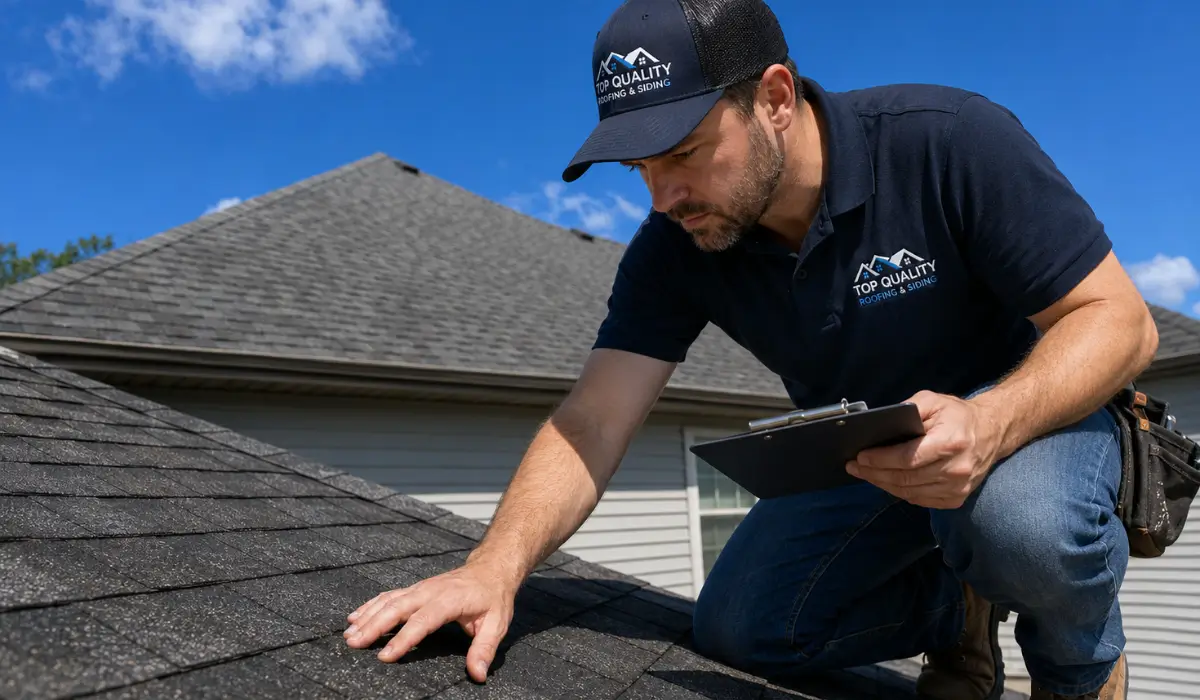










Hail damage can hide beneath a roof's surface even when the shingles look normal from the ground. Top Quality Roofing & Siding helps Illinois homeowners spot impact clues, understand what they may mean, and decide when a closer roof inspection makes sense.
Waiting for a ceiling leak can leave you several steps behind the problem. A bruised shingle or small weak point may allow water beneath the roof covering before moisture reaches the attic, insulation, or drywall.
Quick Answer
|
The hard part is knowing which clues matter. Our Three-Clue Roof Check gives homeowners a simpler way to understand what roofers look for after a strong Illinois hailstorm.
Why Hail Damage Is Easy to Miss From the Ground
What we often see after a storm is a roof that still looks orderly from a distance. The shingles remain in place, and no water is dripping from the ceiling, yet a closer look may reveal impact marks that cannot be judged from ground level.
Asphalt shingles have protective granules across their surface. Hail can knock some loose or bruise the material beneath them without tearing away the whole shingle. Obvious destruction is a poor standard for deciding whether a roof deserves inspection.
The National Weather Service hail guidance explains the damaging potential of hail from severe thunderstorms. Roof material, existing wear, and impact location can also affect what an inspection finds.
A roof does not need to look destroyed to have a storm-related weak point.
Our Three-Clue Roof Check groups of the evidence into three areas:
Surface clues: Round marks, granule loss, cracks, or unusual soft areas on shingles.
Metal clues: Dents on vent caps, flashing, or other exposed roof components.
Interior clues: Attic stains, damp materials, or ceiling marks that suggest water has moved farther into the home.
No single clue tells the entire story. Granules can appear in gutters as shingles age. A dented vent may show that impacts reached the roof, but the shingles still need their own evaluation.
The value of this framework is context. Surface, metal, and interior clues create a clearer picture when viewed together than one visible mark can provide.
Why Hail Damage Can Create Soft Shingle Bruises
A shingle bruise forms when an impact affects the surface and material beneath it. The spot may look dark, feel different during a trained inspection, or show an area where protective granules have been knocked away.
Homeowners should not climb onto a wet, steep, or storm-affected roof to press on shingles. Checking a possible soft spot safely requires proper roof access and an understanding of how normal shingle wear can feel.
In many real cases, missing shingles are assumed to be the main sign of storm trouble. We often pay close attention to quieter clues, including concentrated impact marks, surface changes, and dents around exposed metal roof parts.
An inspection is not simply a search for holes. It compares patterns, materials, and possible water paths to judge whether a storm may have changed the roof's ability to keep water out.
Common Roof Impact Signs Homeowners Can Notice
A storm can leave clues in several parts of a roofing system. A useful first look focuses on safe, visible evidence rather than trying to diagnose the entire roof from one mark.
Homeowners searching for storm damage signs often expect dramatic roof damage. Smaller changes can provide useful context, especially when several signs appear after the same storm.
Common clues include:
Round impact marks: Dark or circular spots where surface granules appear disturbed.
Loose granules: A noticeable amount of shingle granules in gutters or near downspouts.
Dented vent caps: Metal roof parts may show clearer impact marks than shingles.
Cracked roof components: Materials near roof openings and edges may be affected.
Attic stains: Dark or damp areas can point to water beneath the roof covering.
Ceiling discoloration: Interior staining may mean moisture has traveled farther.
Granule loss needs careful interpretation. Shingles lose granules as they age, and prolonged sun exposure can change roofing materials. Our guide to heat and UV damage explains why existing wear matters after a storm.
Granules are a clue, not a diagnosis. Roof marks, nearby shingle condition, metal dents, and storm timing give loose granules more useful context.
For a homeowner considering a shingle inspection in Downers Grove, looking at the roof as a system supports a better decision. One spot can raise a concern, while a wider inspection helps show whether it fits normal aging or a recent impact pattern.
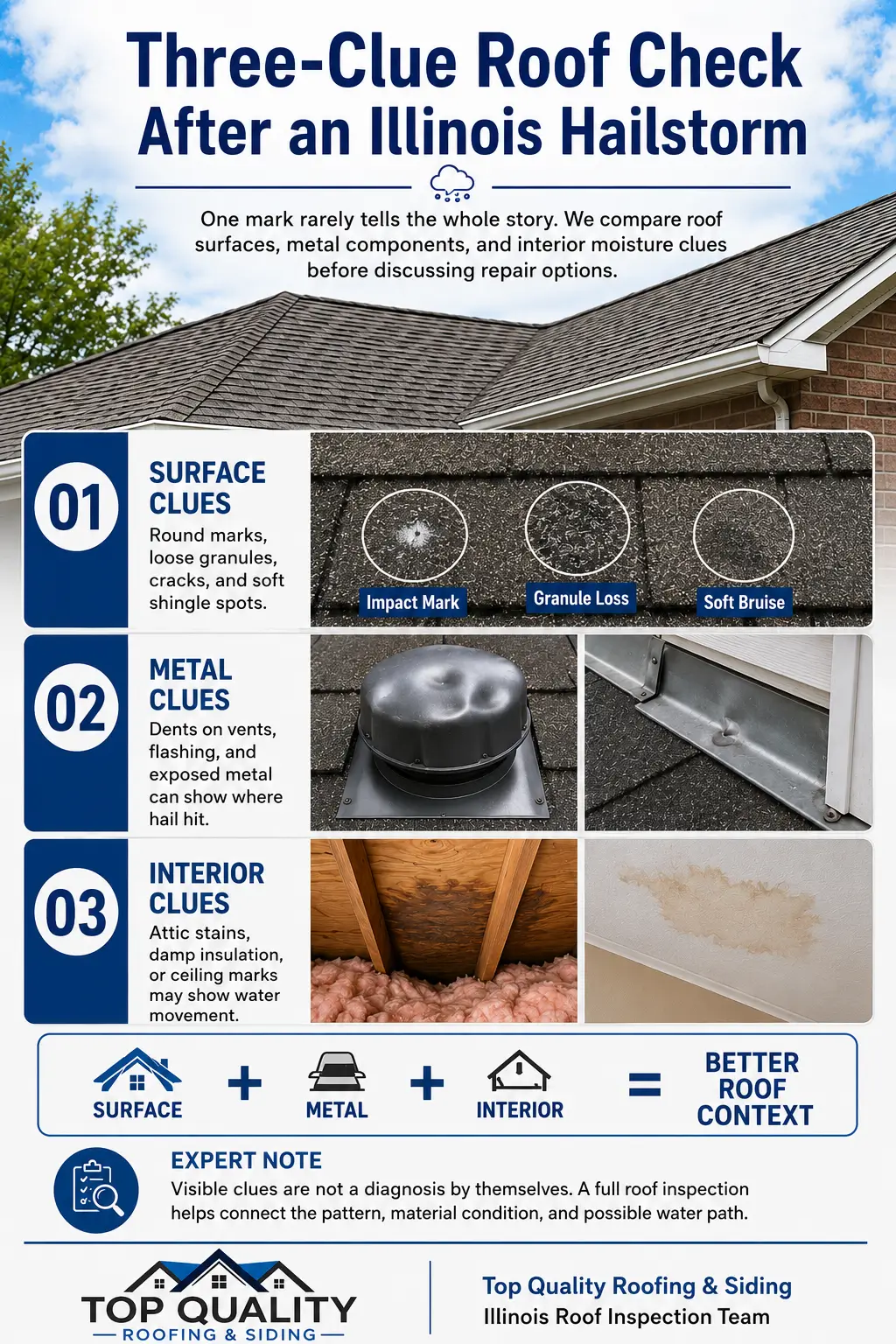
The visual reinforces a simple idea: surface clues show where the inspection begins, while metal and interior signs add context. A photo or visible mark alone should not be treated as proof of cause.
Why Waiting Can Turn a Small Roof Problem Into a Larger Repair
A small weak point may stay hidden until repeated rain reaches the same area. By the time a stain appears indoors, water may have moved beneath the shingles and reached other roof materials.
Picture a home after a July storm. No immediate roof problem is visible, so no evaluation is arranged. Later rain reaches an affected area, and the first clear warning is a damp attic board or ceiling stain.
The cause-and-effect path is easier to see side by side:
Roof Condition | Possible Next Concern | Why It Matters |
Granules loosen | Surface protection is reduced | The area deserves a closer look |
Impact weakens a shingle | Water finds a vulnerable point | Moisture may move below the surface |
Moisture continues | Decking or insulation gets wet | Repair needs may become more involved |
Interior staining appears | Water has traveled farther | The source needs prompt evaluation |
This does not mean every impact mark becomes a major leak. It shows why waiting for indoor water is not a reliable test of roof condition.
Timing also affects diagnosis. A roof checked closer to the storm date can be reviewed alongside the storm timeline and documented exterior changes. Months of sun, rain, and normal aging may make different sources of wear harder to separate.
Our storm season roof guide covers weak areas that may exist before severe weather arrives. An older weak point and a newer impact can create a more complicated water path.
Top Quality Roofing & Siding has served more than 900 Illinois homes, and Hail Damage inspections reinforce one lesson: the useful question is not whether a homeowner sees a hole. We look for signs that the roofing system's ability to move water away may have changed.
When homeowners need an early pricing reference, our online roof cost calculator can provide a starting point before a detailed scope is prepared.
Emergency Roof Tarping Can Limit Active Water Entry
When water is actively entering a home after a storm, temporary roof protection may help limit further exposure while the damaged area is evaluated. A tarp is short-term protection, not a completed repair.
That difference is easy to miss during a stressful night of dripping water and buckets. Homeowners looking for emergency tarping IL usually need a fast response, but the roof still needs inspection once immediate exposure is addressed.
A practical storm response follows a clear process:
Identify active water entry. Dripping, wet attic materials, or spreading stains can signal an immediate problem.
Document safe, visible conditions. Ground-level and interior photos create a basic record.
Protect exposed areas when needed. Temporary covering may limit additional water entry.
Inspect the roofing system. Shingles, flashing, vents, and likely impact areas need review.
Match repair to the findings. Roof condition helps shape the repair discussion.
The FEMA severe weather guidance provides broader information about protecting property from severe weather. Personal safety remains the first concern after a storm.
Temporary protection creates breathing room. It does not identify every water path or restore damaged roofing materials.
Our Illinois roofing service team handles roofing concerns after leaks and severe weather. The next repair step depends on what the roof evaluation shows once immediate water exposure is under control.
A tarp left in place without a repair decision can hide an unresolved problem. Temporary protection works best as one stage in a clear inspection and repair process.
Clear Documentation Helps After a Hailstorm
A clear storm record gives homeowners better information when discussing roof conditions and possible insurance steps. Photos, dates, inspection findings, and policy details each serve a different purpose.
An insurance roof claim is not simply a roofing decision. The homeowner, roofing contractor, adjuster, and insurance carrier have separate roles, and a contractor should never promise that a repair or replacement will be covered.
A useful documentation checklist includes:
Record the storm date and approximate time.
Photograph visible exterior conditions from a safe location.
Save photos of attic stains or interior water.
Review policy terms and filing requirements.
Arrange a professional roof inspection.
Keep inspection notes and estimates organized.
Communicate promptly with the insurance carrier.
The National Association of Insurance Commissioners home insurance guidance provides general consumer information about home insurance. Coverage, deadlines, and claim requirements depend on the policy and insurer.
Top Quality Roofing & Siding holds an Illinois Public Adjuster License and roofing credentials that support our understanding of storm inspection concerns. Hail Damage findings can be documented during an evaluation, but an inspection should never be presented as guaranteed insurance approval.
Homeowners comparing roofing companies near me can pay attention to how a contractor explains findings. Clear photos and plain-English descriptions build more trust than pressure to reach a predetermined result.
Our family roofing company history explains the experience behind our education-first approach. Good documentation should reduce uncertainty and support a more informed next conversation.
Roof Repair Decisions Should Follow the Inspection Findings
Not every storm concern leads to a full roof replacement. The right decision depends on the location and pattern of damage, the surrounding roof, and whether water has reached materials beneath the shingles.
This is where hail damage roof repair IL searches can become confusing. Some advice treats every mark as an emergency, while other advice suggests waiting for a leak. Neither extreme gives the actual roof enough weight.
We use a simple repair decision framework:
Localized concern: A limited problem may support a focused repair when the surrounding roof remains serviceable.
Active water entry: The source and water path need attention, and temporary protection may be needed while repair work is planned.
Wider impact pattern: Signs in several roof areas may require a broader roofing discussion after inspection.
Roof material changes the conversation. Asphalt shingles, cedar, slate, and metal do not show impact in the same way. Our guide to Illinois summer roofing materials explains some of those differences.
Our 50-point inspection process gives our team a consistent way to review roof conditions before discussing options. We look beyond one mark because a useful recommendation should reflect the wider roofing system.
Larger roofing work can create an unexpected household expense. Flexible roofing financing options may help homeowners review payment choices when the recommended scope goes beyond a smaller repair.
The inspection should lead the decision. A clear explanation of what was found, what needs attention, and what can reasonably wait gives homeowners more control.
Frequently Asked Questions About Roof Impact
Homeowners often ask similar questions after an Illinois hailstorm. Roof age, material, existing wear, storm timing, and impact patterns can all affect what an inspection finds.
These short answers address three common concerns without treating one symptom as a complete roof diagnosis.
Can a Roof Have Damage Without Leaking?
Yes. A shingle can be affected before water reaches the attic or ceiling. A dry room only shows what is visible inside the home in that moment.
Water may also take time to reach a visible area. The location of the affected roof section can influence when an interior sign appears.
Are Granules in My Gutters Proof of Storm Damage?
No. Normal aging and weather exposure can loosen asphalt shingle granules. Recent severe weather may justify a closer look, but granules alone do not identify the cause.
Roof marks and metal dents add context. Their pattern can help an inspector evaluate what the gutter granules may mean.
Should I Climb Onto My Roof to Check Soft Spots?
Roof access creates a fall risk, especially after rain or severe weather. Ground-level photos and safely accessible attic checks can document concerns without stepping onto the roof.
Our team can examine shingle surfaces and explain the findings in plain language. Homeowners can also review our local roofing service areas for the Illinois communities we serve.
Visible clues show where questions begin. A full roof evaluation helps explain what those clues may mean.
A Professional Inspection Can Catch Storm Damage Before a Leak
Illinois hailstorms can shorten a roof's useful life when impacts damage shingles or expose existing weak areas. A prompt professional inspection can provide clearer information before water reaches the interior.
Top Quality Roofing & Siding helps Illinois homeowners understand whether findings point to monitoring, repair, or a broader roofing concern.
Active water entry may call for emergency roof repair services while the affected area is evaluated. Temporary protection and repair decisions should reflect the actual problem found.
Get Clear Answers About Your Roof
A storm can leave impact clues before a ceiling stain or active leak appears. Hail Damage deserves a closer look when recent severe weather and visible roof concerns give you a reason to question your roof.
Don't wait until a leak becomes the first clear sign of a roofing problem. For a professional storm damage inspection, book your storm inspection.
We will explain the findings in plain language and help you understand the next practical step. If you prefer to speak with our team, call our Illinois roofing team on (630) 520-0576.
Hail damage can hide beneath a roof's surface even when the shingles look normal from the ground. Top Quality Roofing & Siding helps Illinois homeowners spot impact clues, understand what they may mean, and decide when a closer roof inspection makes sense.
Waiting for a ceiling leak can leave you several steps behind the problem. A bruised shingle or small weak point may allow water beneath the roof covering before moisture reaches the attic, insulation, or drywall.
Quick Answer
|
The hard part is knowing which clues matter. Our Three-Clue Roof Check gives homeowners a simpler way to understand what roofers look for after a strong Illinois hailstorm.
Why Hail Damage Is Easy to Miss From the Ground
What we often see after a storm is a roof that still looks orderly from a distance. The shingles remain in place, and no water is dripping from the ceiling, yet a closer look may reveal impact marks that cannot be judged from ground level.
Asphalt shingles have protective granules across their surface. Hail can knock some loose or bruise the material beneath them without tearing away the whole shingle. Obvious destruction is a poor standard for deciding whether a roof deserves inspection.
The National Weather Service hail guidance explains the damaging potential of hail from severe thunderstorms. Roof material, existing wear, and impact location can also affect what an inspection finds.
A roof does not need to look destroyed to have a storm-related weak point.
Our Three-Clue Roof Check groups of the evidence into three areas:
Surface clues: Round marks, granule loss, cracks, or unusual soft areas on shingles.
Metal clues: Dents on vent caps, flashing, or other exposed roof components.
Interior clues: Attic stains, damp materials, or ceiling marks that suggest water has moved farther into the home.
No single clue tells the entire story. Granules can appear in gutters as shingles age. A dented vent may show that impacts reached the roof, but the shingles still need their own evaluation.
The value of this framework is context. Surface, metal, and interior clues create a clearer picture when viewed together than one visible mark can provide.
Why Hail Damage Can Create Soft Shingle Bruises
A shingle bruise forms when an impact affects the surface and material beneath it. The spot may look dark, feel different during a trained inspection, or show an area where protective granules have been knocked away.
Homeowners should not climb onto a wet, steep, or storm-affected roof to press on shingles. Checking a possible soft spot safely requires proper roof access and an understanding of how normal shingle wear can feel.
In many real cases, missing shingles are assumed to be the main sign of storm trouble. We often pay close attention to quieter clues, including concentrated impact marks, surface changes, and dents around exposed metal roof parts.
An inspection is not simply a search for holes. It compares patterns, materials, and possible water paths to judge whether a storm may have changed the roof's ability to keep water out.
Common Roof Impact Signs Homeowners Can Notice
A storm can leave clues in several parts of a roofing system. A useful first look focuses on safe, visible evidence rather than trying to diagnose the entire roof from one mark.
Homeowners searching for storm damage signs often expect dramatic roof damage. Smaller changes can provide useful context, especially when several signs appear after the same storm.
Common clues include:
Round impact marks: Dark or circular spots where surface granules appear disturbed.
Loose granules: A noticeable amount of shingle granules in gutters or near downspouts.
Dented vent caps: Metal roof parts may show clearer impact marks than shingles.
Cracked roof components: Materials near roof openings and edges may be affected.
Attic stains: Dark or damp areas can point to water beneath the roof covering.
Ceiling discoloration: Interior staining may mean moisture has traveled farther.
Granule loss needs careful interpretation. Shingles lose granules as they age, and prolonged sun exposure can change roofing materials. Our guide to heat and UV damage explains why existing wear matters after a storm.
Granules are a clue, not a diagnosis. Roof marks, nearby shingle condition, metal dents, and storm timing give loose granules more useful context.
For a homeowner considering a shingle inspection in Downers Grove, looking at the roof as a system supports a better decision. One spot can raise a concern, while a wider inspection helps show whether it fits normal aging or a recent impact pattern.
The visual reinforces a simple idea: surface clues show where the inspection begins, while metal and interior signs add context. A photo or visible mark alone should not be treated as proof of cause.
Why Waiting Can Turn a Small Roof Problem Into a Larger Repair
A small weak point may stay hidden until repeated rain reaches the same area. By the time a stain appears indoors, water may have moved beneath the shingles and reached other roof materials.
Picture a home after a July storm. No immediate roof problem is visible, so no evaluation is arranged. Later rain reaches an affected area, and the first clear warning is a damp attic board or ceiling stain.
The cause-and-effect path is easier to see side by side:
Roof Condition | Possible Next Concern | Why It Matters |
Granules loosen | Surface protection is reduced | The area deserves a closer look |
Impact weakens a shingle | Water finds a vulnerable point | Moisture may move below the surface |
Moisture continues | Decking or insulation gets wet | Repair needs may become more involved |
Interior staining appears | Water has traveled farther | The source needs prompt evaluation |
This does not mean every impact mark becomes a major leak. It shows why waiting for indoor water is not a reliable test of roof condition.
Timing also affects diagnosis. A roof checked closer to the storm date can be reviewed alongside the storm timeline and documented exterior changes. Months of sun, rain, and normal aging may make different sources of wear harder to separate.
Our storm season roof guide covers weak areas that may exist before severe weather arrives. An older weak point and a newer impact can create a more complicated water path.
Top Quality Roofing & Siding has served more than 900 Illinois homes, and Hail Damage inspections reinforce one lesson: the useful question is not whether a homeowner sees a hole. We look for signs that the roofing system's ability to move water away may have changed.
When homeowners need an early pricing reference, our online roof cost calculator can provide a starting point before a detailed scope is prepared.
Emergency Roof Tarping Can Limit Active Water Entry
When water is actively entering a home after a storm, temporary roof protection may help limit further exposure while the damaged area is evaluated. A tarp is short-term protection, not a completed repair.
That difference is easy to miss during a stressful night of dripping water and buckets. Homeowners looking for emergency tarping IL usually need a fast response, but the roof still needs inspection once immediate exposure is addressed.
A practical storm response follows a clear process:
Identify active water entry. Dripping, wet attic materials, or spreading stains can signal an immediate problem.
Document safe, visible conditions. Ground-level and interior photos create a basic record.
Protect exposed areas when needed. Temporary covering may limit additional water entry.
Inspect the roofing system. Shingles, flashing, vents, and likely impact areas need review.
Match repair to the findings. Roof condition helps shape the repair discussion.
The FEMA severe weather guidance provides broader information about protecting property from severe weather. Personal safety remains the first concern after a storm.
Temporary protection creates breathing room. It does not identify every water path or restore damaged roofing materials.
Our Illinois roofing service team handles roofing concerns after leaks and severe weather. The next repair step depends on what the roof evaluation shows once immediate water exposure is under control.
A tarp left in place without a repair decision can hide an unresolved problem. Temporary protection works best as one stage in a clear inspection and repair process.
Clear Documentation Helps After a Hailstorm
A clear storm record gives homeowners better information when discussing roof conditions and possible insurance steps. Photos, dates, inspection findings, and policy details each serve a different purpose.
An insurance roof claim is not simply a roofing decision. The homeowner, roofing contractor, adjuster, and insurance carrier have separate roles, and a contractor should never promise that a repair or replacement will be covered.
A useful documentation checklist includes:
Record the storm date and approximate time.
Photograph visible exterior conditions from a safe location.
Save photos of attic stains or interior water.
Review policy terms and filing requirements.
Arrange a professional roof inspection.
Keep inspection notes and estimates organized.
Communicate promptly with the insurance carrier.
The National Association of Insurance Commissioners home insurance guidance provides general consumer information about home insurance. Coverage, deadlines, and claim requirements depend on the policy and insurer.
Top Quality Roofing & Siding holds an Illinois Public Adjuster License and roofing credentials that support our understanding of storm inspection concerns. Hail Damage findings can be documented during an evaluation, but an inspection should never be presented as guaranteed insurance approval.
Homeowners comparing roofing companies near me can pay attention to how a contractor explains findings. Clear photos and plain-English descriptions build more trust than pressure to reach a predetermined result.
Our family roofing company history explains the experience behind our education-first approach. Good documentation should reduce uncertainty and support a more informed next conversation.
Roof Repair Decisions Should Follow the Inspection Findings
Not every storm concern leads to a full roof replacement. The right decision depends on the location and pattern of damage, the surrounding roof, and whether water has reached materials beneath the shingles.
This is where hail damage roof repair IL searches can become confusing. Some advice treats every mark as an emergency, while other advice suggests waiting for a leak. Neither extreme gives the actual roof enough weight.
We use a simple repair decision framework:
Localized concern: A limited problem may support a focused repair when the surrounding roof remains serviceable.
Active water entry: The source and water path need attention, and temporary protection may be needed while repair work is planned.
Wider impact pattern: Signs in several roof areas may require a broader roofing discussion after inspection.
Roof material changes the conversation. Asphalt shingles, cedar, slate, and metal do not show impact in the same way. Our guide to Illinois summer roofing materials explains some of those differences.
Our 50-point inspection process gives our team a consistent way to review roof conditions before discussing options. We look beyond one mark because a useful recommendation should reflect the wider roofing system.
Larger roofing work can create an unexpected household expense. Flexible roofing financing options may help homeowners review payment choices when the recommended scope goes beyond a smaller repair.
The inspection should lead the decision. A clear explanation of what was found, what needs attention, and what can reasonably wait gives homeowners more control.
Frequently Asked Questions About Roof Impact
Homeowners often ask similar questions after an Illinois hailstorm. Roof age, material, existing wear, storm timing, and impact patterns can all affect what an inspection finds.
These short answers address three common concerns without treating one symptom as a complete roof diagnosis.
Can a Roof Have Damage Without Leaking?
Yes. A shingle can be affected before water reaches the attic or ceiling. A dry room only shows what is visible inside the home in that moment.
Water may also take time to reach a visible area. The location of the affected roof section can influence when an interior sign appears.
Are Granules in My Gutters Proof of Storm Damage?
No. Normal aging and weather exposure can loosen asphalt shingle granules. Recent severe weather may justify a closer look, but granules alone do not identify the cause.
Roof marks and metal dents add context. Their pattern can help an inspector evaluate what the gutter granules may mean.
Should I Climb Onto My Roof to Check Soft Spots?
Roof access creates a fall risk, especially after rain or severe weather. Ground-level photos and safely accessible attic checks can document concerns without stepping onto the roof.
Our team can examine shingle surfaces and explain the findings in plain language. Homeowners can also review our local roofing service areas for the Illinois communities we serve.
Visible clues show where questions begin. A full roof evaluation helps explain what those clues may mean.
A Professional Inspection Can Catch Storm Damage Before a Leak
Illinois hailstorms can shorten a roof's useful life when impacts damage shingles or expose existing weak areas. A prompt professional inspection can provide clearer information before water reaches the interior.
Top Quality Roofing & Siding helps Illinois homeowners understand whether findings point to monitoring, repair, or a broader roofing concern.
Active water entry may call for emergency roof repair services while the affected area is evaluated. Temporary protection and repair decisions should reflect the actual problem found.
Get Clear Answers About Your Roof
A storm can leave impact clues before a ceiling stain or active leak appears. Hail Damage deserves a closer look when recent severe weather and visible roof concerns give you a reason to question your roof.
Don't wait until a leak becomes the first clear sign of a roofing problem. For a professional storm damage inspection, book your storm inspection.
We will explain the findings in plain language and help you understand the next practical step. If you prefer to speak with our team, call our Illinois roofing team on (630) 520-0576.
Hail damage can hide beneath a roof's surface even when the shingles look normal from the ground. Top Quality Roofing & Siding helps Illinois homeowners spot impact clues, understand what they may mean, and decide when a closer roof inspection makes sense.
Waiting for a ceiling leak can leave you several steps behind the problem. A bruised shingle or small weak point may allow water beneath the roof covering before moisture reaches the attic, insulation, or drywall.
Quick Answer
|
The hard part is knowing which clues matter. Our Three-Clue Roof Check gives homeowners a simpler way to understand what roofers look for after a strong Illinois hailstorm.
Why Hail Damage Is Easy to Miss From the Ground
What we often see after a storm is a roof that still looks orderly from a distance. The shingles remain in place, and no water is dripping from the ceiling, yet a closer look may reveal impact marks that cannot be judged from ground level.
Asphalt shingles have protective granules across their surface. Hail can knock some loose or bruise the material beneath them without tearing away the whole shingle. Obvious destruction is a poor standard for deciding whether a roof deserves inspection.
The National Weather Service hail guidance explains the damaging potential of hail from severe thunderstorms. Roof material, existing wear, and impact location can also affect what an inspection finds.
A roof does not need to look destroyed to have a storm-related weak point.
Our Three-Clue Roof Check groups of the evidence into three areas:
Surface clues: Round marks, granule loss, cracks, or unusual soft areas on shingles.
Metal clues: Dents on vent caps, flashing, or other exposed roof components.
Interior clues: Attic stains, damp materials, or ceiling marks that suggest water has moved farther into the home.
No single clue tells the entire story. Granules can appear in gutters as shingles age. A dented vent may show that impacts reached the roof, but the shingles still need their own evaluation.
The value of this framework is context. Surface, metal, and interior clues create a clearer picture when viewed together than one visible mark can provide.
Why Hail Damage Can Create Soft Shingle Bruises
A shingle bruise forms when an impact affects the surface and material beneath it. The spot may look dark, feel different during a trained inspection, or show an area where protective granules have been knocked away.
Homeowners should not climb onto a wet, steep, or storm-affected roof to press on shingles. Checking a possible soft spot safely requires proper roof access and an understanding of how normal shingle wear can feel.
In many real cases, missing shingles are assumed to be the main sign of storm trouble. We often pay close attention to quieter clues, including concentrated impact marks, surface changes, and dents around exposed metal roof parts.
An inspection is not simply a search for holes. It compares patterns, materials, and possible water paths to judge whether a storm may have changed the roof's ability to keep water out.
Common Roof Impact Signs Homeowners Can Notice
A storm can leave clues in several parts of a roofing system. A useful first look focuses on safe, visible evidence rather than trying to diagnose the entire roof from one mark.
Homeowners searching for storm damage signs often expect dramatic roof damage. Smaller changes can provide useful context, especially when several signs appear after the same storm.
Common clues include:
Round impact marks: Dark or circular spots where surface granules appear disturbed.
Loose granules: A noticeable amount of shingle granules in gutters or near downspouts.
Dented vent caps: Metal roof parts may show clearer impact marks than shingles.
Cracked roof components: Materials near roof openings and edges may be affected.
Attic stains: Dark or damp areas can point to water beneath the roof covering.
Ceiling discoloration: Interior staining may mean moisture has traveled farther.
Granule loss needs careful interpretation. Shingles lose granules as they age, and prolonged sun exposure can change roofing materials. Our guide to heat and UV damage explains why existing wear matters after a storm.
Granules are a clue, not a diagnosis. Roof marks, nearby shingle condition, metal dents, and storm timing give loose granules more useful context.
For a homeowner considering a shingle inspection in Downers Grove, looking at the roof as a system supports a better decision. One spot can raise a concern, while a wider inspection helps show whether it fits normal aging or a recent impact pattern.
The visual reinforces a simple idea: surface clues show where the inspection begins, while metal and interior signs add context. A photo or visible mark alone should not be treated as proof of cause.
Why Waiting Can Turn a Small Roof Problem Into a Larger Repair
A small weak point may stay hidden until repeated rain reaches the same area. By the time a stain appears indoors, water may have moved beneath the shingles and reached other roof materials.
Picture a home after a July storm. No immediate roof problem is visible, so no evaluation is arranged. Later rain reaches an affected area, and the first clear warning is a damp attic board or ceiling stain.
The cause-and-effect path is easier to see side by side:
Roof Condition | Possible Next Concern | Why It Matters |
Granules loosen | Surface protection is reduced | The area deserves a closer look |
Impact weakens a shingle | Water finds a vulnerable point | Moisture may move below the surface |
Moisture continues | Decking or insulation gets wet | Repair needs may become more involved |
Interior staining appears | Water has traveled farther | The source needs prompt evaluation |
This does not mean every impact mark becomes a major leak. It shows why waiting for indoor water is not a reliable test of roof condition.
Timing also affects diagnosis. A roof checked closer to the storm date can be reviewed alongside the storm timeline and documented exterior changes. Months of sun, rain, and normal aging may make different sources of wear harder to separate.
Our storm season roof guide covers weak areas that may exist before severe weather arrives. An older weak point and a newer impact can create a more complicated water path.
Top Quality Roofing & Siding has served more than 900 Illinois homes, and Hail Damage inspections reinforce one lesson: the useful question is not whether a homeowner sees a hole. We look for signs that the roofing system's ability to move water away may have changed.
When homeowners need an early pricing reference, our online roof cost calculator can provide a starting point before a detailed scope is prepared.
Emergency Roof Tarping Can Limit Active Water Entry
When water is actively entering a home after a storm, temporary roof protection may help limit further exposure while the damaged area is evaluated. A tarp is short-term protection, not a completed repair.
That difference is easy to miss during a stressful night of dripping water and buckets. Homeowners looking for emergency tarping IL usually need a fast response, but the roof still needs inspection once immediate exposure is addressed.
A practical storm response follows a clear process:
Identify active water entry. Dripping, wet attic materials, or spreading stains can signal an immediate problem.
Document safe, visible conditions. Ground-level and interior photos create a basic record.
Protect exposed areas when needed. Temporary covering may limit additional water entry.
Inspect the roofing system. Shingles, flashing, vents, and likely impact areas need review.
Match repair to the findings. Roof condition helps shape the repair discussion.
The FEMA severe weather guidance provides broader information about protecting property from severe weather. Personal safety remains the first concern after a storm.
Temporary protection creates breathing room. It does not identify every water path or restore damaged roofing materials.
Our Illinois roofing service team handles roofing concerns after leaks and severe weather. The next repair step depends on what the roof evaluation shows once immediate water exposure is under control.
A tarp left in place without a repair decision can hide an unresolved problem. Temporary protection works best as one stage in a clear inspection and repair process.
Clear Documentation Helps After a Hailstorm
A clear storm record gives homeowners better information when discussing roof conditions and possible insurance steps. Photos, dates, inspection findings, and policy details each serve a different purpose.
An insurance roof claim is not simply a roofing decision. The homeowner, roofing contractor, adjuster, and insurance carrier have separate roles, and a contractor should never promise that a repair or replacement will be covered.
A useful documentation checklist includes:
Record the storm date and approximate time.
Photograph visible exterior conditions from a safe location.
Save photos of attic stains or interior water.
Review policy terms and filing requirements.
Arrange a professional roof inspection.
Keep inspection notes and estimates organized.
Communicate promptly with the insurance carrier.
The National Association of Insurance Commissioners home insurance guidance provides general consumer information about home insurance. Coverage, deadlines, and claim requirements depend on the policy and insurer.
Top Quality Roofing & Siding holds an Illinois Public Adjuster License and roofing credentials that support our understanding of storm inspection concerns. Hail Damage findings can be documented during an evaluation, but an inspection should never be presented as guaranteed insurance approval.
Homeowners comparing roofing companies near me can pay attention to how a contractor explains findings. Clear photos and plain-English descriptions build more trust than pressure to reach a predetermined result.
Our family roofing company history explains the experience behind our education-first approach. Good documentation should reduce uncertainty and support a more informed next conversation.
Roof Repair Decisions Should Follow the Inspection Findings
Not every storm concern leads to a full roof replacement. The right decision depends on the location and pattern of damage, the surrounding roof, and whether water has reached materials beneath the shingles.
This is where hail damage roof repair IL searches can become confusing. Some advice treats every mark as an emergency, while other advice suggests waiting for a leak. Neither extreme gives the actual roof enough weight.
We use a simple repair decision framework:
Localized concern: A limited problem may support a focused repair when the surrounding roof remains serviceable.
Active water entry: The source and water path need attention, and temporary protection may be needed while repair work is planned.
Wider impact pattern: Signs in several roof areas may require a broader roofing discussion after inspection.
Roof material changes the conversation. Asphalt shingles, cedar, slate, and metal do not show impact in the same way. Our guide to Illinois summer roofing materials explains some of those differences.
Our 50-point inspection process gives our team a consistent way to review roof conditions before discussing options. We look beyond one mark because a useful recommendation should reflect the wider roofing system.
Larger roofing work can create an unexpected household expense. Flexible roofing financing options may help homeowners review payment choices when the recommended scope goes beyond a smaller repair.
The inspection should lead the decision. A clear explanation of what was found, what needs attention, and what can reasonably wait gives homeowners more control.
Frequently Asked Questions About Roof Impact
Homeowners often ask similar questions after an Illinois hailstorm. Roof age, material, existing wear, storm timing, and impact patterns can all affect what an inspection finds.
These short answers address three common concerns without treating one symptom as a complete roof diagnosis.
Can a Roof Have Damage Without Leaking?
Yes. A shingle can be affected before water reaches the attic or ceiling. A dry room only shows what is visible inside the home in that moment.
Water may also take time to reach a visible area. The location of the affected roof section can influence when an interior sign appears.
Are Granules in My Gutters Proof of Storm Damage?
No. Normal aging and weather exposure can loosen asphalt shingle granules. Recent severe weather may justify a closer look, but granules alone do not identify the cause.
Roof marks and metal dents add context. Their pattern can help an inspector evaluate what the gutter granules may mean.
Should I Climb Onto My Roof to Check Soft Spots?
Roof access creates a fall risk, especially after rain or severe weather. Ground-level photos and safely accessible attic checks can document concerns without stepping onto the roof.
Our team can examine shingle surfaces and explain the findings in plain language. Homeowners can also review our local roofing service areas for the Illinois communities we serve.
Visible clues show where questions begin. A full roof evaluation helps explain what those clues may mean.
A Professional Inspection Can Catch Storm Damage Before a Leak
Illinois hailstorms can shorten a roof's useful life when impacts damage shingles or expose existing weak areas. A prompt professional inspection can provide clearer information before water reaches the interior.
Top Quality Roofing & Siding helps Illinois homeowners understand whether findings point to monitoring, repair, or a broader roofing concern.
Active water entry may call for emergency roof repair services while the affected area is evaluated. Temporary protection and repair decisions should reflect the actual problem found.
Get Clear Answers About Your Roof
A storm can leave impact clues before a ceiling stain or active leak appears. Hail Damage deserves a closer look when recent severe weather and visible roof concerns give you a reason to question your roof.
Don't wait until a leak becomes the first clear sign of a roofing problem. For a professional storm damage inspection, book your storm inspection.
We will explain the findings in plain language and help you understand the next practical step. If you prefer to speak with our team, call our Illinois roofing team on (630) 520-0576.
Hail damage can hide beneath a roof's surface even when the shingles look normal from the ground. Top Quality Roofing & Siding helps Illinois homeowners spot impact clues, understand what they may mean, and decide when a closer roof inspection makes sense.
Waiting for a ceiling leak can leave you several steps behind the problem. A bruised shingle or small weak point may allow water beneath the roof covering before moisture reaches the attic, insulation, or drywall.
Quick Answer
|
The hard part is knowing which clues matter. Our Three-Clue Roof Check gives homeowners a simpler way to understand what roofers look for after a strong Illinois hailstorm.
Why Hail Damage Is Easy to Miss From the Ground
What we often see after a storm is a roof that still looks orderly from a distance. The shingles remain in place, and no water is dripping from the ceiling, yet a closer look may reveal impact marks that cannot be judged from ground level.
Asphalt shingles have protective granules across their surface. Hail can knock some loose or bruise the material beneath them without tearing away the whole shingle. Obvious destruction is a poor standard for deciding whether a roof deserves inspection.
The National Weather Service hail guidance explains the damaging potential of hail from severe thunderstorms. Roof material, existing wear, and impact location can also affect what an inspection finds.
A roof does not need to look destroyed to have a storm-related weak point.
Our Three-Clue Roof Check groups of the evidence into three areas:
Surface clues: Round marks, granule loss, cracks, or unusual soft areas on shingles.
Metal clues: Dents on vent caps, flashing, or other exposed roof components.
Interior clues: Attic stains, damp materials, or ceiling marks that suggest water has moved farther into the home.
No single clue tells the entire story. Granules can appear in gutters as shingles age. A dented vent may show that impacts reached the roof, but the shingles still need their own evaluation.
The value of this framework is context. Surface, metal, and interior clues create a clearer picture when viewed together than one visible mark can provide.
Why Hail Damage Can Create Soft Shingle Bruises
A shingle bruise forms when an impact affects the surface and material beneath it. The spot may look dark, feel different during a trained inspection, or show an area where protective granules have been knocked away.
Homeowners should not climb onto a wet, steep, or storm-affected roof to press on shingles. Checking a possible soft spot safely requires proper roof access and an understanding of how normal shingle wear can feel.
In many real cases, missing shingles are assumed to be the main sign of storm trouble. We often pay close attention to quieter clues, including concentrated impact marks, surface changes, and dents around exposed metal roof parts.
An inspection is not simply a search for holes. It compares patterns, materials, and possible water paths to judge whether a storm may have changed the roof's ability to keep water out.
Common Roof Impact Signs Homeowners Can Notice
A storm can leave clues in several parts of a roofing system. A useful first look focuses on safe, visible evidence rather than trying to diagnose the entire roof from one mark.
Homeowners searching for storm damage signs often expect dramatic roof damage. Smaller changes can provide useful context, especially when several signs appear after the same storm.
Common clues include:
Round impact marks: Dark or circular spots where surface granules appear disturbed.
Loose granules: A noticeable amount of shingle granules in gutters or near downspouts.
Dented vent caps: Metal roof parts may show clearer impact marks than shingles.
Cracked roof components: Materials near roof openings and edges may be affected.
Attic stains: Dark or damp areas can point to water beneath the roof covering.
Ceiling discoloration: Interior staining may mean moisture has traveled farther.
Granule loss needs careful interpretation. Shingles lose granules as they age, and prolonged sun exposure can change roofing materials. Our guide to heat and UV damage explains why existing wear matters after a storm.
Granules are a clue, not a diagnosis. Roof marks, nearby shingle condition, metal dents, and storm timing give loose granules more useful context.
For a homeowner considering a shingle inspection in Downers Grove, looking at the roof as a system supports a better decision. One spot can raise a concern, while a wider inspection helps show whether it fits normal aging or a recent impact pattern.
The visual reinforces a simple idea: surface clues show where the inspection begins, while metal and interior signs add context. A photo or visible mark alone should not be treated as proof of cause.
Why Waiting Can Turn a Small Roof Problem Into a Larger Repair
A small weak point may stay hidden until repeated rain reaches the same area. By the time a stain appears indoors, water may have moved beneath the shingles and reached other roof materials.
Picture a home after a July storm. No immediate roof problem is visible, so no evaluation is arranged. Later rain reaches an affected area, and the first clear warning is a damp attic board or ceiling stain.
The cause-and-effect path is easier to see side by side:
Roof Condition | Possible Next Concern | Why It Matters |
Granules loosen | Surface protection is reduced | The area deserves a closer look |
Impact weakens a shingle | Water finds a vulnerable point | Moisture may move below the surface |
Moisture continues | Decking or insulation gets wet | Repair needs may become more involved |
Interior staining appears | Water has traveled farther | The source needs prompt evaluation |
This does not mean every impact mark becomes a major leak. It shows why waiting for indoor water is not a reliable test of roof condition.
Timing also affects diagnosis. A roof checked closer to the storm date can be reviewed alongside the storm timeline and documented exterior changes. Months of sun, rain, and normal aging may make different sources of wear harder to separate.
Our storm season roof guide covers weak areas that may exist before severe weather arrives. An older weak point and a newer impact can create a more complicated water path.
Top Quality Roofing & Siding has served more than 900 Illinois homes, and Hail Damage inspections reinforce one lesson: the useful question is not whether a homeowner sees a hole. We look for signs that the roofing system's ability to move water away may have changed.
When homeowners need an early pricing reference, our online roof cost calculator can provide a starting point before a detailed scope is prepared.
Emergency Roof Tarping Can Limit Active Water Entry
When water is actively entering a home after a storm, temporary roof protection may help limit further exposure while the damaged area is evaluated. A tarp is short-term protection, not a completed repair.
That difference is easy to miss during a stressful night of dripping water and buckets. Homeowners looking for emergency tarping IL usually need a fast response, but the roof still needs inspection once immediate exposure is addressed.
A practical storm response follows a clear process:
Identify active water entry. Dripping, wet attic materials, or spreading stains can signal an immediate problem.
Document safe, visible conditions. Ground-level and interior photos create a basic record.
Protect exposed areas when needed. Temporary covering may limit additional water entry.
Inspect the roofing system. Shingles, flashing, vents, and likely impact areas need review.
Match repair to the findings. Roof condition helps shape the repair discussion.
The FEMA severe weather guidance provides broader information about protecting property from severe weather. Personal safety remains the first concern after a storm.
Temporary protection creates breathing room. It does not identify every water path or restore damaged roofing materials.
Our Illinois roofing service team handles roofing concerns after leaks and severe weather. The next repair step depends on what the roof evaluation shows once immediate water exposure is under control.
A tarp left in place without a repair decision can hide an unresolved problem. Temporary protection works best as one stage in a clear inspection and repair process.
Clear Documentation Helps After a Hailstorm
A clear storm record gives homeowners better information when discussing roof conditions and possible insurance steps. Photos, dates, inspection findings, and policy details each serve a different purpose.
An insurance roof claim is not simply a roofing decision. The homeowner, roofing contractor, adjuster, and insurance carrier have separate roles, and a contractor should never promise that a repair or replacement will be covered.
A useful documentation checklist includes:
Record the storm date and approximate time.
Photograph visible exterior conditions from a safe location.
Save photos of attic stains or interior water.
Review policy terms and filing requirements.
Arrange a professional roof inspection.
Keep inspection notes and estimates organized.
Communicate promptly with the insurance carrier.
The National Association of Insurance Commissioners home insurance guidance provides general consumer information about home insurance. Coverage, deadlines, and claim requirements depend on the policy and insurer.
Top Quality Roofing & Siding holds an Illinois Public Adjuster License and roofing credentials that support our understanding of storm inspection concerns. Hail Damage findings can be documented during an evaluation, but an inspection should never be presented as guaranteed insurance approval.
Homeowners comparing roofing companies near me can pay attention to how a contractor explains findings. Clear photos and plain-English descriptions build more trust than pressure to reach a predetermined result.
Our family roofing company history explains the experience behind our education-first approach. Good documentation should reduce uncertainty and support a more informed next conversation.
Roof Repair Decisions Should Follow the Inspection Findings
Not every storm concern leads to a full roof replacement. The right decision depends on the location and pattern of damage, the surrounding roof, and whether water has reached materials beneath the shingles.
This is where hail damage roof repair IL searches can become confusing. Some advice treats every mark as an emergency, while other advice suggests waiting for a leak. Neither extreme gives the actual roof enough weight.
We use a simple repair decision framework:
Localized concern: A limited problem may support a focused repair when the surrounding roof remains serviceable.
Active water entry: The source and water path need attention, and temporary protection may be needed while repair work is planned.
Wider impact pattern: Signs in several roof areas may require a broader roofing discussion after inspection.
Roof material changes the conversation. Asphalt shingles, cedar, slate, and metal do not show impact in the same way. Our guide to Illinois summer roofing materials explains some of those differences.
Our 50-point inspection process gives our team a consistent way to review roof conditions before discussing options. We look beyond one mark because a useful recommendation should reflect the wider roofing system.
Larger roofing work can create an unexpected household expense. Flexible roofing financing options may help homeowners review payment choices when the recommended scope goes beyond a smaller repair.
The inspection should lead the decision. A clear explanation of what was found, what needs attention, and what can reasonably wait gives homeowners more control.
Frequently Asked Questions About Roof Impact
Homeowners often ask similar questions after an Illinois hailstorm. Roof age, material, existing wear, storm timing, and impact patterns can all affect what an inspection finds.
These short answers address three common concerns without treating one symptom as a complete roof diagnosis.
Can a Roof Have Damage Without Leaking?
Yes. A shingle can be affected before water reaches the attic or ceiling. A dry room only shows what is visible inside the home in that moment.
Water may also take time to reach a visible area. The location of the affected roof section can influence when an interior sign appears.
Are Granules in My Gutters Proof of Storm Damage?
No. Normal aging and weather exposure can loosen asphalt shingle granules. Recent severe weather may justify a closer look, but granules alone do not identify the cause.
Roof marks and metal dents add context. Their pattern can help an inspector evaluate what the gutter granules may mean.
Should I Climb Onto My Roof to Check Soft Spots?
Roof access creates a fall risk, especially after rain or severe weather. Ground-level photos and safely accessible attic checks can document concerns without stepping onto the roof.
Our team can examine shingle surfaces and explain the findings in plain language. Homeowners can also review our local roofing service areas for the Illinois communities we serve.
Visible clues show where questions begin. A full roof evaluation helps explain what those clues may mean.
A Professional Inspection Can Catch Storm Damage Before a Leak
Illinois hailstorms can shorten a roof's useful life when impacts damage shingles or expose existing weak areas. A prompt professional inspection can provide clearer information before water reaches the interior.
Top Quality Roofing & Siding helps Illinois homeowners understand whether findings point to monitoring, repair, or a broader roofing concern.
Active water entry may call for emergency roof repair services while the affected area is evaluated. Temporary protection and repair decisions should reflect the actual problem found.
Get Clear Answers About Your Roof
A storm can leave impact clues before a ceiling stain or active leak appears. Hail Damage deserves a closer look when recent severe weather and visible roof concerns give you a reason to question your roof.
Don't wait until a leak becomes the first clear sign of a roofing problem. For a professional storm damage inspection, book your storm inspection.
We will explain the findings in plain language and help you understand the next practical step. If you prefer to speak with our team, call our Illinois roofing team on (630) 520-0576.


Pricing & financing



Copyright © 2025 Top Quality Roofing and Siding
Pricing & financing
Copyright © 2025 Top Quality Roofing and Siding
Pricing & financing

Copyright © 2025 Top Quality Roofing and Siding