
Free Estimates on New Roof, Siding, Gutter Replacements


Free Estimates on New Roof, Siding, Gutter Replacements
(630) 520-0576
Mon - Sat: 8am to 8pm

Hidden Winter Threats: How Ice Dams Destroy Illinois Roofs
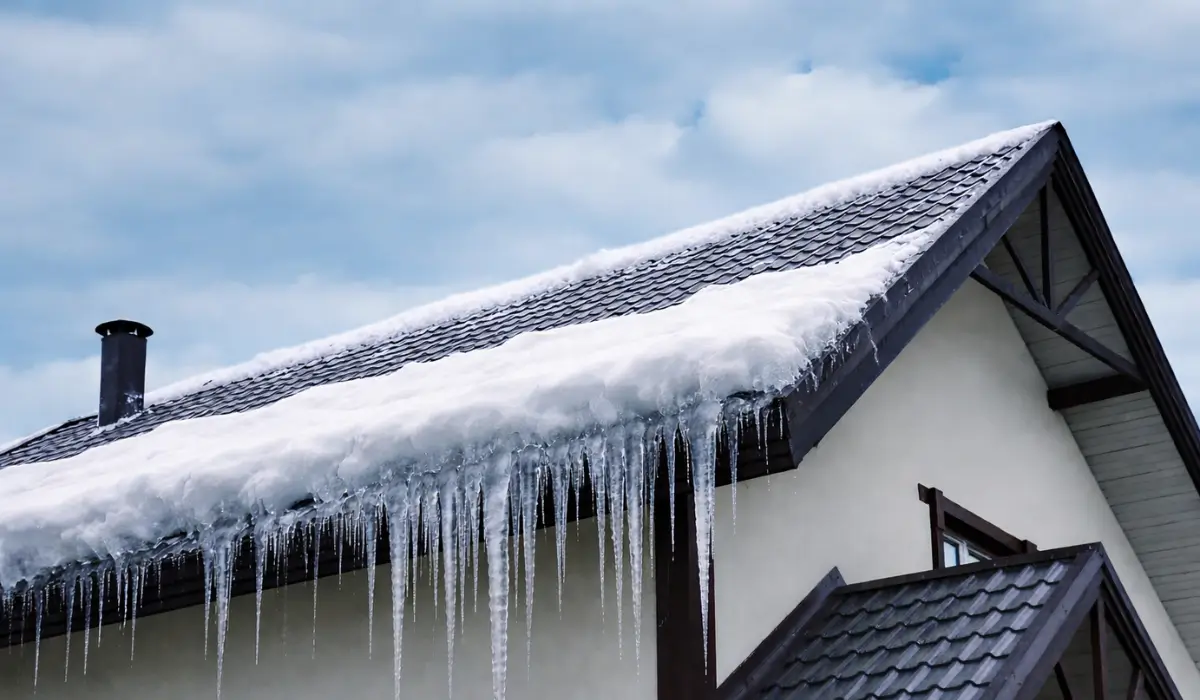










Why Ice Dams Form on Illinois Homes and How They Cause Roof Damage
Ice dams form when melting snow refreezes on colder sections of a roof, creating a ridge that blocks water from draining properly. During Illinois winters, trapped meltwater can seep beneath shingles, damaging insulation, siding, and interior ceilings on many Illinois roofs.
Heavy snowfall combined with rapid temperature swings often creates ideal conditions for ice dam formation. Northern Illinois frequently experiences winter temperature changes of 20°F or more within a single day. These fluctuations cause snow to melt during warmer periods and refreeze when temperatures drop.
The National Weather Service reports that northern Illinois averages roughly 30–40 inches of snowfall annually, increasing the likelihood of snow accumulation and freeze–thaw cycles that contribute to roof ice buildup.
Recognizing early warning signs and responding quickly helps homeowners prevent hidden winter roof damage. When leaks, insulation problems, or roof ice buildup appear, Top Quality Roofing & Siding provides professional inspections and specialized roof services designed for Midwest winter conditions.
What Is an Ice Dam?
An ice dam is a ridge of ice that forms when melting snow refreezes before it drains from the roof. As meltwater becomes trapped behind the frozen barrier, it can back up beneath shingles and flashing.
Once water enters roofing layers, it may spread into insulation, attic framing, and interior ceilings.
📌 Snow Melt Caused by Attic Heat Loss
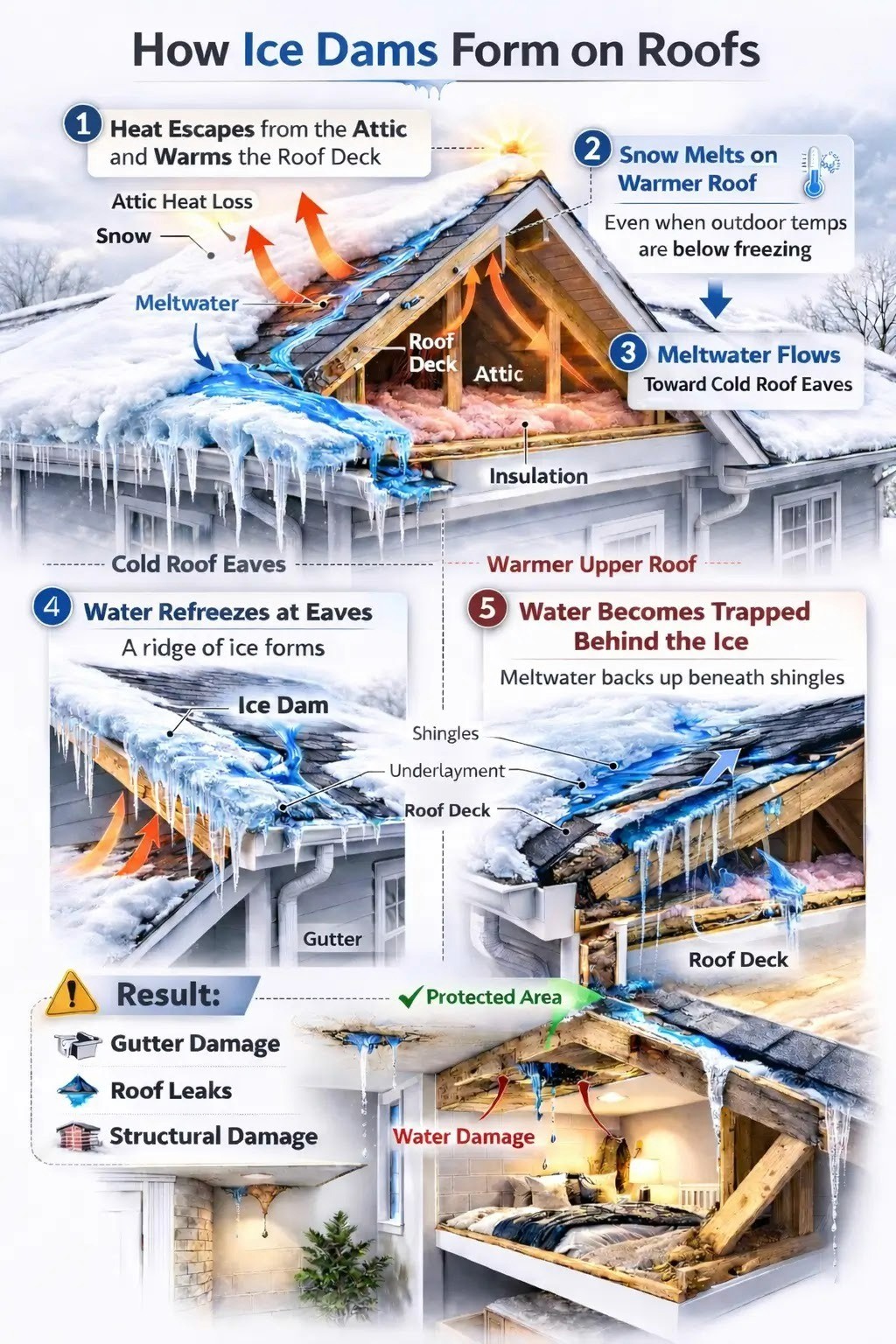
Snow often melts unevenly because warm air escapes from the attic. When attic insulation is insufficient, heat from the home warms portions of the roof deck.
Building science research shows that attic air temperatures above 32°F (0°C) can cause snow to melt even when outside temperatures remain below freezing.
📌 Refreezing in Colder Roof Areas
Meltwater flows toward colder roof sections that extend beyond the heated attic. These areas remain colder and allow water to refreeze into solid ice.
Repeated temperature swings accelerate this process, gradually forming a ridge that prevents water from draining into gutters.
📌 Water Trapped Behind Ice
Once drainage is blocked, meltwater pools behind the ice dam along the lower roof surface. Even a small ridge of ice can hold several gallons of water.
This trapped moisture may eventually penetrate beneath shingles and reach the interior structure of the home.
📌 Water Intrusion Behind Roofing and Siding
Over time, trapped water may seep into roofing layers, insulation, drywall, and siding systems.
This hidden water intrusion IL homeowners experience can take weeks to fully dry, increasing the risk of mold growth and wood deterioration.
Ice dams trap melting snow and force water beneath shingles and exterior materials.
⬛ Cold Climate Roofing Insight Research from the Insurance Institute for Business & Home Safety (IBHS) identifies ice dams as a leading cause of winter roof damage claims in cold-climate regions. Homes with poor attic insulation or limited ventilation face significantly higher risk of ice dam formation. |
How Ice Dams Damage Your Roof & Home Exterior
Ice dams weaken roofing systems because trapped water remains on the roof surface instead of draining away.
Over time, repeated moisture exposure can damage shingles, insulation, and exterior walls.
➡️ Shingle Damage and Roof Deck Exposure
When ice expands along lower portions of Illinois roofs, pressure can lift or loosen shingles.
Once the protective seal breaks, water may reach the plywood roof deck beneath the roofing material.
➡️ Saturated Insulation and Heat Loss
Water often reaches attic insulation first. Wet insulation loses its thermal resistance, allowing heat to escape more easily from the home.
Fiberglass insulation that becomes damp may lose up to 40% of its insulating efficiency, increasing heating costs.
➡️ Interior Ceiling Stains
Water that penetrates roof decking may appear as stains or damp areas on ceilings and walls.
These leaks often develop near exterior walls where snow and ice accumulation is greatest.
➡️ Siding Damage and Mold Growth
Water forced behind siding panels may remain trapped inside wall cavities. Over time this moisture may cause wood rot, corrosion, or microbial growth.
Homes experiencing repeated winter leaks sometimes require specialized mold prevention siding solutions to eliminate hidden moisture.
Severe moisture damage often requires professional ice damming repair IL services to restore roof protection.
Ice dams damage shingles, insulation, siding, and interior structures.
Where Ice Dams Form Most Often on Illinois Roofs
Ice dams rarely form evenly across a roof. Certain areas are more vulnerable because they retain snow longer or experience uneven temperatures.
🔎 Roof Eaves and Overhangs
Ice dams most commonly develop along roof eaves, where the structure extends beyond the heated attic.
Because these areas remain colder, melting snow refreezes easily and begins forming a ridge of ice.
🔎 Roof Valleys
Roof valleys collect snow from multiple roof slopes. When melting begins, these areas channel large amounts of runoff toward lower roof sections. This concentration of meltwater increases the likelihood of refreezing.
🔎 Chimneys and Skylights
Roof penetrations such as chimneys and skylights often allow small amounts of heat to escape. This localized warmth melts snow around the penetration point, sending water toward colder sections where ice forms.
🔎 Poorly Ventilated Roof Areas
Blocked soffit vents or inadequate attic ventilation create warm spots beneath the roof deck. These temperature differences cause uneven snow melt and contribute to ice buildup.
🔎 North-Facing Roof Slopes
Roof slopes that receive little sunlight retain snow longer during winter. Extended snow coverage increases the chance that melting snow will refreeze.
Ice dams often develop at eaves, valleys, roof penetrations, and poorly ventilated areas.
Signs of an Ice Dam in Illinois Homes
Ice dams often develop gradually. Homeowners should watch for early warning signs.
Common indicators include:
Large icicles hanging from gutters
Water dripping behind fascia boards
Interior ceiling stains near exterior walls
Cold drafts in upper floors
Ice buildup along lower portions of Illinois roofs
Sudden roof leaks during late-winter thaws
Large icicles are often the first visible sign that melting snow is refreezing.
Homeowners noticing these warning signs often begin searching for emergency roof repair near me before damage spreads further.
Residents in Naperville, Warrenville, and surrounding communities frequently encounter these winter conditions, making early inspection for roof repair Naperville services extremely important.
Icicles, interior stains, and roof leaks often signal ice dam formation.
How to Prevent Ice Dams on Illinois Roofs
Preventing ice dams requires controlling attic temperatures and improving airflow.
Key prevention strategies include:
Improving attic insulation to reduce attic heat loss
Installing balanced attic ventilation systems
Sealing air leaks around attic hatches and vents
Installing roof de-icing cables or heated gutters
Using ice-and-water shield membranes during reroofing
Scheduling seasonal inspections for Illinois roofs
Proper ventilation typically includes both soffit vents and ridge vents to allow cold air circulation beneath the roof deck.
Energy guidance from the U.S. Department of Energy recommends maintaining attic temperatures close to outdoor conditions during winter months.
Homeowners seeking long-term roof protection can review professional roof services designed for Midwest weather conditions.
Proper insulation, ventilation, and waterproofing help prevent ice dams.
When You Need Ice Dam Repair
Once an ice dam forms, professional removal protects roofing materials and prevents further structural damage.
Safe Steam Ice Removal
Licensed contractors remove ice dams using specialized steam equipment. This method melts ice safely without damaging shingles or flashing.
Roof and Attic Inspection
Technicians inspect roofing layers, insulation, gutters, and siding to identify hidden moisture paths caused by water intrusion IL.
Professional inspections typically include:
checking flashing seals
examining attic insulation moisture levels
evaluating ventilation airflow
inspecting gutters and roof structure for stress
identifying warm air leaks entering the attic
Structural Repairs
Severe winter damage may require certified ice damming repair IL services to restore the integrity of Illinois roofs.
Examples of completed projects can be viewed in our recent roofing projects gallery.
Homeowners experiencing sudden winter leaks often search for emergency roof repair near me, which usually indicates advanced ice buildup requiring professional removal.
⬛ Professional Roofing Tip Roofing contractors recommend inspecting attic insulation before winter storms arrive. Homes with insulation levels below R-38 to R-49 often lose heat through the roof deck, increasing uneven snow melt and ice dam formation. Sealing attic air leaks and improving insulation dramatically reduces the likelihood of recurring ice dam problems. Professional inspection helps identify hidden roof damage. |
Protect Illinois Roofs Before Winter Damage Spreads
Ice dams represent a serious threat to Illinois roofs, siding systems, and interior structures.
Key protection steps include:
Monitor gutters and roof areas for heavy icicle formation
Improve attic insulation and ventilation
Schedule roof inspections after major snowstorms
Address small leaks before moisture spreads
Use certified contractors for safe ice removal
Since 2012, more than 900 homeowners across Illinois have trusted Top Quality Roofing & Siding for winter roof inspections, ice dam removal, and professional repairs.
Worried About Ice Buildup on Your Roof? Ice along roof edges can slowly lead to leaks, wet insulation, and damage inside the home. Addressing these issues early helps protect the comfort and safety of the spaces families rely on every day. Top Quality Roofing & Siding provides careful roof evaluations and dependable repair solutions for Illinois homes. Call (630) 520-0576 to schedule a free ice dam check for your roof. |
Why Ice Dams Form on Illinois Homes and How They Cause Roof Damage
Ice dams form when melting snow refreezes on colder sections of a roof, creating a ridge that blocks water from draining properly. During Illinois winters, trapped meltwater can seep beneath shingles, damaging insulation, siding, and interior ceilings on many Illinois roofs.
Heavy snowfall combined with rapid temperature swings often creates ideal conditions for ice dam formation. Northern Illinois frequently experiences winter temperature changes of 20°F or more within a single day. These fluctuations cause snow to melt during warmer periods and refreeze when temperatures drop.
The National Weather Service reports that northern Illinois averages roughly 30–40 inches of snowfall annually, increasing the likelihood of snow accumulation and freeze–thaw cycles that contribute to roof ice buildup.
Recognizing early warning signs and responding quickly helps homeowners prevent hidden winter roof damage. When leaks, insulation problems, or roof ice buildup appear, Top Quality Roofing & Siding provides professional inspections and specialized roof services designed for Midwest winter conditions.
What Is an Ice Dam?
An ice dam is a ridge of ice that forms when melting snow refreezes before it drains from the roof. As meltwater becomes trapped behind the frozen barrier, it can back up beneath shingles and flashing.
Once water enters roofing layers, it may spread into insulation, attic framing, and interior ceilings.
📌 Snow Melt Caused by Attic Heat Loss
Snow often melts unevenly because warm air escapes from the attic. When attic insulation is insufficient, heat from the home warms portions of the roof deck.
Building science research shows that attic air temperatures above 32°F (0°C) can cause snow to melt even when outside temperatures remain below freezing.
📌 Refreezing in Colder Roof Areas
Meltwater flows toward colder roof sections that extend beyond the heated attic. These areas remain colder and allow water to refreeze into solid ice.
Repeated temperature swings accelerate this process, gradually forming a ridge that prevents water from draining into gutters.
📌 Water Trapped Behind Ice
Once drainage is blocked, meltwater pools behind the ice dam along the lower roof surface. Even a small ridge of ice can hold several gallons of water.
This trapped moisture may eventually penetrate beneath shingles and reach the interior structure of the home.
📌 Water Intrusion Behind Roofing and Siding
Over time, trapped water may seep into roofing layers, insulation, drywall, and siding systems.
This hidden water intrusion IL homeowners experience can take weeks to fully dry, increasing the risk of mold growth and wood deterioration.
Ice dams trap melting snow and force water beneath shingles and exterior materials.
⬛ Cold Climate Roofing Insight Research from the Insurance Institute for Business & Home Safety (IBHS) identifies ice dams as a leading cause of winter roof damage claims in cold-climate regions. Homes with poor attic insulation or limited ventilation face significantly higher risk of ice dam formation. |
How Ice Dams Damage Your Roof & Home Exterior
Ice dams weaken roofing systems because trapped water remains on the roof surface instead of draining away.
Over time, repeated moisture exposure can damage shingles, insulation, and exterior walls.
➡️ Shingle Damage and Roof Deck Exposure
When ice expands along lower portions of Illinois roofs, pressure can lift or loosen shingles.
Once the protective seal breaks, water may reach the plywood roof deck beneath the roofing material.
➡️ Saturated Insulation and Heat Loss
Water often reaches attic insulation first. Wet insulation loses its thermal resistance, allowing heat to escape more easily from the home.
Fiberglass insulation that becomes damp may lose up to 40% of its insulating efficiency, increasing heating costs.
➡️ Interior Ceiling Stains
Water that penetrates roof decking may appear as stains or damp areas on ceilings and walls.
These leaks often develop near exterior walls where snow and ice accumulation is greatest.
➡️ Siding Damage and Mold Growth
Water forced behind siding panels may remain trapped inside wall cavities. Over time this moisture may cause wood rot, corrosion, or microbial growth.
Homes experiencing repeated winter leaks sometimes require specialized mold prevention siding solutions to eliminate hidden moisture.
Severe moisture damage often requires professional ice damming repair IL services to restore roof protection.
Ice dams damage shingles, insulation, siding, and interior structures.
Where Ice Dams Form Most Often on Illinois Roofs
Ice dams rarely form evenly across a roof. Certain areas are more vulnerable because they retain snow longer or experience uneven temperatures.
🔎 Roof Eaves and Overhangs
Ice dams most commonly develop along roof eaves, where the structure extends beyond the heated attic.
Because these areas remain colder, melting snow refreezes easily and begins forming a ridge of ice.
🔎 Roof Valleys
Roof valleys collect snow from multiple roof slopes. When melting begins, these areas channel large amounts of runoff toward lower roof sections. This concentration of meltwater increases the likelihood of refreezing.
🔎 Chimneys and Skylights
Roof penetrations such as chimneys and skylights often allow small amounts of heat to escape. This localized warmth melts snow around the penetration point, sending water toward colder sections where ice forms.
🔎 Poorly Ventilated Roof Areas
Blocked soffit vents or inadequate attic ventilation create warm spots beneath the roof deck. These temperature differences cause uneven snow melt and contribute to ice buildup.
🔎 North-Facing Roof Slopes
Roof slopes that receive little sunlight retain snow longer during winter. Extended snow coverage increases the chance that melting snow will refreeze.
Ice dams often develop at eaves, valleys, roof penetrations, and poorly ventilated areas.
Signs of an Ice Dam in Illinois Homes
Ice dams often develop gradually. Homeowners should watch for early warning signs.
Common indicators include:
Large icicles hanging from gutters
Water dripping behind fascia boards
Interior ceiling stains near exterior walls
Cold drafts in upper floors
Ice buildup along lower portions of Illinois roofs
Sudden roof leaks during late-winter thaws
Large icicles are often the first visible sign that melting snow is refreezing.
Homeowners noticing these warning signs often begin searching for emergency roof repair near me before damage spreads further.
Residents in Naperville, Warrenville, and surrounding communities frequently encounter these winter conditions, making early inspection for roof repair Naperville services extremely important.
Icicles, interior stains, and roof leaks often signal ice dam formation.
How to Prevent Ice Dams on Illinois Roofs
Preventing ice dams requires controlling attic temperatures and improving airflow.
Key prevention strategies include:
Improving attic insulation to reduce attic heat loss
Installing balanced attic ventilation systems
Sealing air leaks around attic hatches and vents
Installing roof de-icing cables or heated gutters
Using ice-and-water shield membranes during reroofing
Scheduling seasonal inspections for Illinois roofs
Proper ventilation typically includes both soffit vents and ridge vents to allow cold air circulation beneath the roof deck.
Energy guidance from the U.S. Department of Energy recommends maintaining attic temperatures close to outdoor conditions during winter months.
Homeowners seeking long-term roof protection can review professional roof services designed for Midwest weather conditions.
Proper insulation, ventilation, and waterproofing help prevent ice dams.
When You Need Ice Dam Repair
Once an ice dam forms, professional removal protects roofing materials and prevents further structural damage.
Safe Steam Ice Removal
Licensed contractors remove ice dams using specialized steam equipment. This method melts ice safely without damaging shingles or flashing.
Roof and Attic Inspection
Technicians inspect roofing layers, insulation, gutters, and siding to identify hidden moisture paths caused by water intrusion IL.
Professional inspections typically include:
checking flashing seals
examining attic insulation moisture levels
evaluating ventilation airflow
inspecting gutters and roof structure for stress
identifying warm air leaks entering the attic
Structural Repairs
Severe winter damage may require certified ice damming repair IL services to restore the integrity of Illinois roofs.
Examples of completed projects can be viewed in our recent roofing projects gallery.
Homeowners experiencing sudden winter leaks often search for emergency roof repair near me, which usually indicates advanced ice buildup requiring professional removal.
⬛ Professional Roofing Tip Roofing contractors recommend inspecting attic insulation before winter storms arrive. Homes with insulation levels below R-38 to R-49 often lose heat through the roof deck, increasing uneven snow melt and ice dam formation. Sealing attic air leaks and improving insulation dramatically reduces the likelihood of recurring ice dam problems. Professional inspection helps identify hidden roof damage. |
Protect Illinois Roofs Before Winter Damage Spreads
Ice dams represent a serious threat to Illinois roofs, siding systems, and interior structures.
Key protection steps include:
Monitor gutters and roof areas for heavy icicle formation
Improve attic insulation and ventilation
Schedule roof inspections after major snowstorms
Address small leaks before moisture spreads
Use certified contractors for safe ice removal
Since 2012, more than 900 homeowners across Illinois have trusted Top Quality Roofing & Siding for winter roof inspections, ice dam removal, and professional repairs.
Worried About Ice Buildup on Your Roof? Ice along roof edges can slowly lead to leaks, wet insulation, and damage inside the home. Addressing these issues early helps protect the comfort and safety of the spaces families rely on every day. Top Quality Roofing & Siding provides careful roof evaluations and dependable repair solutions for Illinois homes. Call (630) 520-0576 to schedule a free ice dam check for your roof. |
Why Ice Dams Form on Illinois Homes and How They Cause Roof Damage
Ice dams form when melting snow refreezes on colder sections of a roof, creating a ridge that blocks water from draining properly. During Illinois winters, trapped meltwater can seep beneath shingles, damaging insulation, siding, and interior ceilings on many Illinois roofs.
Heavy snowfall combined with rapid temperature swings often creates ideal conditions for ice dam formation. Northern Illinois frequently experiences winter temperature changes of 20°F or more within a single day. These fluctuations cause snow to melt during warmer periods and refreeze when temperatures drop.
The National Weather Service reports that northern Illinois averages roughly 30–40 inches of snowfall annually, increasing the likelihood of snow accumulation and freeze–thaw cycles that contribute to roof ice buildup.
Recognizing early warning signs and responding quickly helps homeowners prevent hidden winter roof damage. When leaks, insulation problems, or roof ice buildup appear, Top Quality Roofing & Siding provides professional inspections and specialized roof services designed for Midwest winter conditions.
What Is an Ice Dam?
An ice dam is a ridge of ice that forms when melting snow refreezes before it drains from the roof. As meltwater becomes trapped behind the frozen barrier, it can back up beneath shingles and flashing.
Once water enters roofing layers, it may spread into insulation, attic framing, and interior ceilings.
📌 Snow Melt Caused by Attic Heat Loss
Snow often melts unevenly because warm air escapes from the attic. When attic insulation is insufficient, heat from the home warms portions of the roof deck.
Building science research shows that attic air temperatures above 32°F (0°C) can cause snow to melt even when outside temperatures remain below freezing.
📌 Refreezing in Colder Roof Areas
Meltwater flows toward colder roof sections that extend beyond the heated attic. These areas remain colder and allow water to refreeze into solid ice.
Repeated temperature swings accelerate this process, gradually forming a ridge that prevents water from draining into gutters.
📌 Water Trapped Behind Ice
Once drainage is blocked, meltwater pools behind the ice dam along the lower roof surface. Even a small ridge of ice can hold several gallons of water.
This trapped moisture may eventually penetrate beneath shingles and reach the interior structure of the home.
📌 Water Intrusion Behind Roofing and Siding
Over time, trapped water may seep into roofing layers, insulation, drywall, and siding systems.
This hidden water intrusion IL homeowners experience can take weeks to fully dry, increasing the risk of mold growth and wood deterioration.
Ice dams trap melting snow and force water beneath shingles and exterior materials.
⬛ Cold Climate Roofing Insight Research from the Insurance Institute for Business & Home Safety (IBHS) identifies ice dams as a leading cause of winter roof damage claims in cold-climate regions. Homes with poor attic insulation or limited ventilation face significantly higher risk of ice dam formation. |
How Ice Dams Damage Your Roof & Home Exterior
Ice dams weaken roofing systems because trapped water remains on the roof surface instead of draining away.
Over time, repeated moisture exposure can damage shingles, insulation, and exterior walls.
➡️ Shingle Damage and Roof Deck Exposure
When ice expands along lower portions of Illinois roofs, pressure can lift or loosen shingles.
Once the protective seal breaks, water may reach the plywood roof deck beneath the roofing material.
➡️ Saturated Insulation and Heat Loss
Water often reaches attic insulation first. Wet insulation loses its thermal resistance, allowing heat to escape more easily from the home.
Fiberglass insulation that becomes damp may lose up to 40% of its insulating efficiency, increasing heating costs.
➡️ Interior Ceiling Stains
Water that penetrates roof decking may appear as stains or damp areas on ceilings and walls.
These leaks often develop near exterior walls where snow and ice accumulation is greatest.
➡️ Siding Damage and Mold Growth
Water forced behind siding panels may remain trapped inside wall cavities. Over time this moisture may cause wood rot, corrosion, or microbial growth.
Homes experiencing repeated winter leaks sometimes require specialized mold prevention siding solutions to eliminate hidden moisture.
Severe moisture damage often requires professional ice damming repair IL services to restore roof protection.
Ice dams damage shingles, insulation, siding, and interior structures.
Where Ice Dams Form Most Often on Illinois Roofs
Ice dams rarely form evenly across a roof. Certain areas are more vulnerable because they retain snow longer or experience uneven temperatures.
🔎 Roof Eaves and Overhangs
Ice dams most commonly develop along roof eaves, where the structure extends beyond the heated attic.
Because these areas remain colder, melting snow refreezes easily and begins forming a ridge of ice.
🔎 Roof Valleys
Roof valleys collect snow from multiple roof slopes. When melting begins, these areas channel large amounts of runoff toward lower roof sections. This concentration of meltwater increases the likelihood of refreezing.
🔎 Chimneys and Skylights
Roof penetrations such as chimneys and skylights often allow small amounts of heat to escape. This localized warmth melts snow around the penetration point, sending water toward colder sections where ice forms.
🔎 Poorly Ventilated Roof Areas
Blocked soffit vents or inadequate attic ventilation create warm spots beneath the roof deck. These temperature differences cause uneven snow melt and contribute to ice buildup.
🔎 North-Facing Roof Slopes
Roof slopes that receive little sunlight retain snow longer during winter. Extended snow coverage increases the chance that melting snow will refreeze.
Ice dams often develop at eaves, valleys, roof penetrations, and poorly ventilated areas.
Signs of an Ice Dam in Illinois Homes
Ice dams often develop gradually. Homeowners should watch for early warning signs.
Common indicators include:
Large icicles hanging from gutters
Water dripping behind fascia boards
Interior ceiling stains near exterior walls
Cold drafts in upper floors
Ice buildup along lower portions of Illinois roofs
Sudden roof leaks during late-winter thaws
Large icicles are often the first visible sign that melting snow is refreezing.
Homeowners noticing these warning signs often begin searching for emergency roof repair near me before damage spreads further.
Residents in Naperville, Warrenville, and surrounding communities frequently encounter these winter conditions, making early inspection for roof repair Naperville services extremely important.
Icicles, interior stains, and roof leaks often signal ice dam formation.
How to Prevent Ice Dams on Illinois Roofs
Preventing ice dams requires controlling attic temperatures and improving airflow.
Key prevention strategies include:
Improving attic insulation to reduce attic heat loss
Installing balanced attic ventilation systems
Sealing air leaks around attic hatches and vents
Installing roof de-icing cables or heated gutters
Using ice-and-water shield membranes during reroofing
Scheduling seasonal inspections for Illinois roofs
Proper ventilation typically includes both soffit vents and ridge vents to allow cold air circulation beneath the roof deck.
Energy guidance from the U.S. Department of Energy recommends maintaining attic temperatures close to outdoor conditions during winter months.
Homeowners seeking long-term roof protection can review professional roof services designed for Midwest weather conditions.
Proper insulation, ventilation, and waterproofing help prevent ice dams.
When You Need Ice Dam Repair
Once an ice dam forms, professional removal protects roofing materials and prevents further structural damage.
Safe Steam Ice Removal
Licensed contractors remove ice dams using specialized steam equipment. This method melts ice safely without damaging shingles or flashing.
Roof and Attic Inspection
Technicians inspect roofing layers, insulation, gutters, and siding to identify hidden moisture paths caused by water intrusion IL.
Professional inspections typically include:
checking flashing seals
examining attic insulation moisture levels
evaluating ventilation airflow
inspecting gutters and roof structure for stress
identifying warm air leaks entering the attic
Structural Repairs
Severe winter damage may require certified ice damming repair IL services to restore the integrity of Illinois roofs.
Examples of completed projects can be viewed in our recent roofing projects gallery.
Homeowners experiencing sudden winter leaks often search for emergency roof repair near me, which usually indicates advanced ice buildup requiring professional removal.
⬛ Professional Roofing Tip Roofing contractors recommend inspecting attic insulation before winter storms arrive. Homes with insulation levels below R-38 to R-49 often lose heat through the roof deck, increasing uneven snow melt and ice dam formation. Sealing attic air leaks and improving insulation dramatically reduces the likelihood of recurring ice dam problems. Professional inspection helps identify hidden roof damage. |
Protect Illinois Roofs Before Winter Damage Spreads
Ice dams represent a serious threat to Illinois roofs, siding systems, and interior structures.
Key protection steps include:
Monitor gutters and roof areas for heavy icicle formation
Improve attic insulation and ventilation
Schedule roof inspections after major snowstorms
Address small leaks before moisture spreads
Use certified contractors for safe ice removal
Since 2012, more than 900 homeowners across Illinois have trusted Top Quality Roofing & Siding for winter roof inspections, ice dam removal, and professional repairs.
Worried About Ice Buildup on Your Roof? Ice along roof edges can slowly lead to leaks, wet insulation, and damage inside the home. Addressing these issues early helps protect the comfort and safety of the spaces families rely on every day. Top Quality Roofing & Siding provides careful roof evaluations and dependable repair solutions for Illinois homes. Call (630) 520-0576 to schedule a free ice dam check for your roof. |
Why Ice Dams Form on Illinois Homes and How They Cause Roof Damage
Ice dams form when melting snow refreezes on colder sections of a roof, creating a ridge that blocks water from draining properly. During Illinois winters, trapped meltwater can seep beneath shingles, damaging insulation, siding, and interior ceilings on many Illinois roofs.
Heavy snowfall combined with rapid temperature swings often creates ideal conditions for ice dam formation. Northern Illinois frequently experiences winter temperature changes of 20°F or more within a single day. These fluctuations cause snow to melt during warmer periods and refreeze when temperatures drop.
The National Weather Service reports that northern Illinois averages roughly 30–40 inches of snowfall annually, increasing the likelihood of snow accumulation and freeze–thaw cycles that contribute to roof ice buildup.
Recognizing early warning signs and responding quickly helps homeowners prevent hidden winter roof damage. When leaks, insulation problems, or roof ice buildup appear, Top Quality Roofing & Siding provides professional inspections and specialized roof services designed for Midwest winter conditions.
What Is an Ice Dam?
An ice dam is a ridge of ice that forms when melting snow refreezes before it drains from the roof. As meltwater becomes trapped behind the frozen barrier, it can back up beneath shingles and flashing.
Once water enters roofing layers, it may spread into insulation, attic framing, and interior ceilings.
📌 Snow Melt Caused by Attic Heat Loss
Snow often melts unevenly because warm air escapes from the attic. When attic insulation is insufficient, heat from the home warms portions of the roof deck.
Building science research shows that attic air temperatures above 32°F (0°C) can cause snow to melt even when outside temperatures remain below freezing.
📌 Refreezing in Colder Roof Areas
Meltwater flows toward colder roof sections that extend beyond the heated attic. These areas remain colder and allow water to refreeze into solid ice.
Repeated temperature swings accelerate this process, gradually forming a ridge that prevents water from draining into gutters.
📌 Water Trapped Behind Ice
Once drainage is blocked, meltwater pools behind the ice dam along the lower roof surface. Even a small ridge of ice can hold several gallons of water.
This trapped moisture may eventually penetrate beneath shingles and reach the interior structure of the home.
📌 Water Intrusion Behind Roofing and Siding
Over time, trapped water may seep into roofing layers, insulation, drywall, and siding systems.
This hidden water intrusion IL homeowners experience can take weeks to fully dry, increasing the risk of mold growth and wood deterioration.
Ice dams trap melting snow and force water beneath shingles and exterior materials.
⬛ Cold Climate Roofing Insight Research from the Insurance Institute for Business & Home Safety (IBHS) identifies ice dams as a leading cause of winter roof damage claims in cold-climate regions. Homes with poor attic insulation or limited ventilation face significantly higher risk of ice dam formation. |
How Ice Dams Damage Your Roof & Home Exterior
Ice dams weaken roofing systems because trapped water remains on the roof surface instead of draining away.
Over time, repeated moisture exposure can damage shingles, insulation, and exterior walls.
➡️ Shingle Damage and Roof Deck Exposure
When ice expands along lower portions of Illinois roofs, pressure can lift or loosen shingles.
Once the protective seal breaks, water may reach the plywood roof deck beneath the roofing material.
➡️ Saturated Insulation and Heat Loss
Water often reaches attic insulation first. Wet insulation loses its thermal resistance, allowing heat to escape more easily from the home.
Fiberglass insulation that becomes damp may lose up to 40% of its insulating efficiency, increasing heating costs.
➡️ Interior Ceiling Stains
Water that penetrates roof decking may appear as stains or damp areas on ceilings and walls.
These leaks often develop near exterior walls where snow and ice accumulation is greatest.
➡️ Siding Damage and Mold Growth
Water forced behind siding panels may remain trapped inside wall cavities. Over time this moisture may cause wood rot, corrosion, or microbial growth.
Homes experiencing repeated winter leaks sometimes require specialized mold prevention siding solutions to eliminate hidden moisture.
Severe moisture damage often requires professional ice damming repair IL services to restore roof protection.
Ice dams damage shingles, insulation, siding, and interior structures.
Where Ice Dams Form Most Often on Illinois Roofs
Ice dams rarely form evenly across a roof. Certain areas are more vulnerable because they retain snow longer or experience uneven temperatures.
🔎 Roof Eaves and Overhangs
Ice dams most commonly develop along roof eaves, where the structure extends beyond the heated attic.
Because these areas remain colder, melting snow refreezes easily and begins forming a ridge of ice.
🔎 Roof Valleys
Roof valleys collect snow from multiple roof slopes. When melting begins, these areas channel large amounts of runoff toward lower roof sections. This concentration of meltwater increases the likelihood of refreezing.
🔎 Chimneys and Skylights
Roof penetrations such as chimneys and skylights often allow small amounts of heat to escape. This localized warmth melts snow around the penetration point, sending water toward colder sections where ice forms.
🔎 Poorly Ventilated Roof Areas
Blocked soffit vents or inadequate attic ventilation create warm spots beneath the roof deck. These temperature differences cause uneven snow melt and contribute to ice buildup.
🔎 North-Facing Roof Slopes
Roof slopes that receive little sunlight retain snow longer during winter. Extended snow coverage increases the chance that melting snow will refreeze.
Ice dams often develop at eaves, valleys, roof penetrations, and poorly ventilated areas.
Signs of an Ice Dam in Illinois Homes
Ice dams often develop gradually. Homeowners should watch for early warning signs.
Common indicators include:
Large icicles hanging from gutters
Water dripping behind fascia boards
Interior ceiling stains near exterior walls
Cold drafts in upper floors
Ice buildup along lower portions of Illinois roofs
Sudden roof leaks during late-winter thaws
Large icicles are often the first visible sign that melting snow is refreezing.
Homeowners noticing these warning signs often begin searching for emergency roof repair near me before damage spreads further.
Residents in Naperville, Warrenville, and surrounding communities frequently encounter these winter conditions, making early inspection for roof repair Naperville services extremely important.
Icicles, interior stains, and roof leaks often signal ice dam formation.
How to Prevent Ice Dams on Illinois Roofs
Preventing ice dams requires controlling attic temperatures and improving airflow.
Key prevention strategies include:
Improving attic insulation to reduce attic heat loss
Installing balanced attic ventilation systems
Sealing air leaks around attic hatches and vents
Installing roof de-icing cables or heated gutters
Using ice-and-water shield membranes during reroofing
Scheduling seasonal inspections for Illinois roofs
Proper ventilation typically includes both soffit vents and ridge vents to allow cold air circulation beneath the roof deck.
Energy guidance from the U.S. Department of Energy recommends maintaining attic temperatures close to outdoor conditions during winter months.
Homeowners seeking long-term roof protection can review professional roof services designed for Midwest weather conditions.
Proper insulation, ventilation, and waterproofing help prevent ice dams.
When You Need Ice Dam Repair
Once an ice dam forms, professional removal protects roofing materials and prevents further structural damage.
Safe Steam Ice Removal
Licensed contractors remove ice dams using specialized steam equipment. This method melts ice safely without damaging shingles or flashing.
Roof and Attic Inspection
Technicians inspect roofing layers, insulation, gutters, and siding to identify hidden moisture paths caused by water intrusion IL.
Professional inspections typically include:
checking flashing seals
examining attic insulation moisture levels
evaluating ventilation airflow
inspecting gutters and roof structure for stress
identifying warm air leaks entering the attic
Structural Repairs
Severe winter damage may require certified ice damming repair IL services to restore the integrity of Illinois roofs.
Examples of completed projects can be viewed in our recent roofing projects gallery.
Homeowners experiencing sudden winter leaks often search for emergency roof repair near me, which usually indicates advanced ice buildup requiring professional removal.
⬛ Professional Roofing Tip Roofing contractors recommend inspecting attic insulation before winter storms arrive. Homes with insulation levels below R-38 to R-49 often lose heat through the roof deck, increasing uneven snow melt and ice dam formation. Sealing attic air leaks and improving insulation dramatically reduces the likelihood of recurring ice dam problems. Professional inspection helps identify hidden roof damage. |
Protect Illinois Roofs Before Winter Damage Spreads
Ice dams represent a serious threat to Illinois roofs, siding systems, and interior structures.
Key protection steps include:
Monitor gutters and roof areas for heavy icicle formation
Improve attic insulation and ventilation
Schedule roof inspections after major snowstorms
Address small leaks before moisture spreads
Use certified contractors for safe ice removal
Since 2012, more than 900 homeowners across Illinois have trusted Top Quality Roofing & Siding for winter roof inspections, ice dam removal, and professional repairs.
Worried About Ice Buildup on Your Roof? Ice along roof edges can slowly lead to leaks, wet insulation, and damage inside the home. Addressing these issues early helps protect the comfort and safety of the spaces families rely on every day. Top Quality Roofing & Siding provides careful roof evaluations and dependable repair solutions for Illinois homes. Call (630) 520-0576 to schedule a free ice dam check for your roof. |


Pricing & financing



Copyright © 2025 Top Quality Roofing and Siding
Pricing & financing
Copyright © 2025 Top Quality Roofing and Siding
Pricing & financing

Copyright © 2025 Top Quality Roofing and Siding