
Free Estimates on New Roof, Siding, Gutter Replacements


Free Estimates on New Roof, Siding, Gutter Replacements
(630) 520-0576
Mon - Sat: 8am to 8pm

Fall Siding Installation in Illinois: Is It a Good Time?











Yes, fall siding installation can be a practical choice for Illinois homeowners. Changing temperatures, rain, shorter days, and the siding material can all affect when and how the work should be completed.
Fall also gives homeowners a chance to address worn or damaged siding before winter. We help homeowners consider exterior conditions, material options, budget, and seasonal weather before deciding when to start.
Why Many Homeowners Prefer Fall Siding Projects
Fall can provide a useful window between summer heat and sustained winter cold. For homeowners already planning an exterior update, this may be an opportunity to address damaged or aging siding before another Illinois winter.
Scheduling can change after the busy summer months, although availability still depends on current projects and weather. Waiting until late fall does not necessarily make scheduling easier.
The decision should ultimately come back to the condition of the siding. Fading may be mainly an appearance concern, while damaged areas or signs of moisture can justify a closer look before deciding whether replacement can wait.
Planning insight: Homeowners considering fall siding installation in Illinois can use the siding cost calculator for an initial idea of project costs. Material, project size, existing conditions, and required work will affect the actual price.
The Biggest Challenge With Fall Siding Installation
The biggest challenge is finding a suitable working window. Illinois weather can change quickly, so late-season projects need enough scheduling flexibility to respond to changing conditions.
Weather delays for siding do not automatically make fall a poor time for the work. Three factors deserve particular attention:
Rain and moisture: Wet conditions may interrupt exterior work.
Temperature changes: Siding products have specific handling and installation requirements.
Shorter days: Less daylight can reduce available working time.
Existing siding may also hide problems that become visible only after removal. We plan around the needs of the house rather than trying to meet an arbitrary calendar date, especially when conditions underneath the existing exterior require attention.
When comparing siding contractors in Illinois, ask how weather, material choice, and existing conditions could affect the job. Top Quality Roofing & Siding provides Illinois siding services for homeowners who want to compare available materials and discuss what fits their home.
How Fall Siding Installation Changes by Material
Installing LP SmartSide in autumn still requires following the manufacturer's current requirements for storage, handling, fastening, spacing, and installation. The requirements for the specific LP SmartSide product should be checked before work begins.
Homeowners thinking ahead to colder weather can also compare siding options for winter while considering how different materials fit their longer-term plans.
Fiber cement:
Products have manufacturer-specific installation requirements. Current James Hardie installation instructions should be checked for the applicable product rather than applying one general installation rule to all fiber cement siding.
Vinyl:
Installation needs to account for product movement as temperatures change. The vinyl siding installation manual from the Polymeric Exterior Products Association provides industry installation guidance, while the requirements for the specific siding product should still control the work.
If fiber cement and vinyl are on your shortlist, our vinyl and fiber cement comparison provides more context about their practical differences beyond seasonal installation.
The season matters, but it should not determine the material by itself. Long-term appearance, maintenance, budget, product requirements, and suitability for the home deserve equal attention.
How Contractors Prepare for Late-Season Projects
A good fall siding project starts before the old material comes off. Our team considers expected weather, property conditions, siding material, access around the home, and available daylight when planning the work.
Careful planning for fall siding installation becomes more important as winter approaches. A practical late-season plan may include:
Monitoring weather as the project approaches.
Protecting materials from unsuitable conditions.
Managing exposed exterior areas during the work.
Accounting for shorter working days.
Protecting landscaping when the ground is wet or muddy.
The goal is not to rush through a shorter working window. Removing old siding can reveal damage or moisture concerns underneath, and if that happens, the next step should reflect what is actually found instead of covering the area simply to stay on schedule.
Exterior-system check: Siding does not function in isolation. If removal exposes concerns near roof transitions or drainage areas, the roofing system or gutters and drainage may also need attention.
If colder weather is approaching, our winter siding replacement discussion can help homeowners understand how the timing decision changes once fall gives way to winter.
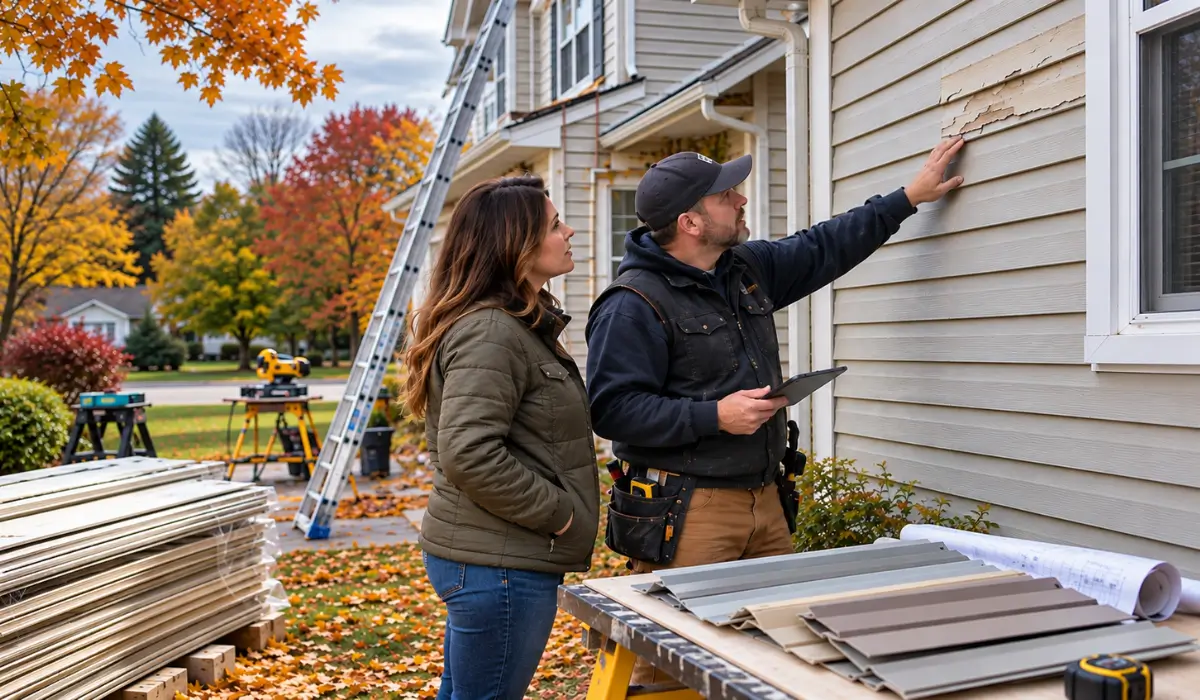
Fall Siding Installation Home Assessment
Financing a Siding Project Before Winter
A siding project is a significant expense, so timing should make financial sense as well as practical sense. Completing the work before winter may be worthwhile when siding already needs attention, but the end of the year alone is not a reason to replace siding that is performing properly.
We offer siding financing options for homeowners who prefer to spread eligible project costs over time. The total price, financing terms, and household budget should all be considered together before making a decision.
Top Quality Fall Siding Decision Check
Before moving forward, ask three questions:
Does the siding's condition justify replacement?
Are conditions suitable for the selected material?
Does completing the work now make more sense than waiting?
Those answers matter more than the season alone. If budget is part of the decision, the siding cost calculator provides a useful starting point before discussing the property and project details.
You can also review completed exterior projects to see the types of work we complete before deciding what comes next.
Plan Your Illinois Siding Project Around the Conditions
Fall can be a good time for siding work in Illinois, but the month alone does not determine whether the timing is right. Weather, material requirements, existing exterior conditions, project scope, and budget should all be considered.
Top Quality Roofing & Siding is a family-owned company established in 2012. Homeowners who want more information about who they would be working with can review our company background and credentials.
If you are considering fall siding installation, we can look at your home, discuss appropriate materials, and review current scheduling. Request a siding project estimate so we can assess what your home needs and discuss the next step.
Yes, fall siding installation can be a practical choice for Illinois homeowners. Changing temperatures, rain, shorter days, and the siding material can all affect when and how the work should be completed.
Fall also gives homeowners a chance to address worn or damaged siding before winter. We help homeowners consider exterior conditions, material options, budget, and seasonal weather before deciding when to start.
Why Many Homeowners Prefer Fall Siding Projects
Fall can provide a useful window between summer heat and sustained winter cold. For homeowners already planning an exterior update, this may be an opportunity to address damaged or aging siding before another Illinois winter.
Scheduling can change after the busy summer months, although availability still depends on current projects and weather. Waiting until late fall does not necessarily make scheduling easier.
The decision should ultimately come back to the condition of the siding. Fading may be mainly an appearance concern, while damaged areas or signs of moisture can justify a closer look before deciding whether replacement can wait.
Planning insight: Homeowners considering fall siding installation in Illinois can use the siding cost calculator for an initial idea of project costs. Material, project size, existing conditions, and required work will affect the actual price.
The Biggest Challenge With Fall Siding Installation
The biggest challenge is finding a suitable working window. Illinois weather can change quickly, so late-season projects need enough scheduling flexibility to respond to changing conditions.
Weather delays for siding do not automatically make fall a poor time for the work. Three factors deserve particular attention:
Rain and moisture: Wet conditions may interrupt exterior work.
Temperature changes: Siding products have specific handling and installation requirements.
Shorter days: Less daylight can reduce available working time.
Existing siding may also hide problems that become visible only after removal. We plan around the needs of the house rather than trying to meet an arbitrary calendar date, especially when conditions underneath the existing exterior require attention.
When comparing siding contractors in Illinois, ask how weather, material choice, and existing conditions could affect the job. Top Quality Roofing & Siding provides Illinois siding services for homeowners who want to compare available materials and discuss what fits their home.
How Fall Siding Installation Changes by Material
Installing LP SmartSide in autumn still requires following the manufacturer's current requirements for storage, handling, fastening, spacing, and installation. The requirements for the specific LP SmartSide product should be checked before work begins.
Homeowners thinking ahead to colder weather can also compare siding options for winter while considering how different materials fit their longer-term plans.
Fiber cement:
Products have manufacturer-specific installation requirements. Current James Hardie installation instructions should be checked for the applicable product rather than applying one general installation rule to all fiber cement siding.
Vinyl:
Installation needs to account for product movement as temperatures change. The vinyl siding installation manual from the Polymeric Exterior Products Association provides industry installation guidance, while the requirements for the specific siding product should still control the work.
If fiber cement and vinyl are on your shortlist, our vinyl and fiber cement comparison provides more context about their practical differences beyond seasonal installation.
The season matters, but it should not determine the material by itself. Long-term appearance, maintenance, budget, product requirements, and suitability for the home deserve equal attention.
How Contractors Prepare for Late-Season Projects
A good fall siding project starts before the old material comes off. Our team considers expected weather, property conditions, siding material, access around the home, and available daylight when planning the work.
Careful planning for fall siding installation becomes more important as winter approaches. A practical late-season plan may include:
Monitoring weather as the project approaches.
Protecting materials from unsuitable conditions.
Managing exposed exterior areas during the work.
Accounting for shorter working days.
Protecting landscaping when the ground is wet or muddy.
The goal is not to rush through a shorter working window. Removing old siding can reveal damage or moisture concerns underneath, and if that happens, the next step should reflect what is actually found instead of covering the area simply to stay on schedule.
Exterior-system check: Siding does not function in isolation. If removal exposes concerns near roof transitions or drainage areas, the roofing system or gutters and drainage may also need attention.
If colder weather is approaching, our winter siding replacement discussion can help homeowners understand how the timing decision changes once fall gives way to winter.
Fall Siding Installation Home Assessment
Financing a Siding Project Before Winter
A siding project is a significant expense, so timing should make financial sense as well as practical sense. Completing the work before winter may be worthwhile when siding already needs attention, but the end of the year alone is not a reason to replace siding that is performing properly.
We offer siding financing options for homeowners who prefer to spread eligible project costs over time. The total price, financing terms, and household budget should all be considered together before making a decision.
Top Quality Fall Siding Decision Check
Before moving forward, ask three questions:
Does the siding's condition justify replacement?
Are conditions suitable for the selected material?
Does completing the work now make more sense than waiting?
Those answers matter more than the season alone. If budget is part of the decision, the siding cost calculator provides a useful starting point before discussing the property and project details.
You can also review completed exterior projects to see the types of work we complete before deciding what comes next.
Plan Your Illinois Siding Project Around the Conditions
Fall can be a good time for siding work in Illinois, but the month alone does not determine whether the timing is right. Weather, material requirements, existing exterior conditions, project scope, and budget should all be considered.
Top Quality Roofing & Siding is a family-owned company established in 2012. Homeowners who want more information about who they would be working with can review our company background and credentials.
If you are considering fall siding installation, we can look at your home, discuss appropriate materials, and review current scheduling. Request a siding project estimate so we can assess what your home needs and discuss the next step.
Yes, fall siding installation can be a practical choice for Illinois homeowners. Changing temperatures, rain, shorter days, and the siding material can all affect when and how the work should be completed.
Fall also gives homeowners a chance to address worn or damaged siding before winter. We help homeowners consider exterior conditions, material options, budget, and seasonal weather before deciding when to start.
Why Many Homeowners Prefer Fall Siding Projects
Fall can provide a useful window between summer heat and sustained winter cold. For homeowners already planning an exterior update, this may be an opportunity to address damaged or aging siding before another Illinois winter.
Scheduling can change after the busy summer months, although availability still depends on current projects and weather. Waiting until late fall does not necessarily make scheduling easier.
The decision should ultimately come back to the condition of the siding. Fading may be mainly an appearance concern, while damaged areas or signs of moisture can justify a closer look before deciding whether replacement can wait.
Planning insight: Homeowners considering fall siding installation in Illinois can use the siding cost calculator for an initial idea of project costs. Material, project size, existing conditions, and required work will affect the actual price.
The Biggest Challenge With Fall Siding Installation
The biggest challenge is finding a suitable working window. Illinois weather can change quickly, so late-season projects need enough scheduling flexibility to respond to changing conditions.
Weather delays for siding do not automatically make fall a poor time for the work. Three factors deserve particular attention:
Rain and moisture: Wet conditions may interrupt exterior work.
Temperature changes: Siding products have specific handling and installation requirements.
Shorter days: Less daylight can reduce available working time.
Existing siding may also hide problems that become visible only after removal. We plan around the needs of the house rather than trying to meet an arbitrary calendar date, especially when conditions underneath the existing exterior require attention.
When comparing siding contractors in Illinois, ask how weather, material choice, and existing conditions could affect the job. Top Quality Roofing & Siding provides Illinois siding services for homeowners who want to compare available materials and discuss what fits their home.
How Fall Siding Installation Changes by Material
Installing LP SmartSide in autumn still requires following the manufacturer's current requirements for storage, handling, fastening, spacing, and installation. The requirements for the specific LP SmartSide product should be checked before work begins.
Homeowners thinking ahead to colder weather can also compare siding options for winter while considering how different materials fit their longer-term plans.
Fiber cement:
Products have manufacturer-specific installation requirements. Current James Hardie installation instructions should be checked for the applicable product rather than applying one general installation rule to all fiber cement siding.
Vinyl:
Installation needs to account for product movement as temperatures change. The vinyl siding installation manual from the Polymeric Exterior Products Association provides industry installation guidance, while the requirements for the specific siding product should still control the work.
If fiber cement and vinyl are on your shortlist, our vinyl and fiber cement comparison provides more context about their practical differences beyond seasonal installation.
The season matters, but it should not determine the material by itself. Long-term appearance, maintenance, budget, product requirements, and suitability for the home deserve equal attention.
How Contractors Prepare for Late-Season Projects
A good fall siding project starts before the old material comes off. Our team considers expected weather, property conditions, siding material, access around the home, and available daylight when planning the work.
Careful planning for fall siding installation becomes more important as winter approaches. A practical late-season plan may include:
Monitoring weather as the project approaches.
Protecting materials from unsuitable conditions.
Managing exposed exterior areas during the work.
Accounting for shorter working days.
Protecting landscaping when the ground is wet or muddy.
The goal is not to rush through a shorter working window. Removing old siding can reveal damage or moisture concerns underneath, and if that happens, the next step should reflect what is actually found instead of covering the area simply to stay on schedule.
Exterior-system check: Siding does not function in isolation. If removal exposes concerns near roof transitions or drainage areas, the roofing system or gutters and drainage may also need attention.
If colder weather is approaching, our winter siding replacement discussion can help homeowners understand how the timing decision changes once fall gives way to winter.
Fall Siding Installation Home Assessment
Financing a Siding Project Before Winter
A siding project is a significant expense, so timing should make financial sense as well as practical sense. Completing the work before winter may be worthwhile when siding already needs attention, but the end of the year alone is not a reason to replace siding that is performing properly.
We offer siding financing options for homeowners who prefer to spread eligible project costs over time. The total price, financing terms, and household budget should all be considered together before making a decision.
Top Quality Fall Siding Decision Check
Before moving forward, ask three questions:
Does the siding's condition justify replacement?
Are conditions suitable for the selected material?
Does completing the work now make more sense than waiting?
Those answers matter more than the season alone. If budget is part of the decision, the siding cost calculator provides a useful starting point before discussing the property and project details.
You can also review completed exterior projects to see the types of work we complete before deciding what comes next.
Plan Your Illinois Siding Project Around the Conditions
Fall can be a good time for siding work in Illinois, but the month alone does not determine whether the timing is right. Weather, material requirements, existing exterior conditions, project scope, and budget should all be considered.
Top Quality Roofing & Siding is a family-owned company established in 2012. Homeowners who want more information about who they would be working with can review our company background and credentials.
If you are considering fall siding installation, we can look at your home, discuss appropriate materials, and review current scheduling. Request a siding project estimate so we can assess what your home needs and discuss the next step.
Yes, fall siding installation can be a practical choice for Illinois homeowners. Changing temperatures, rain, shorter days, and the siding material can all affect when and how the work should be completed.
Fall also gives homeowners a chance to address worn or damaged siding before winter. We help homeowners consider exterior conditions, material options, budget, and seasonal weather before deciding when to start.
Why Many Homeowners Prefer Fall Siding Projects
Fall can provide a useful window between summer heat and sustained winter cold. For homeowners already planning an exterior update, this may be an opportunity to address damaged or aging siding before another Illinois winter.
Scheduling can change after the busy summer months, although availability still depends on current projects and weather. Waiting until late fall does not necessarily make scheduling easier.
The decision should ultimately come back to the condition of the siding. Fading may be mainly an appearance concern, while damaged areas or signs of moisture can justify a closer look before deciding whether replacement can wait.
Planning insight: Homeowners considering fall siding installation in Illinois can use the siding cost calculator for an initial idea of project costs. Material, project size, existing conditions, and required work will affect the actual price.
The Biggest Challenge With Fall Siding Installation
The biggest challenge is finding a suitable working window. Illinois weather can change quickly, so late-season projects need enough scheduling flexibility to respond to changing conditions.
Weather delays for siding do not automatically make fall a poor time for the work. Three factors deserve particular attention:
Rain and moisture: Wet conditions may interrupt exterior work.
Temperature changes: Siding products have specific handling and installation requirements.
Shorter days: Less daylight can reduce available working time.
Existing siding may also hide problems that become visible only after removal. We plan around the needs of the house rather than trying to meet an arbitrary calendar date, especially when conditions underneath the existing exterior require attention.
When comparing siding contractors in Illinois, ask how weather, material choice, and existing conditions could affect the job. Top Quality Roofing & Siding provides Illinois siding services for homeowners who want to compare available materials and discuss what fits their home.
How Fall Siding Installation Changes by Material
Installing LP SmartSide in autumn still requires following the manufacturer's current requirements for storage, handling, fastening, spacing, and installation. The requirements for the specific LP SmartSide product should be checked before work begins.
Homeowners thinking ahead to colder weather can also compare siding options for winter while considering how different materials fit their longer-term plans.
Fiber cement:
Products have manufacturer-specific installation requirements. Current James Hardie installation instructions should be checked for the applicable product rather than applying one general installation rule to all fiber cement siding.
Vinyl:
Installation needs to account for product movement as temperatures change. The vinyl siding installation manual from the Polymeric Exterior Products Association provides industry installation guidance, while the requirements for the specific siding product should still control the work.
If fiber cement and vinyl are on your shortlist, our vinyl and fiber cement comparison provides more context about their practical differences beyond seasonal installation.
The season matters, but it should not determine the material by itself. Long-term appearance, maintenance, budget, product requirements, and suitability for the home deserve equal attention.
How Contractors Prepare for Late-Season Projects
A good fall siding project starts before the old material comes off. Our team considers expected weather, property conditions, siding material, access around the home, and available daylight when planning the work.
Careful planning for fall siding installation becomes more important as winter approaches. A practical late-season plan may include:
Monitoring weather as the project approaches.
Protecting materials from unsuitable conditions.
Managing exposed exterior areas during the work.
Accounting for shorter working days.
Protecting landscaping when the ground is wet or muddy.
The goal is not to rush through a shorter working window. Removing old siding can reveal damage or moisture concerns underneath, and if that happens, the next step should reflect what is actually found instead of covering the area simply to stay on schedule.
Exterior-system check: Siding does not function in isolation. If removal exposes concerns near roof transitions or drainage areas, the roofing system or gutters and drainage may also need attention.
If colder weather is approaching, our winter siding replacement discussion can help homeowners understand how the timing decision changes once fall gives way to winter.
Fall Siding Installation Home Assessment
Financing a Siding Project Before Winter
A siding project is a significant expense, so timing should make financial sense as well as practical sense. Completing the work before winter may be worthwhile when siding already needs attention, but the end of the year alone is not a reason to replace siding that is performing properly.
We offer siding financing options for homeowners who prefer to spread eligible project costs over time. The total price, financing terms, and household budget should all be considered together before making a decision.
Top Quality Fall Siding Decision Check
Before moving forward, ask three questions:
Does the siding's condition justify replacement?
Are conditions suitable for the selected material?
Does completing the work now make more sense than waiting?
Those answers matter more than the season alone. If budget is part of the decision, the siding cost calculator provides a useful starting point before discussing the property and project details.
You can also review completed exterior projects to see the types of work we complete before deciding what comes next.
Plan Your Illinois Siding Project Around the Conditions
Fall can be a good time for siding work in Illinois, but the month alone does not determine whether the timing is right. Weather, material requirements, existing exterior conditions, project scope, and budget should all be considered.
Top Quality Roofing & Siding is a family-owned company established in 2012. Homeowners who want more information about who they would be working with can review our company background and credentials.
If you are considering fall siding installation, we can look at your home, discuss appropriate materials, and review current scheduling. Request a siding project estimate so we can assess what your home needs and discuss the next step.


Pricing & financing



Copyright © 2025 Top Quality Roofing and Siding
Pricing & financing
Copyright © 2025 Top Quality Roofing and Siding
Pricing & financing

Copyright © 2025 Top Quality Roofing and Siding