
Free Estimates on New Roof, Siding, Gutter Replacements


Free Estimates on New Roof, Siding, Gutter Replacements
(630) 520-0576
Mon - Sat: 8am to 8pm

Which Siding Stands Up to Illinois Storms? LP SmartSide vs PlyGem
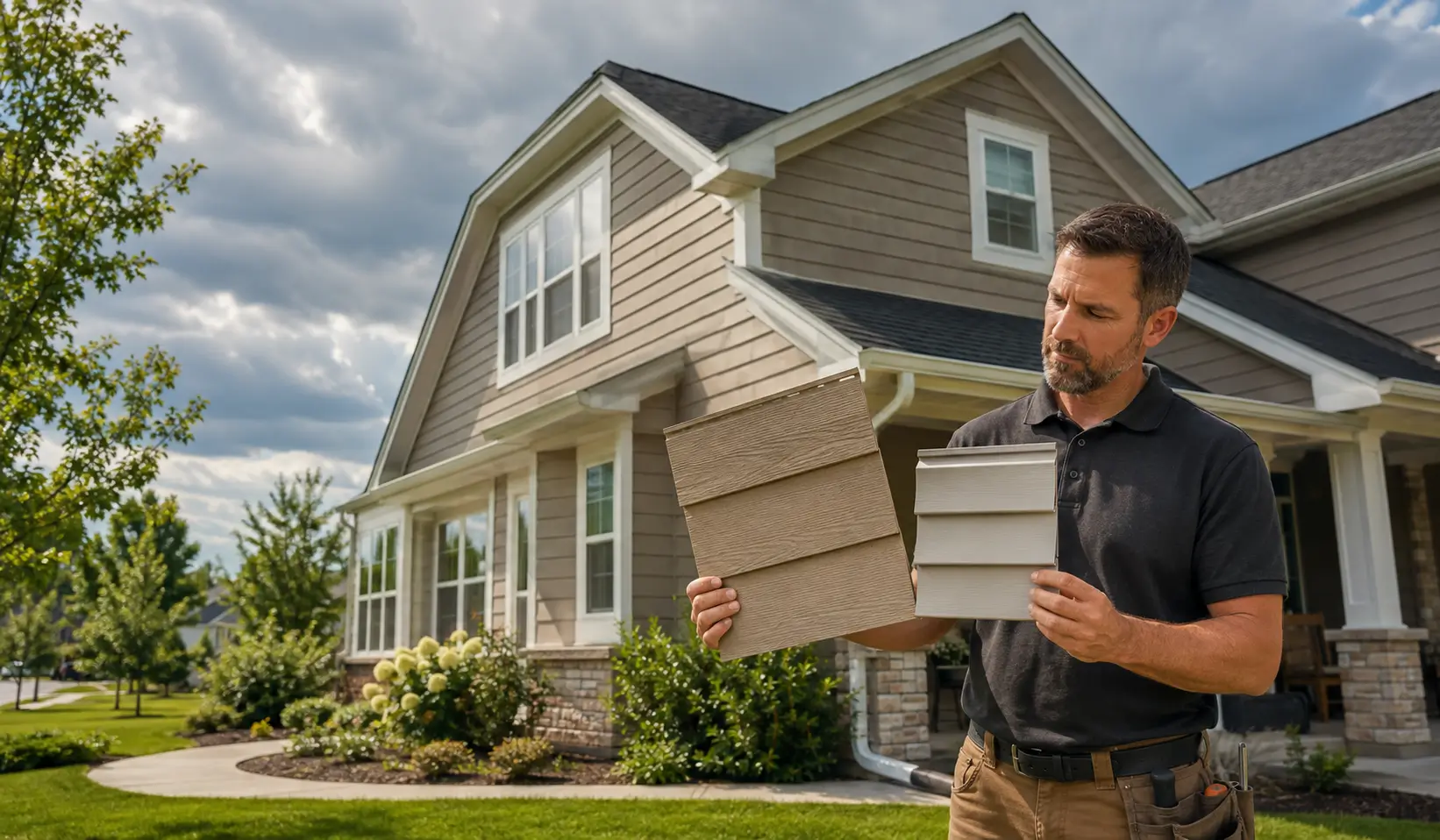





Illinois storms can punish weak siding fast. If you’re comparing LP SmartSide vs PlyGem for storm-resistant siding in IL, the right choice depends on how each material handles hail, wind, moisture, temperature changes, and long-term maintenance.
Choosing between them is not simply about which material is “stronger.” The better fit depends on your home, neighborhood, maintenance preferences, and the types of weather exposure your exterior regularly faces.
For homeowners planning summer siding projects, understanding those differences before installation can make it easier to choose a system that fits both the house and Illinois conditions.
What Makes Siding “Storm Resistant”?
Impact performance is better judged by how a material responds to a strike and how practical repairs may be afterward.
Impact Resistance Against Hail
Hail can strike siding with enough force to leave dents, cracks, chips, or other visible damage.
The way siding reacts depends partly on the material itself. Some products may flex or absorb impact differently, while others can crack when hit hard enough.
Homeowners searching for hail-proof siding should keep one point in mind: no exterior cladding should be treated as completely immune to hail.
A better goal is to compare impact resistance, repairability, and how damage tends to appear after a storm.
Wind Durability During Midwest Storms
Strong wind can place stress on siding panels, fasteners, joints, corners, and trim.
Material choice matters, but installation matters just as much. Proper fastening, spacing, trim work, and attention to manufacturer requirements all influence how well a siding system holds up when wind pushes against the exterior.
Moisture Management During Heavy Rain
Wind-driven rain can reach seams, joints, corners, windows, and other transitions in the exterior.
Good siding should work as part of a broader moisture-management system rather than acting as the home's only line of defense.
Flashing, housewrap, drainage details, caulking, and installation quality all affect how well the wall assembly handles water.
Resistance to Warping in Heat and Humidity
Illinois summers can bring prolonged heat and humidity.
Siding materials expand and contract differently as temperatures change. Proper installation needs to account for that movement so panels or boards do not buckle, warp, or create visible gaps.
LP SmartSide: Strengths for Illinois Homes
An LP SmartSide review for Illinois homeowners should focus on how engineered wood fits the demands of a four-season climate.
LP SmartSide is an engineered wood siding product. Its construction gives it a different feel and performance profile from traditional vinyl siding.
Engineered Wood Built With Impact Resistance in Mind
One of the reasons homeowners consider engineered wood is its ability to provide a more substantial exterior surface.
That can be appealing in neighborhoods where hail, wind-driven debris, and other storm exposure are regular concerns.
Impact resistance can be an advantage in storm-prone areas, but severe weather can still cause damage.
Performance Through Seasonal Temperature Changes
Illinois homes experience summer heat, winter cold, and rapid temperature shifts between seasons.
Engineered wood and vinyl respond differently to these changes. A properly installed LP SmartSide system is designed with the material's movement and fastening requirements in mind.
Installation quality therefore remains a major part of real-world performance.
Natural Wood-Look Appeal
Appearance is another reason homeowners consider LP SmartSide.
It can provide the texture and profile of painted wood siding without requiring the same material choice as traditional solid wood.
That can make it attractive for suburban Illinois homes where owners want a classic or higher-detail exterior.
Why It May Appeal to Illinois Homeowners
LP SmartSide can make sense for homeowners who prioritize:
A more substantial wood-style appearance
Impact resistance as part of storm preparation
Traditional or upscale suburban exterior design
A siding system suited to detailed trim and architectural features
PlyGem Vinyl Siding Performance
PlyGem performance should be considered from a different perspective.
Vinyl siding is lightweight, widely used, and available in a variety of profiles and colors. For many homeowners, its appeal comes from straightforward upkeep and the ability to replace affected sections when localized damage occurs.
Lightweight and Practical for Residential Exteriors
Vinyl siding does not rely on the same material construction as engineered wood.
Its lower weight can make it a practical option for many residential siding projects while offering a broad range of exterior styles.
Easier Replacement After Isolated Damage
After a storm, damage may be limited to one wall or a small number of siding panels.
Depending on the product, installation, age, and availability of a matching profile and color, individual vinyl sections may be replaceable without re-siding an entire home.
Matching older siding can sometimes be more difficult, however, especially when sun exposure has changed the appearance of the original material.
Color Performance on Sunny Exposures
Color performance matters on elevations that receive strong afternoon sunlight.
PlyGem offers vinyl siding options intended for residential exterior use, but homeowners should compare the specific product line, color, exposure, and manufacturer guidance rather than assuming every option performs identically.
Where Vinyl Can Fit Illinois Homes
PlyGem vinyl may appeal to homeowners who prioritize:
Lower-maintenance exterior materials
Straightforward cleaning
A wide selection of colors and profiles
Easier replacement of individual damaged sections when matching material is available
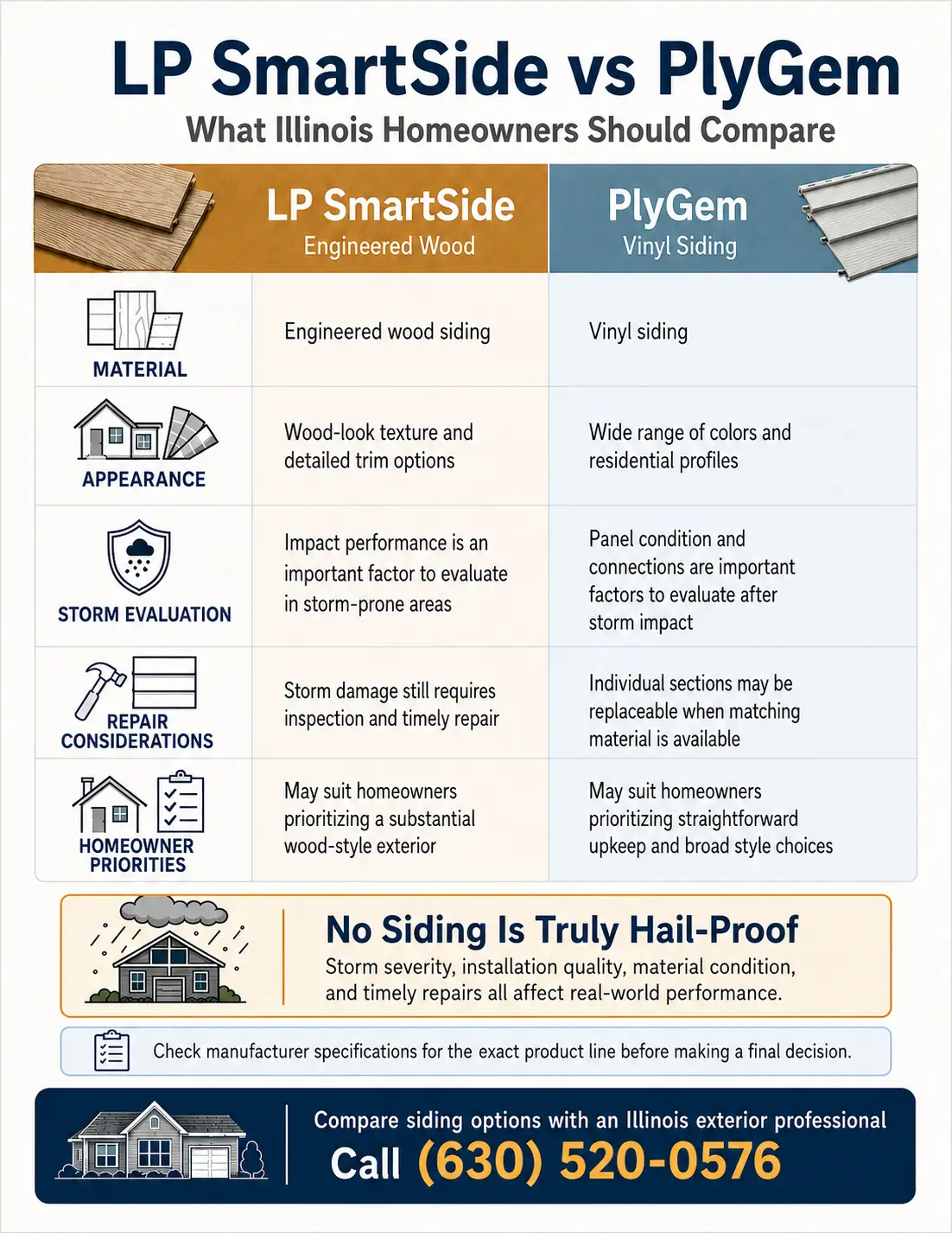
LP SmartSide and PlyGem offer different siding characteristics. Compare material, appearance, storm considerations, repair needs, and maintenance priorities before choosing.
LP SmartSide vs PlyGem: Which Handles Hail Better?
This is often the deciding question for homeowners comparing storm-resistant siding in IL.
The answer is more nuanced than simply declaring one product the winner.
Denting, Cracking, and Other Impact Damage
Different siding materials show storm damage differently.
A hail strike may leave visible impact marks on one material while another may crack, chip, loosen, or suffer damage that is harder to see from the ground.
That means homeowners should look beyond appearance after a storm.
Check corners, panels, trim, joints, and elevations that faced the strongest weather. When hail is significant, a professional siding inspection can help identify damage that may not be obvious from the yard.
Maintenance After a Storm
With either material, small problems should be addressed before water gets behind the siding system.
After a severe storm, watch for:
Cracked or broken sections
Loose siding
Open seams or joints
Damaged trim
Gaps around windows and doors
Areas where the siding has pulled away from the wall
The most durable siding system still depends on proper installation and timely repairs.
What About “Hail-Proof Siding”?
The phrase hail-proof siding is useful as a search term, but homeowners should be cautious about taking it literally.
Storm severity varies, and no siding material should be assumed to withstand every possible impact without damage.
A better comparison is:
How resistant is the material to impact, what does damage look like, and how practical is it to repair afterward?
Those questions lead to a more useful decision than looking for an absolute “hail-proof” label.
Insurance Considerations
Siding material can also matter when a storm leads to an insurance claim.
Coverage, matching requirements, deductibles, repair versus replacement decisions, and documentation can vary by insurer and policy.
Before choosing siding because of a possible insurance advantage, ask your insurance provider how your specific policy handles storm-damaged siding.
A contractor can document visible exterior damage, but your insurer determines coverage under the policy.
Choosing the Right Siding for Your Neighborhood
Storm performance matters, but it is only one part of the decision.
The best siding should also make sense for your home's architecture and the expectations of your neighborhood.
Check HOA Appearance Requirements
Some Illinois subdivisions have homeowners' associations that regulate exterior colors, materials, profiles, or visible changes.
Review those requirements before selecting a siding system.
It is easier to confirm an approved material first than change plans after ordering or installation has started.
Match the Home's Exterior Style
LP SmartSide and PlyGem can create noticeably different visual effects.
A homeowner updating a traditional exterior may prioritize wood-like texture and detailed trim. Someone refreshing a simpler or more contemporary home may prefer a clean vinyl profile with lower day-to-day maintenance.
Neither approach is automatically right for every property.
Think About Long-Term Maintenance
Ask how much exterior upkeep you are comfortable taking on.
Consider cleaning, inspection, touch-ups, storm repairs, color retention, and the likelihood of finding matching replacement material years later.
Those practical questions matter just as much as appearance on installation day.
Compare LP SmartSide and PlyGem With an Illinois Siding Expert |
Not all siding performs the same way during Illinois storm season. LP SmartSide may appeal to homeowners who prioritize engineered-wood construction, impact resistance, and a wood-style exterior. PlyGem vinyl may be a better fit for homeowners who value lower-maintenance siding, broad style choices, and potentially simpler panel replacement after localized damage. The better choice depends on your home's architecture, storm exposure, neighborhood requirements, and maintenance preferences. If you're planning a siding project, compare both options with a contractor who can evaluate the property rather than recommending a material based on one feature alone. Call (630) 520-0576 to discuss LP SmartSide, PlyGem, and storm-resistant siding options for your Illinois home. |
Illinois storms can punish weak siding fast. If you’re comparing LP SmartSide vs PlyGem for storm-resistant siding in IL, the right choice depends on how each material handles hail, wind, moisture, temperature changes, and long-term maintenance.
Choosing between them is not simply about which material is “stronger.” The better fit depends on your home, neighborhood, maintenance preferences, and the types of weather exposure your exterior regularly faces.
For homeowners planning summer siding projects, understanding those differences before installation can make it easier to choose a system that fits both the house and Illinois conditions.
What Makes Siding “Storm Resistant”?
Impact performance is better judged by how a material responds to a strike and how practical repairs may be afterward.
Impact Resistance Against Hail
Hail can strike siding with enough force to leave dents, cracks, chips, or other visible damage.
The way siding reacts depends partly on the material itself. Some products may flex or absorb impact differently, while others can crack when hit hard enough.
Homeowners searching for hail-proof siding should keep one point in mind: no exterior cladding should be treated as completely immune to hail.
A better goal is to compare impact resistance, repairability, and how damage tends to appear after a storm.
Wind Durability During Midwest Storms
Strong wind can place stress on siding panels, fasteners, joints, corners, and trim.
Material choice matters, but installation matters just as much. Proper fastening, spacing, trim work, and attention to manufacturer requirements all influence how well a siding system holds up when wind pushes against the exterior.
Moisture Management During Heavy Rain
Wind-driven rain can reach seams, joints, corners, windows, and other transitions in the exterior.
Good siding should work as part of a broader moisture-management system rather than acting as the home's only line of defense.
Flashing, housewrap, drainage details, caulking, and installation quality all affect how well the wall assembly handles water.
Resistance to Warping in Heat and Humidity
Illinois summers can bring prolonged heat and humidity.
Siding materials expand and contract differently as temperatures change. Proper installation needs to account for that movement so panels or boards do not buckle, warp, or create visible gaps.
LP SmartSide: Strengths for Illinois Homes
An LP SmartSide review for Illinois homeowners should focus on how engineered wood fits the demands of a four-season climate.
LP SmartSide is an engineered wood siding product. Its construction gives it a different feel and performance profile from traditional vinyl siding.
Engineered Wood Built With Impact Resistance in Mind
One of the reasons homeowners consider engineered wood is its ability to provide a more substantial exterior surface.
That can be appealing in neighborhoods where hail, wind-driven debris, and other storm exposure are regular concerns.
Impact resistance can be an advantage in storm-prone areas, but severe weather can still cause damage.
Performance Through Seasonal Temperature Changes
Illinois homes experience summer heat, winter cold, and rapid temperature shifts between seasons.
Engineered wood and vinyl respond differently to these changes. A properly installed LP SmartSide system is designed with the material's movement and fastening requirements in mind.
Installation quality therefore remains a major part of real-world performance.
Natural Wood-Look Appeal
Appearance is another reason homeowners consider LP SmartSide.
It can provide the texture and profile of painted wood siding without requiring the same material choice as traditional solid wood.
That can make it attractive for suburban Illinois homes where owners want a classic or higher-detail exterior.
Why It May Appeal to Illinois Homeowners
LP SmartSide can make sense for homeowners who prioritize:
A more substantial wood-style appearance
Impact resistance as part of storm preparation
Traditional or upscale suburban exterior design
A siding system suited to detailed trim and architectural features
PlyGem Vinyl Siding Performance
PlyGem performance should be considered from a different perspective.
Vinyl siding is lightweight, widely used, and available in a variety of profiles and colors. For many homeowners, its appeal comes from straightforward upkeep and the ability to replace affected sections when localized damage occurs.
Lightweight and Practical for Residential Exteriors
Vinyl siding does not rely on the same material construction as engineered wood.
Its lower weight can make it a practical option for many residential siding projects while offering a broad range of exterior styles.
Easier Replacement After Isolated Damage
After a storm, damage may be limited to one wall or a small number of siding panels.
Depending on the product, installation, age, and availability of a matching profile and color, individual vinyl sections may be replaceable without re-siding an entire home.
Matching older siding can sometimes be more difficult, however, especially when sun exposure has changed the appearance of the original material.
Color Performance on Sunny Exposures
Color performance matters on elevations that receive strong afternoon sunlight.
PlyGem offers vinyl siding options intended for residential exterior use, but homeowners should compare the specific product line, color, exposure, and manufacturer guidance rather than assuming every option performs identically.
Where Vinyl Can Fit Illinois Homes
PlyGem vinyl may appeal to homeowners who prioritize:
Lower-maintenance exterior materials
Straightforward cleaning
A wide selection of colors and profiles
Easier replacement of individual damaged sections when matching material is available
LP SmartSide and PlyGem offer different siding characteristics. Compare material, appearance, storm considerations, repair needs, and maintenance priorities before choosing.
LP SmartSide vs PlyGem: Which Handles Hail Better?
This is often the deciding question for homeowners comparing storm-resistant siding in IL.
The answer is more nuanced than simply declaring one product the winner.
Denting, Cracking, and Other Impact Damage
Different siding materials show storm damage differently.
A hail strike may leave visible impact marks on one material while another may crack, chip, loosen, or suffer damage that is harder to see from the ground.
That means homeowners should look beyond appearance after a storm.
Check corners, panels, trim, joints, and elevations that faced the strongest weather. When hail is significant, a professional siding inspection can help identify damage that may not be obvious from the yard.
Maintenance After a Storm
With either material, small problems should be addressed before water gets behind the siding system.
After a severe storm, watch for:
Cracked or broken sections
Loose siding
Open seams or joints
Damaged trim
Gaps around windows and doors
Areas where the siding has pulled away from the wall
The most durable siding system still depends on proper installation and timely repairs.
What About “Hail-Proof Siding”?
The phrase hail-proof siding is useful as a search term, but homeowners should be cautious about taking it literally.
Storm severity varies, and no siding material should be assumed to withstand every possible impact without damage.
A better comparison is:
How resistant is the material to impact, what does damage look like, and how practical is it to repair afterward?
Those questions lead to a more useful decision than looking for an absolute “hail-proof” label.
Insurance Considerations
Siding material can also matter when a storm leads to an insurance claim.
Coverage, matching requirements, deductibles, repair versus replacement decisions, and documentation can vary by insurer and policy.
Before choosing siding because of a possible insurance advantage, ask your insurance provider how your specific policy handles storm-damaged siding.
A contractor can document visible exterior damage, but your insurer determines coverage under the policy.
Choosing the Right Siding for Your Neighborhood
Storm performance matters, but it is only one part of the decision.
The best siding should also make sense for your home's architecture and the expectations of your neighborhood.
Check HOA Appearance Requirements
Some Illinois subdivisions have homeowners' associations that regulate exterior colors, materials, profiles, or visible changes.
Review those requirements before selecting a siding system.
It is easier to confirm an approved material first than change plans after ordering or installation has started.
Match the Home's Exterior Style
LP SmartSide and PlyGem can create noticeably different visual effects.
A homeowner updating a traditional exterior may prioritize wood-like texture and detailed trim. Someone refreshing a simpler or more contemporary home may prefer a clean vinyl profile with lower day-to-day maintenance.
Neither approach is automatically right for every property.
Think About Long-Term Maintenance
Ask how much exterior upkeep you are comfortable taking on.
Consider cleaning, inspection, touch-ups, storm repairs, color retention, and the likelihood of finding matching replacement material years later.
Those practical questions matter just as much as appearance on installation day.
Compare LP SmartSide and PlyGem With an Illinois Siding Expert |
Not all siding performs the same way during Illinois storm season. LP SmartSide may appeal to homeowners who prioritize engineered-wood construction, impact resistance, and a wood-style exterior. PlyGem vinyl may be a better fit for homeowners who value lower-maintenance siding, broad style choices, and potentially simpler panel replacement after localized damage. The better choice depends on your home's architecture, storm exposure, neighborhood requirements, and maintenance preferences. If you're planning a siding project, compare both options with a contractor who can evaluate the property rather than recommending a material based on one feature alone. Call (630) 520-0576 to discuss LP SmartSide, PlyGem, and storm-resistant siding options for your Illinois home. |
Illinois storms can punish weak siding fast. If you’re comparing LP SmartSide vs PlyGem for storm-resistant siding in IL, the right choice depends on how each material handles hail, wind, moisture, temperature changes, and long-term maintenance.
Choosing between them is not simply about which material is “stronger.” The better fit depends on your home, neighborhood, maintenance preferences, and the types of weather exposure your exterior regularly faces.
For homeowners planning summer siding projects, understanding those differences before installation can make it easier to choose a system that fits both the house and Illinois conditions.
What Makes Siding “Storm Resistant”?
Impact performance is better judged by how a material responds to a strike and how practical repairs may be afterward.
Impact Resistance Against Hail
Hail can strike siding with enough force to leave dents, cracks, chips, or other visible damage.
The way siding reacts depends partly on the material itself. Some products may flex or absorb impact differently, while others can crack when hit hard enough.
Homeowners searching for hail-proof siding should keep one point in mind: no exterior cladding should be treated as completely immune to hail.
A better goal is to compare impact resistance, repairability, and how damage tends to appear after a storm.
Wind Durability During Midwest Storms
Strong wind can place stress on siding panels, fasteners, joints, corners, and trim.
Material choice matters, but installation matters just as much. Proper fastening, spacing, trim work, and attention to manufacturer requirements all influence how well a siding system holds up when wind pushes against the exterior.
Moisture Management During Heavy Rain
Wind-driven rain can reach seams, joints, corners, windows, and other transitions in the exterior.
Good siding should work as part of a broader moisture-management system rather than acting as the home's only line of defense.
Flashing, housewrap, drainage details, caulking, and installation quality all affect how well the wall assembly handles water.
Resistance to Warping in Heat and Humidity
Illinois summers can bring prolonged heat and humidity.
Siding materials expand and contract differently as temperatures change. Proper installation needs to account for that movement so panels or boards do not buckle, warp, or create visible gaps.
LP SmartSide: Strengths for Illinois Homes
An LP SmartSide review for Illinois homeowners should focus on how engineered wood fits the demands of a four-season climate.
LP SmartSide is an engineered wood siding product. Its construction gives it a different feel and performance profile from traditional vinyl siding.
Engineered Wood Built With Impact Resistance in Mind
One of the reasons homeowners consider engineered wood is its ability to provide a more substantial exterior surface.
That can be appealing in neighborhoods where hail, wind-driven debris, and other storm exposure are regular concerns.
Impact resistance can be an advantage in storm-prone areas, but severe weather can still cause damage.
Performance Through Seasonal Temperature Changes
Illinois homes experience summer heat, winter cold, and rapid temperature shifts between seasons.
Engineered wood and vinyl respond differently to these changes. A properly installed LP SmartSide system is designed with the material's movement and fastening requirements in mind.
Installation quality therefore remains a major part of real-world performance.
Natural Wood-Look Appeal
Appearance is another reason homeowners consider LP SmartSide.
It can provide the texture and profile of painted wood siding without requiring the same material choice as traditional solid wood.
That can make it attractive for suburban Illinois homes where owners want a classic or higher-detail exterior.
Why It May Appeal to Illinois Homeowners
LP SmartSide can make sense for homeowners who prioritize:
A more substantial wood-style appearance
Impact resistance as part of storm preparation
Traditional or upscale suburban exterior design
A siding system suited to detailed trim and architectural features
PlyGem Vinyl Siding Performance
PlyGem performance should be considered from a different perspective.
Vinyl siding is lightweight, widely used, and available in a variety of profiles and colors. For many homeowners, its appeal comes from straightforward upkeep and the ability to replace affected sections when localized damage occurs.
Lightweight and Practical for Residential Exteriors
Vinyl siding does not rely on the same material construction as engineered wood.
Its lower weight can make it a practical option for many residential siding projects while offering a broad range of exterior styles.
Easier Replacement After Isolated Damage
After a storm, damage may be limited to one wall or a small number of siding panels.
Depending on the product, installation, age, and availability of a matching profile and color, individual vinyl sections may be replaceable without re-siding an entire home.
Matching older siding can sometimes be more difficult, however, especially when sun exposure has changed the appearance of the original material.
Color Performance on Sunny Exposures
Color performance matters on elevations that receive strong afternoon sunlight.
PlyGem offers vinyl siding options intended for residential exterior use, but homeowners should compare the specific product line, color, exposure, and manufacturer guidance rather than assuming every option performs identically.
Where Vinyl Can Fit Illinois Homes
PlyGem vinyl may appeal to homeowners who prioritize:
Lower-maintenance exterior materials
Straightforward cleaning
A wide selection of colors and profiles
Easier replacement of individual damaged sections when matching material is available
LP SmartSide and PlyGem offer different siding characteristics. Compare material, appearance, storm considerations, repair needs, and maintenance priorities before choosing.
LP SmartSide vs PlyGem: Which Handles Hail Better?
This is often the deciding question for homeowners comparing storm-resistant siding in IL.
The answer is more nuanced than simply declaring one product the winner.
Denting, Cracking, and Other Impact Damage
Different siding materials show storm damage differently.
A hail strike may leave visible impact marks on one material while another may crack, chip, loosen, or suffer damage that is harder to see from the ground.
That means homeowners should look beyond appearance after a storm.
Check corners, panels, trim, joints, and elevations that faced the strongest weather. When hail is significant, a professional siding inspection can help identify damage that may not be obvious from the yard.
Maintenance After a Storm
With either material, small problems should be addressed before water gets behind the siding system.
After a severe storm, watch for:
Cracked or broken sections
Loose siding
Open seams or joints
Damaged trim
Gaps around windows and doors
Areas where the siding has pulled away from the wall
The most durable siding system still depends on proper installation and timely repairs.
What About “Hail-Proof Siding”?
The phrase hail-proof siding is useful as a search term, but homeowners should be cautious about taking it literally.
Storm severity varies, and no siding material should be assumed to withstand every possible impact without damage.
A better comparison is:
How resistant is the material to impact, what does damage look like, and how practical is it to repair afterward?
Those questions lead to a more useful decision than looking for an absolute “hail-proof” label.
Insurance Considerations
Siding material can also matter when a storm leads to an insurance claim.
Coverage, matching requirements, deductibles, repair versus replacement decisions, and documentation can vary by insurer and policy.
Before choosing siding because of a possible insurance advantage, ask your insurance provider how your specific policy handles storm-damaged siding.
A contractor can document visible exterior damage, but your insurer determines coverage under the policy.
Choosing the Right Siding for Your Neighborhood
Storm performance matters, but it is only one part of the decision.
The best siding should also make sense for your home's architecture and the expectations of your neighborhood.
Check HOA Appearance Requirements
Some Illinois subdivisions have homeowners' associations that regulate exterior colors, materials, profiles, or visible changes.
Review those requirements before selecting a siding system.
It is easier to confirm an approved material first than change plans after ordering or installation has started.
Match the Home's Exterior Style
LP SmartSide and PlyGem can create noticeably different visual effects.
A homeowner updating a traditional exterior may prioritize wood-like texture and detailed trim. Someone refreshing a simpler or more contemporary home may prefer a clean vinyl profile with lower day-to-day maintenance.
Neither approach is automatically right for every property.
Think About Long-Term Maintenance
Ask how much exterior upkeep you are comfortable taking on.
Consider cleaning, inspection, touch-ups, storm repairs, color retention, and the likelihood of finding matching replacement material years later.
Those practical questions matter just as much as appearance on installation day.
Compare LP SmartSide and PlyGem With an Illinois Siding Expert |
Not all siding performs the same way during Illinois storm season. LP SmartSide may appeal to homeowners who prioritize engineered-wood construction, impact resistance, and a wood-style exterior. PlyGem vinyl may be a better fit for homeowners who value lower-maintenance siding, broad style choices, and potentially simpler panel replacement after localized damage. The better choice depends on your home's architecture, storm exposure, neighborhood requirements, and maintenance preferences. If you're planning a siding project, compare both options with a contractor who can evaluate the property rather than recommending a material based on one feature alone. Call (630) 520-0576 to discuss LP SmartSide, PlyGem, and storm-resistant siding options for your Illinois home. |
Illinois storms can punish weak siding fast. If you’re comparing LP SmartSide vs PlyGem for storm-resistant siding in IL, the right choice depends on how each material handles hail, wind, moisture, temperature changes, and long-term maintenance.
Choosing between them is not simply about which material is “stronger.” The better fit depends on your home, neighborhood, maintenance preferences, and the types of weather exposure your exterior regularly faces.
For homeowners planning summer siding projects, understanding those differences before installation can make it easier to choose a system that fits both the house and Illinois conditions.
What Makes Siding “Storm Resistant”?
Impact performance is better judged by how a material responds to a strike and how practical repairs may be afterward.
Impact Resistance Against Hail
Hail can strike siding with enough force to leave dents, cracks, chips, or other visible damage.
The way siding reacts depends partly on the material itself. Some products may flex or absorb impact differently, while others can crack when hit hard enough.
Homeowners searching for hail-proof siding should keep one point in mind: no exterior cladding should be treated as completely immune to hail.
A better goal is to compare impact resistance, repairability, and how damage tends to appear after a storm.
Wind Durability During Midwest Storms
Strong wind can place stress on siding panels, fasteners, joints, corners, and trim.
Material choice matters, but installation matters just as much. Proper fastening, spacing, trim work, and attention to manufacturer requirements all influence how well a siding system holds up when wind pushes against the exterior.
Moisture Management During Heavy Rain
Wind-driven rain can reach seams, joints, corners, windows, and other transitions in the exterior.
Good siding should work as part of a broader moisture-management system rather than acting as the home's only line of defense.
Flashing, housewrap, drainage details, caulking, and installation quality all affect how well the wall assembly handles water.
Resistance to Warping in Heat and Humidity
Illinois summers can bring prolonged heat and humidity.
Siding materials expand and contract differently as temperatures change. Proper installation needs to account for that movement so panels or boards do not buckle, warp, or create visible gaps.
LP SmartSide: Strengths for Illinois Homes
An LP SmartSide review for Illinois homeowners should focus on how engineered wood fits the demands of a four-season climate.
LP SmartSide is an engineered wood siding product. Its construction gives it a different feel and performance profile from traditional vinyl siding.
Engineered Wood Built With Impact Resistance in Mind
One of the reasons homeowners consider engineered wood is its ability to provide a more substantial exterior surface.
That can be appealing in neighborhoods where hail, wind-driven debris, and other storm exposure are regular concerns.
Impact resistance can be an advantage in storm-prone areas, but severe weather can still cause damage.
Performance Through Seasonal Temperature Changes
Illinois homes experience summer heat, winter cold, and rapid temperature shifts between seasons.
Engineered wood and vinyl respond differently to these changes. A properly installed LP SmartSide system is designed with the material's movement and fastening requirements in mind.
Installation quality therefore remains a major part of real-world performance.
Natural Wood-Look Appeal
Appearance is another reason homeowners consider LP SmartSide.
It can provide the texture and profile of painted wood siding without requiring the same material choice as traditional solid wood.
That can make it attractive for suburban Illinois homes where owners want a classic or higher-detail exterior.
Why It May Appeal to Illinois Homeowners
LP SmartSide can make sense for homeowners who prioritize:
A more substantial wood-style appearance
Impact resistance as part of storm preparation
Traditional or upscale suburban exterior design
A siding system suited to detailed trim and architectural features
PlyGem Vinyl Siding Performance
PlyGem performance should be considered from a different perspective.
Vinyl siding is lightweight, widely used, and available in a variety of profiles and colors. For many homeowners, its appeal comes from straightforward upkeep and the ability to replace affected sections when localized damage occurs.
Lightweight and Practical for Residential Exteriors
Vinyl siding does not rely on the same material construction as engineered wood.
Its lower weight can make it a practical option for many residential siding projects while offering a broad range of exterior styles.
Easier Replacement After Isolated Damage
After a storm, damage may be limited to one wall or a small number of siding panels.
Depending on the product, installation, age, and availability of a matching profile and color, individual vinyl sections may be replaceable without re-siding an entire home.
Matching older siding can sometimes be more difficult, however, especially when sun exposure has changed the appearance of the original material.
Color Performance on Sunny Exposures
Color performance matters on elevations that receive strong afternoon sunlight.
PlyGem offers vinyl siding options intended for residential exterior use, but homeowners should compare the specific product line, color, exposure, and manufacturer guidance rather than assuming every option performs identically.
Where Vinyl Can Fit Illinois Homes
PlyGem vinyl may appeal to homeowners who prioritize:
Lower-maintenance exterior materials
Straightforward cleaning
A wide selection of colors and profiles
Easier replacement of individual damaged sections when matching material is available
LP SmartSide and PlyGem offer different siding characteristics. Compare material, appearance, storm considerations, repair needs, and maintenance priorities before choosing.
LP SmartSide vs PlyGem: Which Handles Hail Better?
This is often the deciding question for homeowners comparing storm-resistant siding in IL.
The answer is more nuanced than simply declaring one product the winner.
Denting, Cracking, and Other Impact Damage
Different siding materials show storm damage differently.
A hail strike may leave visible impact marks on one material while another may crack, chip, loosen, or suffer damage that is harder to see from the ground.
That means homeowners should look beyond appearance after a storm.
Check corners, panels, trim, joints, and elevations that faced the strongest weather. When hail is significant, a professional siding inspection can help identify damage that may not be obvious from the yard.
Maintenance After a Storm
With either material, small problems should be addressed before water gets behind the siding system.
After a severe storm, watch for:
Cracked or broken sections
Loose siding
Open seams or joints
Damaged trim
Gaps around windows and doors
Areas where the siding has pulled away from the wall
The most durable siding system still depends on proper installation and timely repairs.
What About “Hail-Proof Siding”?
The phrase hail-proof siding is useful as a search term, but homeowners should be cautious about taking it literally.
Storm severity varies, and no siding material should be assumed to withstand every possible impact without damage.
A better comparison is:
How resistant is the material to impact, what does damage look like, and how practical is it to repair afterward?
Those questions lead to a more useful decision than looking for an absolute “hail-proof” label.
Insurance Considerations
Siding material can also matter when a storm leads to an insurance claim.
Coverage, matching requirements, deductibles, repair versus replacement decisions, and documentation can vary by insurer and policy.
Before choosing siding because of a possible insurance advantage, ask your insurance provider how your specific policy handles storm-damaged siding.
A contractor can document visible exterior damage, but your insurer determines coverage under the policy.
Choosing the Right Siding for Your Neighborhood
Storm performance matters, but it is only one part of the decision.
The best siding should also make sense for your home's architecture and the expectations of your neighborhood.
Check HOA Appearance Requirements
Some Illinois subdivisions have homeowners' associations that regulate exterior colors, materials, profiles, or visible changes.
Review those requirements before selecting a siding system.
It is easier to confirm an approved material first than change plans after ordering or installation has started.
Match the Home's Exterior Style
LP SmartSide and PlyGem can create noticeably different visual effects.
A homeowner updating a traditional exterior may prioritize wood-like texture and detailed trim. Someone refreshing a simpler or more contemporary home may prefer a clean vinyl profile with lower day-to-day maintenance.
Neither approach is automatically right for every property.
Think About Long-Term Maintenance
Ask how much exterior upkeep you are comfortable taking on.
Consider cleaning, inspection, touch-ups, storm repairs, color retention, and the likelihood of finding matching replacement material years later.
Those practical questions matter just as much as appearance on installation day.
Compare LP SmartSide and PlyGem With an Illinois Siding Expert |
Not all siding performs the same way during Illinois storm season. LP SmartSide may appeal to homeowners who prioritize engineered-wood construction, impact resistance, and a wood-style exterior. PlyGem vinyl may be a better fit for homeowners who value lower-maintenance siding, broad style choices, and potentially simpler panel replacement after localized damage. The better choice depends on your home's architecture, storm exposure, neighborhood requirements, and maintenance preferences. If you're planning a siding project, compare both options with a contractor who can evaluate the property rather than recommending a material based on one feature alone. Call (630) 520-0576 to discuss LP SmartSide, PlyGem, and storm-resistant siding options for your Illinois home. |


Pricing & financing



Copyright © 2025 Top Quality Roofing and Siding
Pricing & financing
Copyright © 2025 Top Quality Roofing and Siding
Pricing & financing

Copyright © 2025 Top Quality Roofing and Siding