
Free Estimates on New Roof, Siding, Gutter Replacements


Free Estimates on New Roof, Siding, Gutter Replacements
(630) 520-0576
Mon - Sat: 8am to 8pm

Is Fall Too Late for Roof Replacement in IL? Not Always











Many Illinois homeowners assume roofing season ends after summer, but fall can still be a practical time for roof replacement in Illinois when weather, materials, and scheduling line up. The key is scheduling early enough, watching temperature changes, and choosing materials that can be installed properly before winter weather settles in.
For homeowners in Naperville and nearby communities, fall roof replacement can help address leaks, aging shingles, and recurring repair problems before snow, ice, and repeated freeze-thaw cycles make existing damage harder to manage.
Why Fall Roofing Works Better Than Most Homeowners Think
Moderate fall conditions can provide a useful installation window, especially when homeowners schedule before colder weather becomes less predictable.
Cooler Temperatures Can Be Easier on Roofing Materials
Mild fall temperatures can be easier on roofing materials and crews than extreme summer heat. Asphalt shingles still need suitable installation temperatures and proper handling.
Less Intense UV Exposure During Installation
Reduced fall heat and UV intensity can make roof surfaces easier to work on than during peak summer conditions, although every installation still depends on the product and forecast.
Fall Can Provide Useful Dry-Weather Windows
Illinois fall weather can provide stretches of mild, dry conditions suitable for roofing. The actual installation window still depends on the forecast, roof condition, and material requirements.
The Ideal Roof Replacement Timeline in Illinois
There is no single calendar date when roofing work becomes impossible. A practical Illinois roof timeline depends on temperature, moisture, daylight, roof design, and manufacturer requirements.
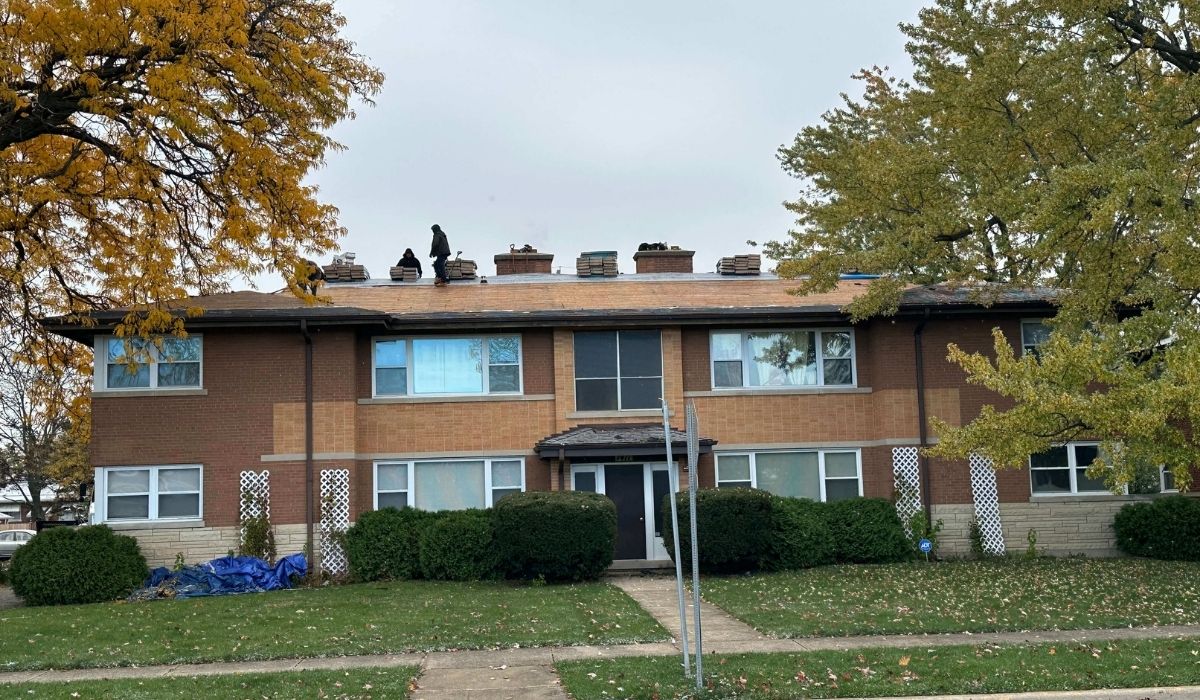
Fall can still provide a practical roof replacement window in Illinois when weather and material requirements allow.
Why September Is a Strong Roof Replacement Window
September is often one of the better months to arrange a fall roof replacement.
Daytime temperatures are generally more moderate than midsummer, daylight hours are still reasonable, and winter conditions are usually not yet a major concern.
Booking during September also gives homeowners more flexibility if weather causes a temporary delay.
Mid-October Can Still Be Suitable for Many Projects
Many roofs can still be replaced during October when temperatures remain within the installation requirements for the selected roofing system.
The exact cutoff depends on the material being installed.
Asphalt shingles, for example, may rely on sealant strips that bond properly under suitable temperatures and sun exposure. Manufacturers can have specific cold-weather instructions, so contractors should follow the installation requirements for the product being used.
Late-Fall Projects Depend More Heavily on Weather
November does not automatically mean roof replacement is impossible.
However, the installation window becomes less predictable as temperatures begin dropping overnight and weather systems become more variable.
Late-season install tips generally include:
Watch both daytime and overnight temperatures
Allow extra flexibility for weather delays
Follow manufacturer requirements for cold-weather installation
Avoid installing roofing materials on wet, icy, or frost-covered surfaces
A project that could move forward comfortably during a mild week may need to be delayed during a cold snap.
Scheduling Delays Can Push a Project Into Winter
The bigger late-season risk is often a schedule that slips. Rain, material deliveries, inspections, decking repairs, or earlier projects can move an installation closer to winter.
Homeowners considering fall replacement should leave enough buffer in the schedule so one weather delay does not turn a fall project into a winter project.
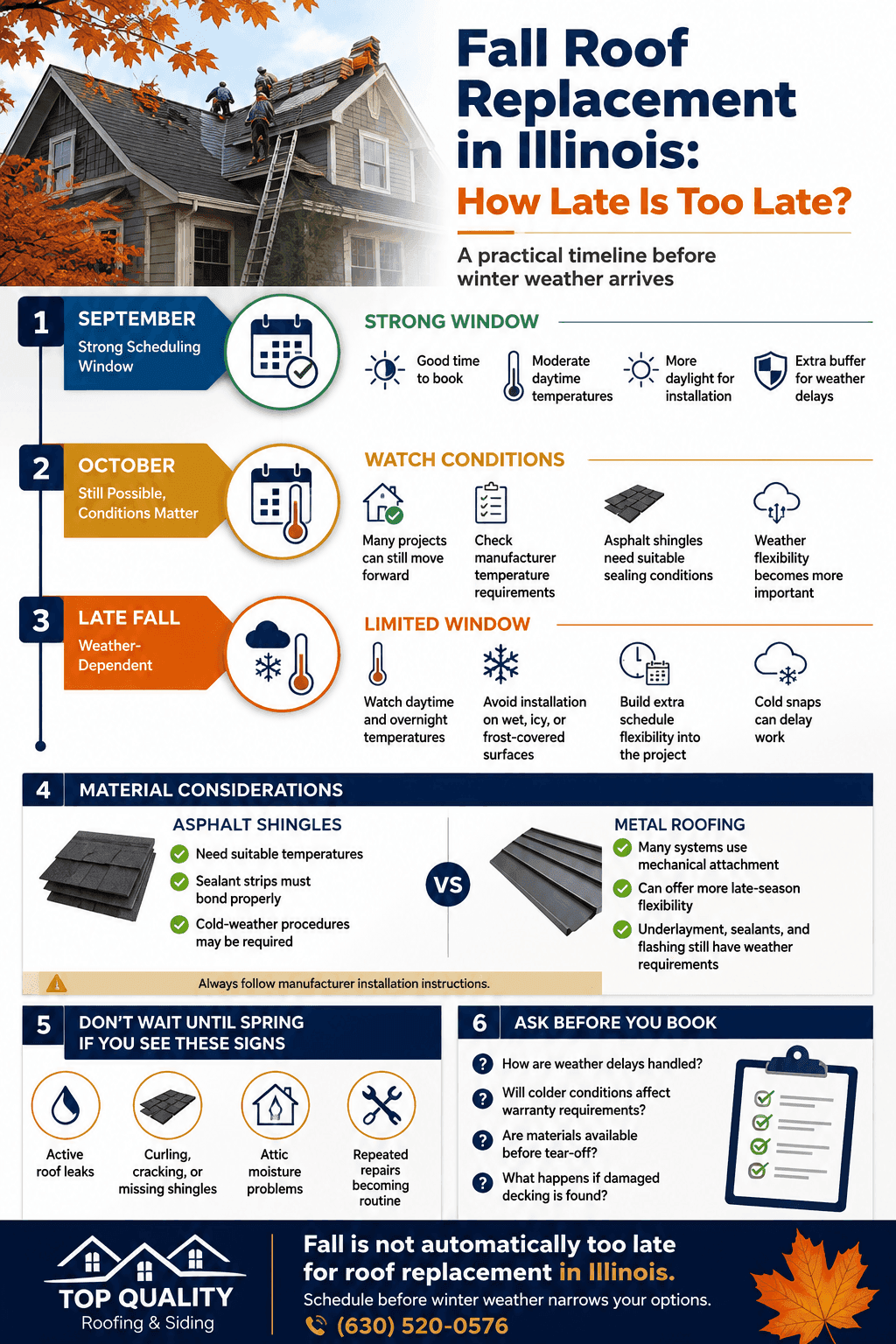
Fall roof replacement in Illinois becomes more weather-dependent as winter approaches, so early scheduling can provide more flexibility.
Best Roofing Materials for Late-Season Installation
Material requirements become increasingly important as Illinois temperatures fall.
Asphalt Shingles and Temperature Considerations
Asphalt shingles are widely used on Illinois homes, but colder weather can make installation more demanding.
Shingles become less flexible as temperatures fall, which means contractors need to handle them carefully. Their factory-applied sealant also needs appropriate conditions to activate and bond as intended.
In colder conditions, additional sealing methods may sometimes be required depending on the manufacturer’s instructions.
For an asphalt replacement in Naperville, homeowners should ask whether the expected installation temperatures fall within the requirements for the exact shingle product being installed.
Why Metal Roofing Can Work Well for Fall Installation
Many metal roofing systems use mechanical attachment rather than relying on the same type of heat-activated shingle sealant used in asphalt roofing.
That does not mean weather no longer matters.
Installers still need dry, safe working conditions, and components such as underlayment, sealants, flashing, and accessories must be installed according to manufacturer requirements.
Metal can nevertheless be a strong option when homeowners are considering replacement later in the season.
Cold-Weather Adhesives Still Matter
Underlayments, membranes, tapes, sealants, and adhesives may have minimum application temperatures. Ask whether every component in the selected roofing system can be installed according to manufacturer requirements under the expected conditions.
Signs You Shouldn’t Wait Until Spring
Some older roofs can reasonably be monitored until spring, but active leaks, widespread shingle damage, or repeated repairs may justify earlier action.
Active Leaks Are Reaching the Attic
A roof leak rarely improves on its own.
If water is already reaching attic insulation, rafters, roof decking, or ceilings, repeated winter moisture can create more damage.
Snow and ice can also make emergency roof access more difficult.
A professional inspection can help determine whether a repair is still practical or whether replacement should happen sooner.
Shingles Are Curling, Cracking, or Missing
Damaged shingles leave the roofing system more vulnerable to wind and moisture.
Curling or brittle shingles can deteriorate further during repeated freeze-thaw cycles.
Missing shingles are even more concerning because they may expose underlying roof components to water.
If deterioration is widespread rather than limited to a small area, another isolated repair may not solve the larger problem.
You Notice Drafts or Unexplained Energy Changes
Drafts or rising energy use do not automatically mean the roof needs replacement. However, when they occur alongside roof leaks, attic moisture, or ventilation problems, an inspection can help identify the cause.
Repairs Are Becoming Routine
A repair can make sense when damage is isolated and the rest of the roof remains in good condition.
Repeated repairs are different.
If homeowners are addressing new leaks, loose shingles, flashing problems, or damaged areas every season, the cost and disruption can continue without solving the underlying issue.
Replacement may provide a more practical long-term solution when deterioration has spread across the roofing system.
Questions to Ask Before Booking a Fall Installation
Late-season roofing requires more planning than simply choosing an installation date.
Before signing a contract, ask the roofing company how the project will be handled if conditions change.
How Are Weather Delays Handled?Ask what happens if rain, frost, high winds, or unexpected cold prevents installation. A contractor should be able to explain how the roof will be protected if work is interrupted and how scheduling changes are communicated. Homeowners should also understand whether the project can be safely paused between tear-off and installation. |
How Will Colder Weather Affect the Warranty?Ask whether colder installation conditions affect workmanship or manufacturer warranty requirements and what cold-weather procedures apply to the selected system. |
Are Materials Available Before the Project Starts?Confirm that the selected shingles or panels, flashing, underlayment, ventilation components, and other required materials are available before tear-off begins. |
What Happens if Damaged Decking Is Found?Removing the old roof can reveal wood decking damage that was not visible during the initial inspection. |
Ask how unexpected repairs are handled and whether additional decking work could extend the installation timeline.
Building this possibility into the plan can reduce surprises during a late-season project.
Don’t Let the Calendar Decide for YouFall is not automatically too late for an Illinois roofing project. The safest installation window depends on roof condition, weather, material requirements, and how much schedule flexibility remains before winter. Planning a fall roof replacement in Naperville? Call Top Quality Roofing at (630) 520-0576 to schedule a roof consultation, or contact us to request an estimate. |
Many Illinois homeowners assume roofing season ends after summer, but fall can still be a practical time for roof replacement in Illinois when weather, materials, and scheduling line up. The key is scheduling early enough, watching temperature changes, and choosing materials that can be installed properly before winter weather settles in.
For homeowners in Naperville and nearby communities, fall roof replacement can help address leaks, aging shingles, and recurring repair problems before snow, ice, and repeated freeze-thaw cycles make existing damage harder to manage.
Why Fall Roofing Works Better Than Most Homeowners Think
Moderate fall conditions can provide a useful installation window, especially when homeowners schedule before colder weather becomes less predictable.
Cooler Temperatures Can Be Easier on Roofing Materials
Mild fall temperatures can be easier on roofing materials and crews than extreme summer heat. Asphalt shingles still need suitable installation temperatures and proper handling.
Less Intense UV Exposure During Installation
Reduced fall heat and UV intensity can make roof surfaces easier to work on than during peak summer conditions, although every installation still depends on the product and forecast.
Fall Can Provide Useful Dry-Weather Windows
Illinois fall weather can provide stretches of mild, dry conditions suitable for roofing. The actual installation window still depends on the forecast, roof condition, and material requirements.
The Ideal Roof Replacement Timeline in Illinois
There is no single calendar date when roofing work becomes impossible. A practical Illinois roof timeline depends on temperature, moisture, daylight, roof design, and manufacturer requirements.
Fall can still provide a practical roof replacement window in Illinois when weather and material requirements allow.
Why September Is a Strong Roof Replacement Window
September is often one of the better months to arrange a fall roof replacement.
Daytime temperatures are generally more moderate than midsummer, daylight hours are still reasonable, and winter conditions are usually not yet a major concern.
Booking during September also gives homeowners more flexibility if weather causes a temporary delay.
Mid-October Can Still Be Suitable for Many Projects
Many roofs can still be replaced during October when temperatures remain within the installation requirements for the selected roofing system.
The exact cutoff depends on the material being installed.
Asphalt shingles, for example, may rely on sealant strips that bond properly under suitable temperatures and sun exposure. Manufacturers can have specific cold-weather instructions, so contractors should follow the installation requirements for the product being used.
Late-Fall Projects Depend More Heavily on Weather
November does not automatically mean roof replacement is impossible.
However, the installation window becomes less predictable as temperatures begin dropping overnight and weather systems become more variable.
Late-season install tips generally include:
Watch both daytime and overnight temperatures
Allow extra flexibility for weather delays
Follow manufacturer requirements for cold-weather installation
Avoid installing roofing materials on wet, icy, or frost-covered surfaces
A project that could move forward comfortably during a mild week may need to be delayed during a cold snap.
Scheduling Delays Can Push a Project Into Winter
The bigger late-season risk is often a schedule that slips. Rain, material deliveries, inspections, decking repairs, or earlier projects can move an installation closer to winter.
Homeowners considering fall replacement should leave enough buffer in the schedule so one weather delay does not turn a fall project into a winter project.
Fall roof replacement in Illinois becomes more weather-dependent as winter approaches, so early scheduling can provide more flexibility.
Best Roofing Materials for Late-Season Installation
Material requirements become increasingly important as Illinois temperatures fall.
Asphalt Shingles and Temperature Considerations
Asphalt shingles are widely used on Illinois homes, but colder weather can make installation more demanding.
Shingles become less flexible as temperatures fall, which means contractors need to handle them carefully. Their factory-applied sealant also needs appropriate conditions to activate and bond as intended.
In colder conditions, additional sealing methods may sometimes be required depending on the manufacturer’s instructions.
For an asphalt replacement in Naperville, homeowners should ask whether the expected installation temperatures fall within the requirements for the exact shingle product being installed.
Why Metal Roofing Can Work Well for Fall Installation
Many metal roofing systems use mechanical attachment rather than relying on the same type of heat-activated shingle sealant used in asphalt roofing.
That does not mean weather no longer matters.
Installers still need dry, safe working conditions, and components such as underlayment, sealants, flashing, and accessories must be installed according to manufacturer requirements.
Metal can nevertheless be a strong option when homeowners are considering replacement later in the season.
Cold-Weather Adhesives Still Matter
Underlayments, membranes, tapes, sealants, and adhesives may have minimum application temperatures. Ask whether every component in the selected roofing system can be installed according to manufacturer requirements under the expected conditions.
Signs You Shouldn’t Wait Until Spring
Some older roofs can reasonably be monitored until spring, but active leaks, widespread shingle damage, or repeated repairs may justify earlier action.
Active Leaks Are Reaching the Attic
A roof leak rarely improves on its own.
If water is already reaching attic insulation, rafters, roof decking, or ceilings, repeated winter moisture can create more damage.
Snow and ice can also make emergency roof access more difficult.
A professional inspection can help determine whether a repair is still practical or whether replacement should happen sooner.
Shingles Are Curling, Cracking, or Missing
Damaged shingles leave the roofing system more vulnerable to wind and moisture.
Curling or brittle shingles can deteriorate further during repeated freeze-thaw cycles.
Missing shingles are even more concerning because they may expose underlying roof components to water.
If deterioration is widespread rather than limited to a small area, another isolated repair may not solve the larger problem.
You Notice Drafts or Unexplained Energy Changes
Drafts or rising energy use do not automatically mean the roof needs replacement. However, when they occur alongside roof leaks, attic moisture, or ventilation problems, an inspection can help identify the cause.
Repairs Are Becoming Routine
A repair can make sense when damage is isolated and the rest of the roof remains in good condition.
Repeated repairs are different.
If homeowners are addressing new leaks, loose shingles, flashing problems, or damaged areas every season, the cost and disruption can continue without solving the underlying issue.
Replacement may provide a more practical long-term solution when deterioration has spread across the roofing system.
Questions to Ask Before Booking a Fall Installation
Late-season roofing requires more planning than simply choosing an installation date.
Before signing a contract, ask the roofing company how the project will be handled if conditions change.
How Are Weather Delays Handled?Ask what happens if rain, frost, high winds, or unexpected cold prevents installation. A contractor should be able to explain how the roof will be protected if work is interrupted and how scheduling changes are communicated. Homeowners should also understand whether the project can be safely paused between tear-off and installation. |
How Will Colder Weather Affect the Warranty?Ask whether colder installation conditions affect workmanship or manufacturer warranty requirements and what cold-weather procedures apply to the selected system. |
Are Materials Available Before the Project Starts?Confirm that the selected shingles or panels, flashing, underlayment, ventilation components, and other required materials are available before tear-off begins. |
What Happens if Damaged Decking Is Found?Removing the old roof can reveal wood decking damage that was not visible during the initial inspection. |
Ask how unexpected repairs are handled and whether additional decking work could extend the installation timeline.
Building this possibility into the plan can reduce surprises during a late-season project.
Don’t Let the Calendar Decide for YouFall is not automatically too late for an Illinois roofing project. The safest installation window depends on roof condition, weather, material requirements, and how much schedule flexibility remains before winter. Planning a fall roof replacement in Naperville? Call Top Quality Roofing at (630) 520-0576 to schedule a roof consultation, or contact us to request an estimate. |
Many Illinois homeowners assume roofing season ends after summer, but fall can still be a practical time for roof replacement in Illinois when weather, materials, and scheduling line up. The key is scheduling early enough, watching temperature changes, and choosing materials that can be installed properly before winter weather settles in.
For homeowners in Naperville and nearby communities, fall roof replacement can help address leaks, aging shingles, and recurring repair problems before snow, ice, and repeated freeze-thaw cycles make existing damage harder to manage.
Why Fall Roofing Works Better Than Most Homeowners Think
Moderate fall conditions can provide a useful installation window, especially when homeowners schedule before colder weather becomes less predictable.
Cooler Temperatures Can Be Easier on Roofing Materials
Mild fall temperatures can be easier on roofing materials and crews than extreme summer heat. Asphalt shingles still need suitable installation temperatures and proper handling.
Less Intense UV Exposure During Installation
Reduced fall heat and UV intensity can make roof surfaces easier to work on than during peak summer conditions, although every installation still depends on the product and forecast.
Fall Can Provide Useful Dry-Weather Windows
Illinois fall weather can provide stretches of mild, dry conditions suitable for roofing. The actual installation window still depends on the forecast, roof condition, and material requirements.
The Ideal Roof Replacement Timeline in Illinois
There is no single calendar date when roofing work becomes impossible. A practical Illinois roof timeline depends on temperature, moisture, daylight, roof design, and manufacturer requirements.
Fall can still provide a practical roof replacement window in Illinois when weather and material requirements allow.
Why September Is a Strong Roof Replacement Window
September is often one of the better months to arrange a fall roof replacement.
Daytime temperatures are generally more moderate than midsummer, daylight hours are still reasonable, and winter conditions are usually not yet a major concern.
Booking during September also gives homeowners more flexibility if weather causes a temporary delay.
Mid-October Can Still Be Suitable for Many Projects
Many roofs can still be replaced during October when temperatures remain within the installation requirements for the selected roofing system.
The exact cutoff depends on the material being installed.
Asphalt shingles, for example, may rely on sealant strips that bond properly under suitable temperatures and sun exposure. Manufacturers can have specific cold-weather instructions, so contractors should follow the installation requirements for the product being used.
Late-Fall Projects Depend More Heavily on Weather
November does not automatically mean roof replacement is impossible.
However, the installation window becomes less predictable as temperatures begin dropping overnight and weather systems become more variable.
Late-season install tips generally include:
Watch both daytime and overnight temperatures
Allow extra flexibility for weather delays
Follow manufacturer requirements for cold-weather installation
Avoid installing roofing materials on wet, icy, or frost-covered surfaces
A project that could move forward comfortably during a mild week may need to be delayed during a cold snap.
Scheduling Delays Can Push a Project Into Winter
The bigger late-season risk is often a schedule that slips. Rain, material deliveries, inspections, decking repairs, or earlier projects can move an installation closer to winter.
Homeowners considering fall replacement should leave enough buffer in the schedule so one weather delay does not turn a fall project into a winter project.
Fall roof replacement in Illinois becomes more weather-dependent as winter approaches, so early scheduling can provide more flexibility.
Best Roofing Materials for Late-Season Installation
Material requirements become increasingly important as Illinois temperatures fall.
Asphalt Shingles and Temperature Considerations
Asphalt shingles are widely used on Illinois homes, but colder weather can make installation more demanding.
Shingles become less flexible as temperatures fall, which means contractors need to handle them carefully. Their factory-applied sealant also needs appropriate conditions to activate and bond as intended.
In colder conditions, additional sealing methods may sometimes be required depending on the manufacturer’s instructions.
For an asphalt replacement in Naperville, homeowners should ask whether the expected installation temperatures fall within the requirements for the exact shingle product being installed.
Why Metal Roofing Can Work Well for Fall Installation
Many metal roofing systems use mechanical attachment rather than relying on the same type of heat-activated shingle sealant used in asphalt roofing.
That does not mean weather no longer matters.
Installers still need dry, safe working conditions, and components such as underlayment, sealants, flashing, and accessories must be installed according to manufacturer requirements.
Metal can nevertheless be a strong option when homeowners are considering replacement later in the season.
Cold-Weather Adhesives Still Matter
Underlayments, membranes, tapes, sealants, and adhesives may have minimum application temperatures. Ask whether every component in the selected roofing system can be installed according to manufacturer requirements under the expected conditions.
Signs You Shouldn’t Wait Until Spring
Some older roofs can reasonably be monitored until spring, but active leaks, widespread shingle damage, or repeated repairs may justify earlier action.
Active Leaks Are Reaching the Attic
A roof leak rarely improves on its own.
If water is already reaching attic insulation, rafters, roof decking, or ceilings, repeated winter moisture can create more damage.
Snow and ice can also make emergency roof access more difficult.
A professional inspection can help determine whether a repair is still practical or whether replacement should happen sooner.
Shingles Are Curling, Cracking, or Missing
Damaged shingles leave the roofing system more vulnerable to wind and moisture.
Curling or brittle shingles can deteriorate further during repeated freeze-thaw cycles.
Missing shingles are even more concerning because they may expose underlying roof components to water.
If deterioration is widespread rather than limited to a small area, another isolated repair may not solve the larger problem.
You Notice Drafts or Unexplained Energy Changes
Drafts or rising energy use do not automatically mean the roof needs replacement. However, when they occur alongside roof leaks, attic moisture, or ventilation problems, an inspection can help identify the cause.
Repairs Are Becoming Routine
A repair can make sense when damage is isolated and the rest of the roof remains in good condition.
Repeated repairs are different.
If homeowners are addressing new leaks, loose shingles, flashing problems, or damaged areas every season, the cost and disruption can continue without solving the underlying issue.
Replacement may provide a more practical long-term solution when deterioration has spread across the roofing system.
Questions to Ask Before Booking a Fall Installation
Late-season roofing requires more planning than simply choosing an installation date.
Before signing a contract, ask the roofing company how the project will be handled if conditions change.
How Are Weather Delays Handled?Ask what happens if rain, frost, high winds, or unexpected cold prevents installation. A contractor should be able to explain how the roof will be protected if work is interrupted and how scheduling changes are communicated. Homeowners should also understand whether the project can be safely paused between tear-off and installation. |
How Will Colder Weather Affect the Warranty?Ask whether colder installation conditions affect workmanship or manufacturer warranty requirements and what cold-weather procedures apply to the selected system. |
Are Materials Available Before the Project Starts?Confirm that the selected shingles or panels, flashing, underlayment, ventilation components, and other required materials are available before tear-off begins. |
What Happens if Damaged Decking Is Found?Removing the old roof can reveal wood decking damage that was not visible during the initial inspection. |
Ask how unexpected repairs are handled and whether additional decking work could extend the installation timeline.
Building this possibility into the plan can reduce surprises during a late-season project.
Don’t Let the Calendar Decide for YouFall is not automatically too late for an Illinois roofing project. The safest installation window depends on roof condition, weather, material requirements, and how much schedule flexibility remains before winter. Planning a fall roof replacement in Naperville? Call Top Quality Roofing at (630) 520-0576 to schedule a roof consultation, or contact us to request an estimate. |
Many Illinois homeowners assume roofing season ends after summer, but fall can still be a practical time for roof replacement in Illinois when weather, materials, and scheduling line up. The key is scheduling early enough, watching temperature changes, and choosing materials that can be installed properly before winter weather settles in.
For homeowners in Naperville and nearby communities, fall roof replacement can help address leaks, aging shingles, and recurring repair problems before snow, ice, and repeated freeze-thaw cycles make existing damage harder to manage.
Why Fall Roofing Works Better Than Most Homeowners Think
Moderate fall conditions can provide a useful installation window, especially when homeowners schedule before colder weather becomes less predictable.
Cooler Temperatures Can Be Easier on Roofing Materials
Mild fall temperatures can be easier on roofing materials and crews than extreme summer heat. Asphalt shingles still need suitable installation temperatures and proper handling.
Less Intense UV Exposure During Installation
Reduced fall heat and UV intensity can make roof surfaces easier to work on than during peak summer conditions, although every installation still depends on the product and forecast.
Fall Can Provide Useful Dry-Weather Windows
Illinois fall weather can provide stretches of mild, dry conditions suitable for roofing. The actual installation window still depends on the forecast, roof condition, and material requirements.
The Ideal Roof Replacement Timeline in Illinois
There is no single calendar date when roofing work becomes impossible. A practical Illinois roof timeline depends on temperature, moisture, daylight, roof design, and manufacturer requirements.
Fall can still provide a practical roof replacement window in Illinois when weather and material requirements allow.
Why September Is a Strong Roof Replacement Window
September is often one of the better months to arrange a fall roof replacement.
Daytime temperatures are generally more moderate than midsummer, daylight hours are still reasonable, and winter conditions are usually not yet a major concern.
Booking during September also gives homeowners more flexibility if weather causes a temporary delay.
Mid-October Can Still Be Suitable for Many Projects
Many roofs can still be replaced during October when temperatures remain within the installation requirements for the selected roofing system.
The exact cutoff depends on the material being installed.
Asphalt shingles, for example, may rely on sealant strips that bond properly under suitable temperatures and sun exposure. Manufacturers can have specific cold-weather instructions, so contractors should follow the installation requirements for the product being used.
Late-Fall Projects Depend More Heavily on Weather
November does not automatically mean roof replacement is impossible.
However, the installation window becomes less predictable as temperatures begin dropping overnight and weather systems become more variable.
Late-season install tips generally include:
Watch both daytime and overnight temperatures
Allow extra flexibility for weather delays
Follow manufacturer requirements for cold-weather installation
Avoid installing roofing materials on wet, icy, or frost-covered surfaces
A project that could move forward comfortably during a mild week may need to be delayed during a cold snap.
Scheduling Delays Can Push a Project Into Winter
The bigger late-season risk is often a schedule that slips. Rain, material deliveries, inspections, decking repairs, or earlier projects can move an installation closer to winter.
Homeowners considering fall replacement should leave enough buffer in the schedule so one weather delay does not turn a fall project into a winter project.
Fall roof replacement in Illinois becomes more weather-dependent as winter approaches, so early scheduling can provide more flexibility.
Best Roofing Materials for Late-Season Installation
Material requirements become increasingly important as Illinois temperatures fall.
Asphalt Shingles and Temperature Considerations
Asphalt shingles are widely used on Illinois homes, but colder weather can make installation more demanding.
Shingles become less flexible as temperatures fall, which means contractors need to handle them carefully. Their factory-applied sealant also needs appropriate conditions to activate and bond as intended.
In colder conditions, additional sealing methods may sometimes be required depending on the manufacturer’s instructions.
For an asphalt replacement in Naperville, homeowners should ask whether the expected installation temperatures fall within the requirements for the exact shingle product being installed.
Why Metal Roofing Can Work Well for Fall Installation
Many metal roofing systems use mechanical attachment rather than relying on the same type of heat-activated shingle sealant used in asphalt roofing.
That does not mean weather no longer matters.
Installers still need dry, safe working conditions, and components such as underlayment, sealants, flashing, and accessories must be installed according to manufacturer requirements.
Metal can nevertheless be a strong option when homeowners are considering replacement later in the season.
Cold-Weather Adhesives Still Matter
Underlayments, membranes, tapes, sealants, and adhesives may have minimum application temperatures. Ask whether every component in the selected roofing system can be installed according to manufacturer requirements under the expected conditions.
Signs You Shouldn’t Wait Until Spring
Some older roofs can reasonably be monitored until spring, but active leaks, widespread shingle damage, or repeated repairs may justify earlier action.
Active Leaks Are Reaching the Attic
A roof leak rarely improves on its own.
If water is already reaching attic insulation, rafters, roof decking, or ceilings, repeated winter moisture can create more damage.
Snow and ice can also make emergency roof access more difficult.
A professional inspection can help determine whether a repair is still practical or whether replacement should happen sooner.
Shingles Are Curling, Cracking, or Missing
Damaged shingles leave the roofing system more vulnerable to wind and moisture.
Curling or brittle shingles can deteriorate further during repeated freeze-thaw cycles.
Missing shingles are even more concerning because they may expose underlying roof components to water.
If deterioration is widespread rather than limited to a small area, another isolated repair may not solve the larger problem.
You Notice Drafts or Unexplained Energy Changes
Drafts or rising energy use do not automatically mean the roof needs replacement. However, when they occur alongside roof leaks, attic moisture, or ventilation problems, an inspection can help identify the cause.
Repairs Are Becoming Routine
A repair can make sense when damage is isolated and the rest of the roof remains in good condition.
Repeated repairs are different.
If homeowners are addressing new leaks, loose shingles, flashing problems, or damaged areas every season, the cost and disruption can continue without solving the underlying issue.
Replacement may provide a more practical long-term solution when deterioration has spread across the roofing system.
Questions to Ask Before Booking a Fall Installation
Late-season roofing requires more planning than simply choosing an installation date.
Before signing a contract, ask the roofing company how the project will be handled if conditions change.
How Are Weather Delays Handled?Ask what happens if rain, frost, high winds, or unexpected cold prevents installation. A contractor should be able to explain how the roof will be protected if work is interrupted and how scheduling changes are communicated. Homeowners should also understand whether the project can be safely paused between tear-off and installation. |
How Will Colder Weather Affect the Warranty?Ask whether colder installation conditions affect workmanship or manufacturer warranty requirements and what cold-weather procedures apply to the selected system. |
Are Materials Available Before the Project Starts?Confirm that the selected shingles or panels, flashing, underlayment, ventilation components, and other required materials are available before tear-off begins. |
What Happens if Damaged Decking Is Found?Removing the old roof can reveal wood decking damage that was not visible during the initial inspection. |
Ask how unexpected repairs are handled and whether additional decking work could extend the installation timeline.
Building this possibility into the plan can reduce surprises during a late-season project.
Don’t Let the Calendar Decide for YouFall is not automatically too late for an Illinois roofing project. The safest installation window depends on roof condition, weather, material requirements, and how much schedule flexibility remains before winter. Planning a fall roof replacement in Naperville? Call Top Quality Roofing at (630) 520-0576 to schedule a roof consultation, or contact us to request an estimate. |


Pricing & financing



Copyright © 2025 Top Quality Roofing and Siding
Pricing & financing
Copyright © 2025 Top Quality Roofing and Siding
Pricing & financing

Copyright © 2025 Top Quality Roofing and Siding